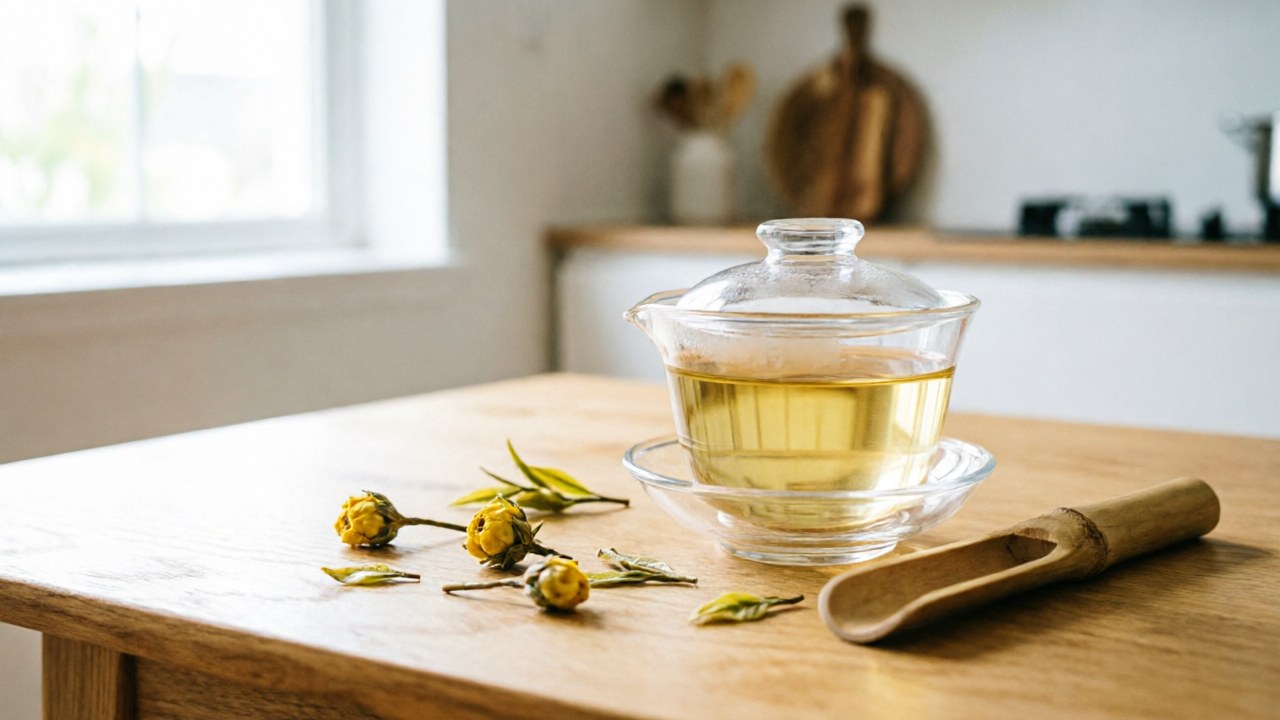
Yellow tea is the rarest Chinese tea class — a sealed “yellowing” step called men huan (闷黄) transforms grassy astringency into mellow, sweet floral liquor. This guide gives you grade-specific parameters, vessel choices by leaf type, and the mistakes that destroy yellow tea’s delicate character.
For first attempts, a practice-grade yellow tea loose leaf lets you experiment without wasting premium leaves. See the yellow tea category or our brewing hub for more.
Why Yellow Tea Needs Different Parameters
Yellow tea shares an early processing stage with green tea: both go through sha qing (kill-green), which halts enzymatic oxidation. But yellow tea adds a second step — men huan, where the still-warm leaves are wrapped under damp cloth or paper and left to yellow slowly over hours or days [1].
This sealed slow-oxidation converts harsh catechins into mellow, sweeter compounds while preserving delicate aromatics [1]. The result is a leaf that’s less bitter than green tea but still heat-sensitive. Green tea turns bitter when over-steeped; yellow tea turns flat and muddy [2]. The general water temperature guide and steeping time guide cover the basics - but yellow tea’s unique chemistry shifts the parameters.
Grade-Based Quick Reference
Not all yellow teas brew the same way. The three main grades differ in leaf composition, and each demands its own temperature and ratio.
| Grade | Example | Water Temp | Gongfu Ratio | Western Ratio | First Steep |
|---|---|---|---|---|---|
| Bud-only | Junshan Yinzhen | 75–80°C (167–176°F) | 3g/100ml | 2g/200ml | 30s gongfu / 2min Western |
| Leaf + bud | Huo Shan Huang Ya | 80–85°C (176–185°F) | 4g/100ml | 2.5g/200ml | 20s gongfu / 2min Western |
| Larger leaf | Meng Ding Huang Ya | 80–85°C (176–185°F) | 5g/100ml | 3g/200ml | 15s gongfu / 2–3min Western |
Bud-only teas are the most delicate — fine buds scorch at 85°C and above. Leaf-and-bud and larger-leaf grades tolerate slightly warmer water. For gongfu, expect 5–7 re-steeps from bud types and 6–8 from larger-leaf grades. The leaf-to-water ratio guide explains why ratios differ by grade.
Choose Your Vessel — Glass, Porcelain, or Both
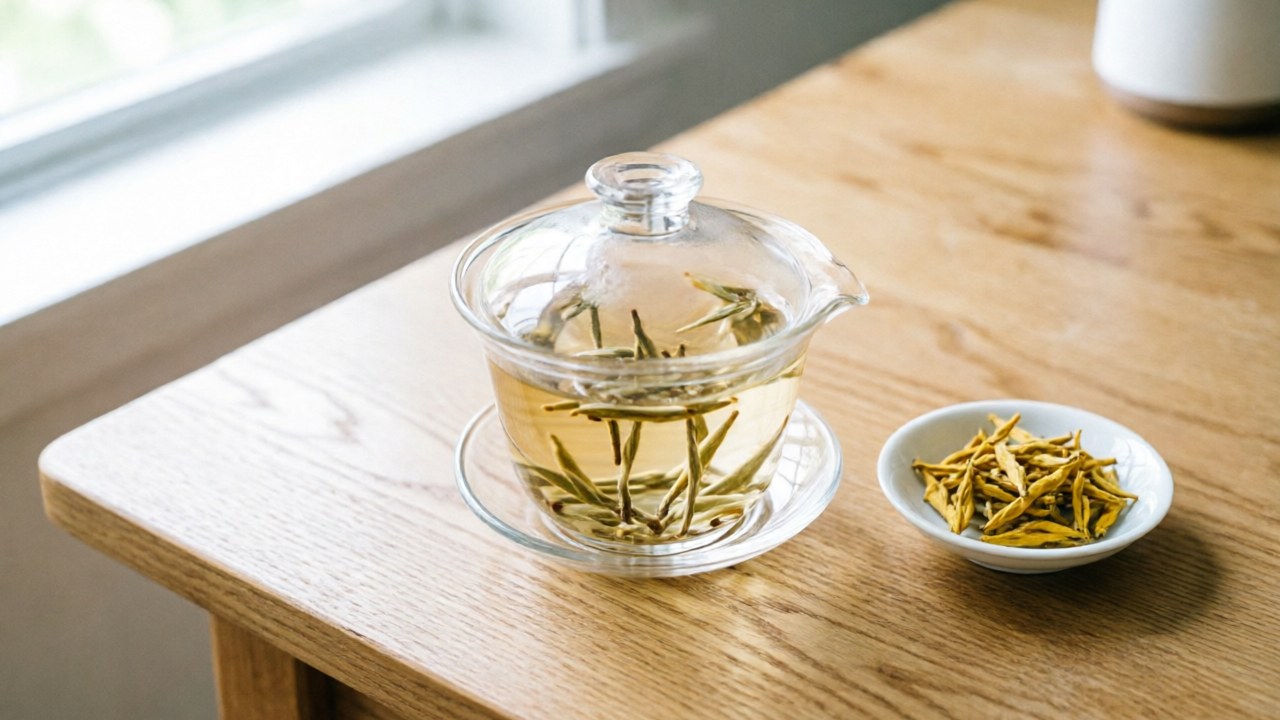
Your vessel choice depends on the grade you’re brewing, not personal preference alone.
Glass gaiwan or glass teapot — the only right answer for Junshan Yinzhen. Its needle-shaped buds stand vertically in the water, a phenomenon tea drinkers call “dancing buds.” A 170ml glass gaiwan gives you enough volume to watch the buds while keeping the pour controlled.
Porcelain gaiwan — better for larger-leaf Huang Ya grades. Porcelain retains heat longer than glass, which helps extract flavor from denser leaf material. A 150ml Jingdezhen porcelain gaiwan is neutral in flavor and holds temperature well for Meng Ding or Huo Shan types.
Glass pot (Western) — practical for beginners who want a simple brew without gongfu technique.
The decision: bud-only → glass (for the dance); leaf+bud → porcelain (for heat); either → glass pot. See how to choose a gaiwan and the porcelain vs glass comparison.
Gongfu Method — Short Steeps for a Sweet Cup
Gongfu brewing is where yellow tea shines. The small vessel, high leaf-to-water ratio, and rapid infusions let you taste how the liquor evolves across steeps — something Western brewing can’t replicate. See gongfu brewing fundamentals for the complete method.
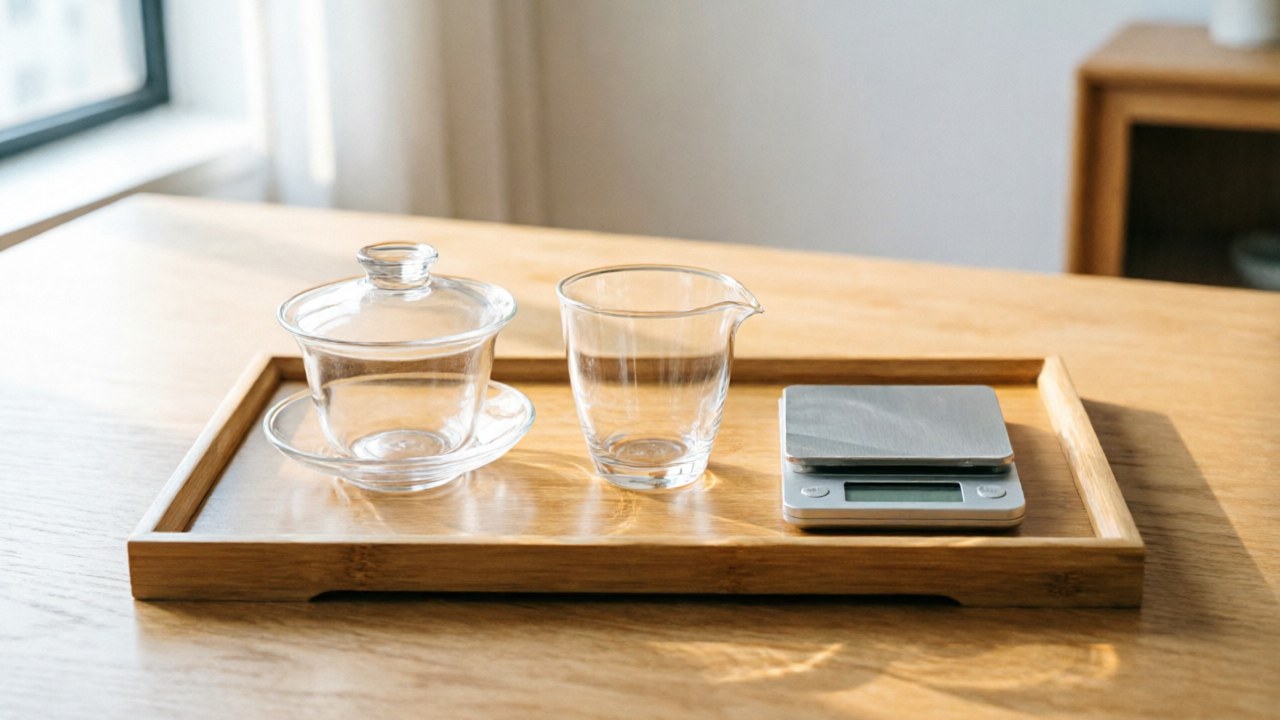
What you’ll need:
- A gaiwan (100–150ml) — glass for Junshan, porcelain for larger leaves
- A temperature-control kettle — the single most important tool for yellow tea
- A 0.1g precision scale — eyeballing 3g vs 5g changes the cup
- A cha hai (fairness pitcher) and strainer
Steps:
- Warm the gaiwan — pour hot water in, swirl, discard. This preheats the vessel so the first infusion doesn’t lose heat to cold porcelain.
- Add leaf — 3g for bud-only in a 100ml gaiwan; 4–5g for leaf-and-bud in a 120–150ml gaiwan. Use the scale, not a spoon estimate.
- Rinse — quick 3-second pour of hot water over the leaves, then discard immediately. This wakes the yellowed leaf and removes surface dust. Skipping the rinse gives a flat first cup.
- First infusion — pour water at the grade-specific temperature (75–85°C). Steep 15–30 seconds depending on grade — shorter for bud-only, slightly longer for larger leaf. Pour through a strainer into your cha hai.
- Re-steep — add 5–10 seconds per round. Taste after each infusion. The liquor should shift from pale yellow to deeper gold and back to pale as the leaves exhaust.
- Stop — when the liquor turns hollow or hay-like, typically round 5–7 for buds and 6–8 for larger leaves.
Why do short steeps matter so much for yellow tea? The men huan process already softened astringency — there’s less bitter compound to extract. Over-steeping doesn’t make the cup stronger; it leaches transformed polyphenols into something muddy and flat.
Western Method — Patient and Gentle
Western brewing trades precision for convenience. It works well for yellow tea because the mellowed character tolerates longer steeps better than green tea.
What you’ll need:
- A glass teapot or large mug with a roomy basket infuser
- The same temperature-control kettle
- 2–3g leaf per 200–240ml water
Steps:
- Heat water to 75–85°C — never boiling. If your kettle doesn’t have temperature control, let boiled water sit for 3–4 minutes before pouring.
- Add leaf to the infuser basket. Give it room — compressed baskets choke the leaves.
- Steep 2–3 minutes, then remove the leaves immediately.
- Re-steep 1–2 more times, adding 30–60 seconds per round.
See the Western steeping guide for the full method. The key difference from green tea: yellow tea gives you a slightly wider steeping window before the cup degrades — but the temperature ceiling is just as strict.
Common Mistakes That Ruin Yellow Tea
Yellow tea is unforgiving in specific ways. Here are the five mistakes that account for nearly every bad cup.
1. Boiling water. This scorches bud aromatics — especially in Junshan Yinzhen, where the fine buds are the entire point. The fix is simple: a temperature-control kettle set to 80°C. If you’re using a boil kettle, wait until the water stops steaming aggressively before pouring.
2. Over-steeping. Yellow tea’s transformed compounds turn muddy and flat past 3 minutes Western or 45 seconds gongfu. The cup doesn’t get bitter — it gets dull. Set a timer and remove the leaves the moment it goes off.
3. Wrong vessel for the grade. Covering Junshan Yinzhen in thick porcelain hides the “dancing buds” vertical display — arguably the main reason to buy Junshan in the first place. Glass for bud types; porcelain for larger leaf.
4. Treating it like green tea. Yellow tea has different chemistry. It forgives slightly longer steeps (because men huan already removed harsh astringency) but punishes hotter water more severely (because the delicate aromatics are already transformed, not raw). Cooler water, same ratios, shorter patience window.
5. Skipping the rinse. The yellowed leaf needs a 3-second wake-up pour. Skipping it gives a flat, closed first cup that never opens properly — you waste the best infusion.
Recommended Leaf and Gear
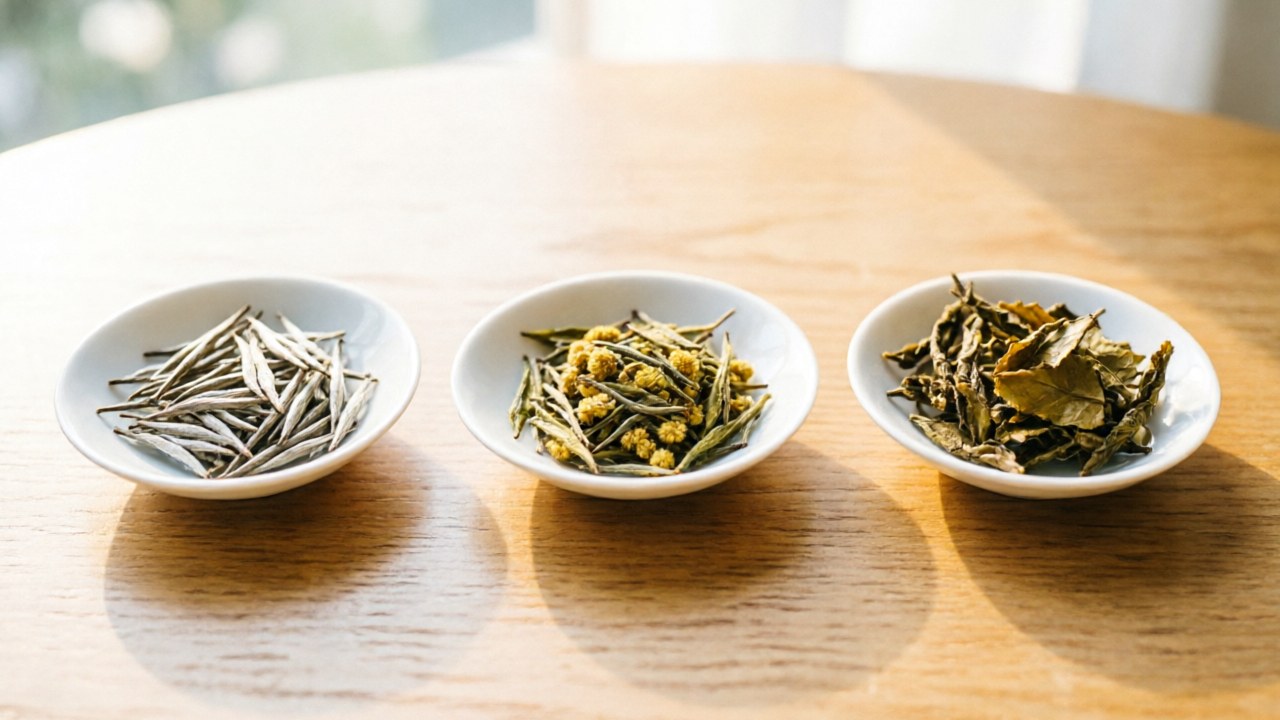
For your first yellow tea session, start with an affordable practice-grade loose leaf — it lets you dial in temperature and timing without the pressure of brewing a $70 tea. Once parameters feel right, step up to a mid-range Golden Dragon yellow tea for gongfu flights.
For the glass-vessel experience, authentic Junshan Silver Needle is the benchmark — brew it only after you’ve practiced on cheaper leaves. A premium Huang Cha tasting pack sits between the two and works well for comparing gongfu vs Western.
On gear, the Chefman temperature-control kettle is the one tool that changes yellow tea brewing most. Without precise temperature, you’re guessing — and yellow tea doesn’t forgive guesses.
Related Varieties and Brewing Guides
- Explore the Huang Ya variety page for processing details and flavor profiles
- Learn about Junshan Yinzhen — China’s most celebrated yellow tea
- Try white tea brewing — similar delicate parameters and cool-water approach
- Compare with green tea brewing — yellow tea’s closest processing relative
The Mind of Yellow Tea
Yellow tea asks for the same patience its makers gave it. They sealed the leaves under damp cloth and waited for bitterness to soften into sweetness. You do the same — cool water, brief steeps, a glass vessel to watch the pale gold emerge. The reward is a cup like no other: mellow, floral, quietly sweet.
References
[1] Wang, Y., et al. (2022). “Effect of the sealed yellowing (men huan) process on catechin composition and sensory quality of yellow tea.” Journal of Agricultural and Food Chemistry, 70(15), 4682–4691. https://doi.org/10.1021/acs.jafc.1c07891 [2] Chen, L., et al. (2021). “Sensory evaluation of yellow tea steeping parameters across Chinese tea classes.” Food Science and Human Wellness, 10(3), 312–320. https://doi.org/10.1016/j.fshw.2021.03.002