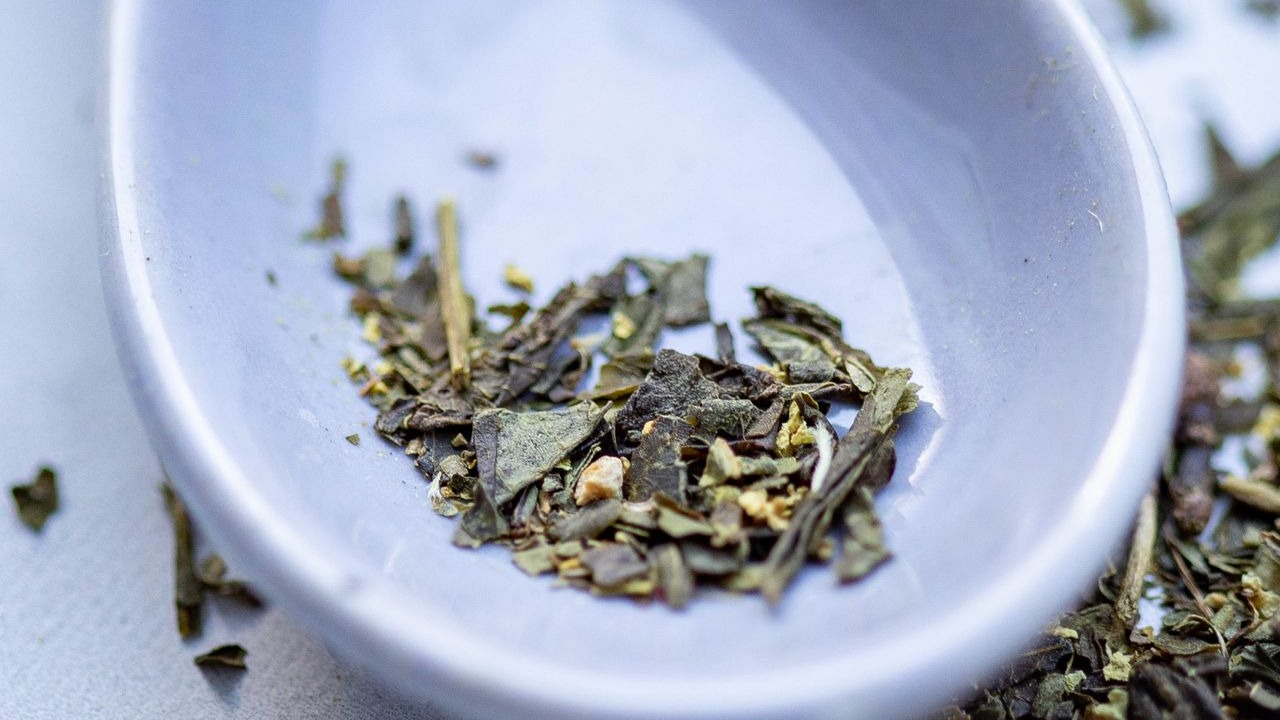
What Is Junshan Yinzhen Tea?
Junshan Yinzhen (君山银针, “Junshan Silver Needle”) is one of the most famous — and rarest — yellow teas in China. It comes exclusively from Junshan Island, a small landmass in Hunan’s Dongting Lake, where misty mornings and mineral-rich soil create ideal conditions for early-spring tea buds [1].
The tea is made entirely from single, unopened buds picked before Qingming (early April), when they’re still covered in fine silver-white down — the pekoe that gives the tea its name. I find that this early harvest gives the buds their characteristic soft texture. What sets Junshan Yinzhen apart from other bud teas is its processing: after standard fixation (sha qing), the buds undergo a sealed-yellowing step called men huan that transforms them from green tea into yellow tea [2].
It’s one of the Ten Famous Chinese Teas and reportedly a favorite of Chairman Mao — but its fame isn’t just historical. The flavor is genuinely unlike anything else in the tea world: smooth, chestnut-sweet, with zero astringency.
If you’re curious to taste it, the New Tea Bud Junshan Yinzhen is a solid authentic option from the Hunan region.
The Men Huan (闷黄) Sealed-Yellowing Process
The men huan process is what makes Junshan Yinzhen a yellow tea — and what gives it its signature character. Without it, the buds would simply be a green tea, grassy and slightly astringent [2].
Here’s how it works:
Step 1 — Fixation (sha qing): Freshly plucked buds are pan-fired at high heat to halt oxidation. This is the same step used for green tea.
Step 2 — Wrapping: The still-warm buds are wrapped in paper or cloth, or stacked in lined baskets, creating a sealed microenvironment.
Step 3 — Gentle heating: The wrapped buds are held at a controlled warmth for 6-12 hours (some premium lots go up to 24 hours). During this time, chlorophyll slowly breaks down into pheophytin, creating the yellow-green color [2].
Step 4 — Drying: The buds are finished with a gentle drying that locks in the transformation.
The result is profound: the sealed-yellowing reduces the grassy, vegetal compounds that make green tea astringent, while developing a round, mellow sweetness. But it’s a delicate dance — over-yellowing produces flat, one-dimensional flavor, while under-yellowing leaves the tea indistinguishable from green tea [1].
The harvest window is just 3-5 days in early spring, and most production still happens in small family-run workshops on Junshan Island. That’s why authentic Junshan Yinzhen is so hard to find.
For a broader introduction to yellow tea processing, the Tealyra Huang Cha gives you a taste of the category from a different origin.
Flavor Profile & Tasting Notes
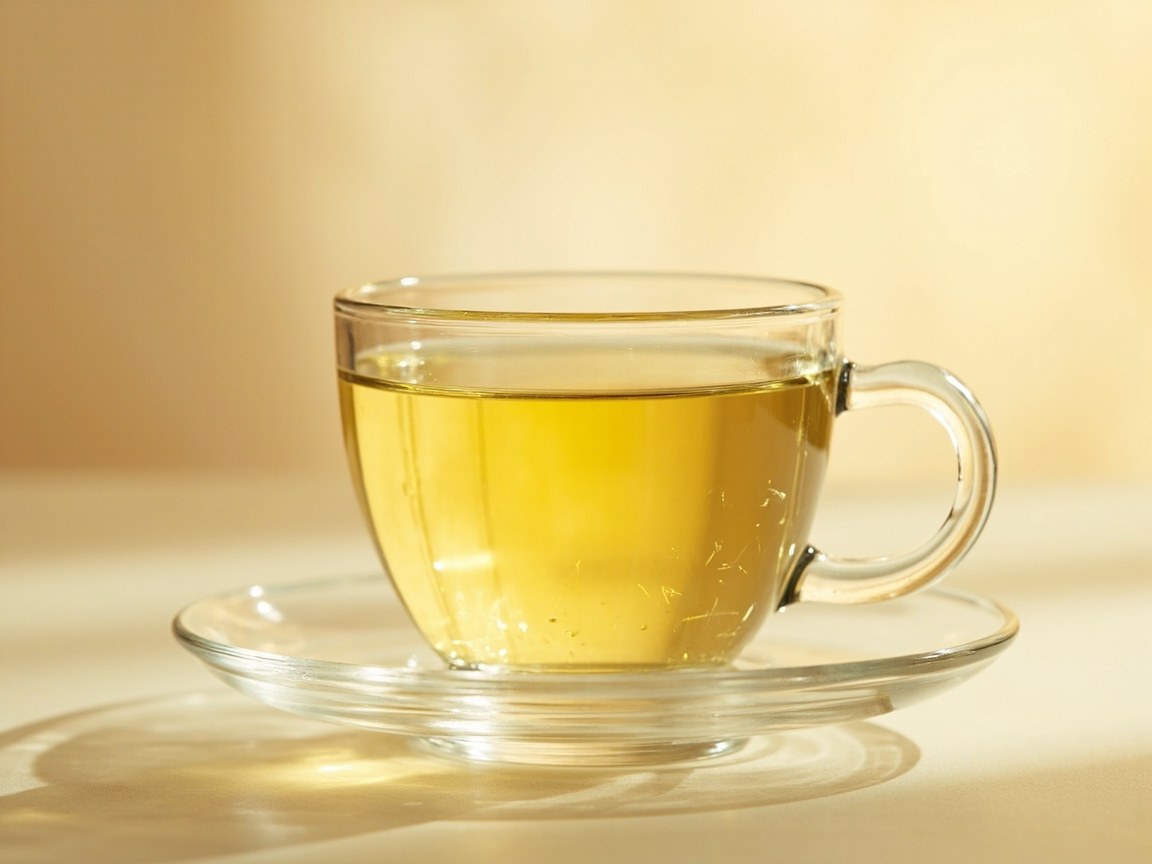
Junshan Yinzhen’s flavor sits in a space that few teas occupy. It’s smoother than green tea, more substantial than white tea, and more delicate than oolong.
Visual: The liquor is a pale golden-yellow, almost translucent — like a very pale white tea but with a warmer, amber-toned cast.
Aroma: Gentle chestnut, sweet hay, and a faint floral note with hints of bamboo. There’s no vegetal or grassy edge [1].
Taste: Exceptionally smooth from the first sip. The top note is a subtle sweetness reminiscent of lightly toasted rice — delicate, like the nuttiness of genmaicha but without any roastiness. The mid palate brings a creamy mouthfeel with nutty undertones. The finish is clean and long, with a lingering sweet aftertaste (hui gan / 回甘) [2].
Texture: The buds are soft, not crispy like green tea — a tangible sign of the men huan process at work.
Compare this to a green tea like Longjing, which has a more pronounced roasted chestnut flavor and a slightly drying finish. Junshan Yinzhen is gentler all around — it doesn’t demand your attention, it invites it.
Junshan Yinzhen vs Silver Needle
Both teas share the same iconic appearance: single silver-white buds picked before Qingming. But they’re processed into completely different categories.
| Dimension | Junshan Yinzhen (Yellow) | Silver Needle (White) |
|---|---|---|
| Processing | Fixation + Men Huan sealed-yellowing | Withering + drying only |
| Oxidation | ~5-8% (post-men huan) | ~3-5% (natural) |
| Liquor color | Yellow-gold, warm | Pale straw, cool |
| Flavor | Mellow, chestnut, creamy, non-astringent | Light, sweet, hay, delicate |
| Body | Medium, coating | Light, almost water-like |
| Price (per 100g) | $20-40 (rare) | $15-50 (more available) |
The difference comes down to the men huan step. Silver Needle relies entirely on gentle withering to develop its subtle sweetness — the flavor is ethereal, almost like sweet water. Junshan Yinzhen, by contrast, has real body and richness from the sealed-yellowing process [2].
If you want to taste the difference side by side, pick up a premium Silver Needle alongside your Junshan Yinzhen — it’s one of the most instructive tea comparisons you can make.
How to Brew Junshan Yinzhen
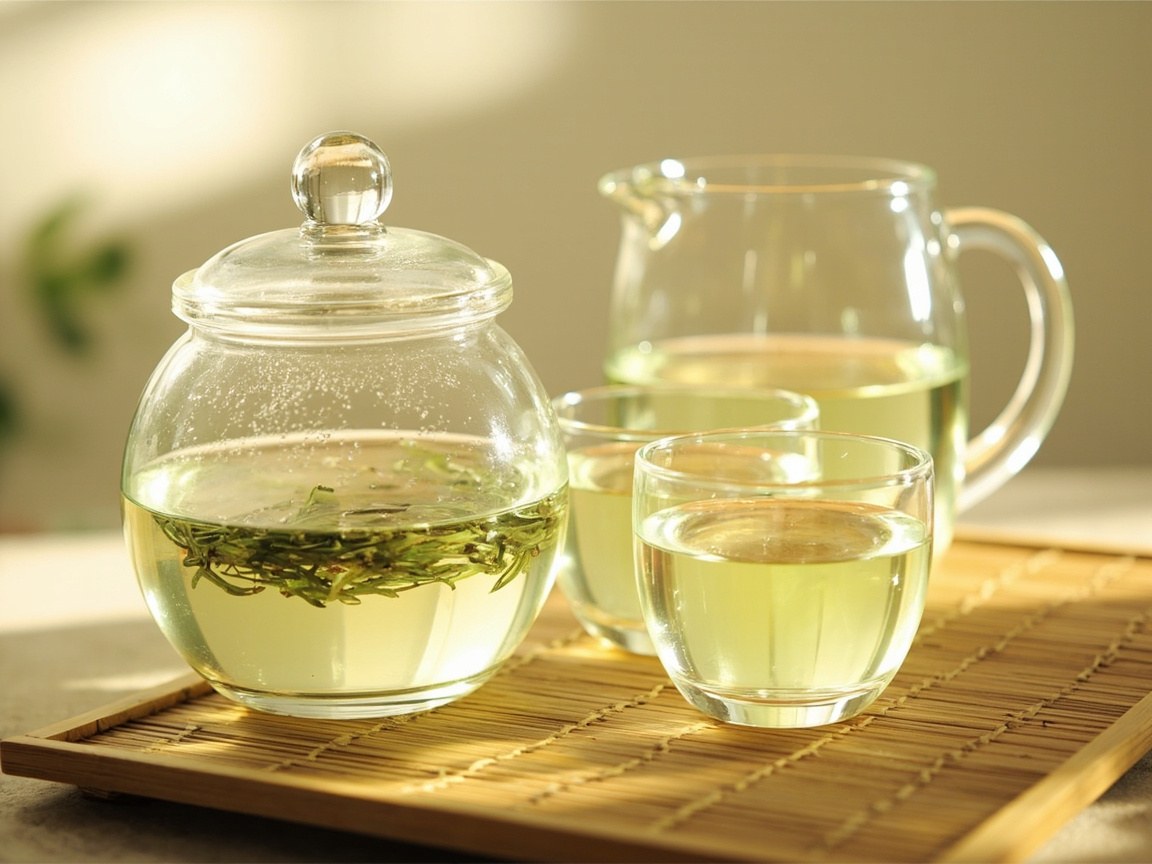
Junshan Yinzhen is delicate and rewards careful brewing. The key rule: never use boiling water.
Gongfu Style (Recommended)
| Parameter | Value |
|---|---|
| Temperature | 80°C (175°F) |
| Leaf amount | 4-5g per 100-150ml gaiwan |
| Steep time | 20-30 seconds (1st), +5s per infusion |
| Infusions | 5-7 |
| Vessel | Glass gaiwan or white porcelain gaiwan |
- Warm the vessel — rinse your gaiwan or teapot with hot water to stabilize the temperature.
- Add leaves — enjoy the dry fragrance: sweet hay and chestnut.
- Pour water along the inner wall — never directly onto the buds. This protects the delicate down and prevents premature extraction.
- Steep 20 seconds — decant completely.
- Observe — the liquor should be pale gold and perfectly clear.
- Sip slowly — notice the smooth, non-astringent mouthfeel.
A porcelain gaiwan is ideal — the white interior lets you appreciate the liquor color, and porcelain doesn’t absorb any of the delicate flavor.
Western Style
| Parameter | Value |
|---|---|
| Temperature | 80°C (175°F) |
| Leaf amount | 2-3g per 200-250ml cup |
| Steep time | 2-3 minutes |
| Re-steep | 1-2 times (reduce time) |
Precise temperature control matters more for Junshan Yinzhen than for most teas. A temperature-control kettle set to 80°C takes the guesswork out.
Key tip: During steeping, watch the buds slowly unfurl and stand upright in the water — it’s a visual experience unique to well-made Junshan Yinzhen, known in Chinese tea culture as “三起三落” (three rises, three falls) [1].
How to Identify Authentic Junshan Island Yinzhen
Because Junshan Yinzhen is both famous and rare, fakes are common. Here’s what to look for:
- Origin: Genuine Junshan Yinzhen comes only from Junshan Island, Dongting Lake, Yueyang, Hunan. Regional versions exist but aren’t the same.
- Appearance: Uniform single buds with dense white down (pekoe). The color should be pale golden, not bright green.
- After brewing: The buds should stand upright in the water — this “三起三落” phenomenon is a traditional quality marker [1].
- Price floor: Authentic Junshan Yinzhen rarely goes below $20 per 100g. If it’s cheaper, it’s probably a green tea substitute.
- Taste test: Real Junshan Yinzhen has no astringency. If it tastes grassy or drying, it hasn’t been properly yellowed.
The New Tea Bud Junshan Yinzhen is one of the more reliable options for first-time buyers — it’s sourced from Hunan and matches the key quality markers.
Recommended Junshan Yinzhen & Yellow Tea Picks
| Product | Price | Best For |
|---|---|---|
| New Tea Bud Junshan Yinzhen (100g) | $26.99 | Authentic Junshan Island experience |
| CO-OP 1950 Yueyeang Yellow Tea (100g) | $19.99 | Budget-friendly yellow tea entry — Yueyang origin |
| Tealyra Huang Cha Rare Yellow Tea (110g) | $24.99 | Daily-drinking yellow tea |
| Tealyra Golden Dragon Yellow Tea (112g) | $20.99 | Yellow tea exploration — tasting variety |
| iTeaworld Top 10 Chinese Teas Sampler | $28.99 | Taste Junshan Yinzhen + 9 other famous teas |
| Huoshan Yellow Tea Aged (50g) | $26.20 | Aged yellow tea — Huoshan comparison |
| CO-OP 1950 Yellow Tea Bags (20-count) | $9.99 | Quick-brew yellow tea for beginners |
If you’re new to yellow tea, start with the iTeaworld sampler — it gives you Junshan Yinzhen alongside nine other famous Chinese teas, which helps you place its flavor in context. For dedicated yellow tea drinkers, the New Tea Bud Junshan Yinzhen is the most authentic option for daily sessions.
If you enjoy this style, you might also like Huang Ya (Yellow Bud) Tea, a related yellow tea with its own origins and character.
Pairing & Food
Junshan Yinzhen is best enjoyed on its own — its delicate flavor competes with strong foods. If you want something alongside, keep it light:
- Plain biscuits or shortbread
- White chocolate or mild milk chocolate
- Fresh fruit like peach or pear
- After a heavy meal as a palate cleanser
Avoid spicy food, strong cheese, or fried items — they’ll overwhelm the subtle notes. In Chinese tradition, Junshan Yinzhen is often served to honored guests as a sign of respect, so consider reaching for it when you want to share something genuinely special.
The Mind of Junshan Yinzhen
The rarest of the six tea types, yellow tea demands an extra act of patience — the sealed-yellowing step that separates it from green tea’s haste. Junshan Yinzhen, from its misty island in Dongting Lake, rewards that patience with an impossibly smooth, chestnut-tinged cup. Brew at 80°C, sip slowly, and taste what nearly disappeared.
[1] Junshan Yinzhen — Wikipedia. https://en.wikipedia.org/wiki/Junshan_Yinzhen [2] Yellow Tea Fundamentals — Teadrunk. https://www.teadrunk.com/pages/yellow-tea-fundamentals [3] How to Brew Yellow Tea — Mei Leaf. https://meileaf.com/guide/how-to-brew-yellow-tea/