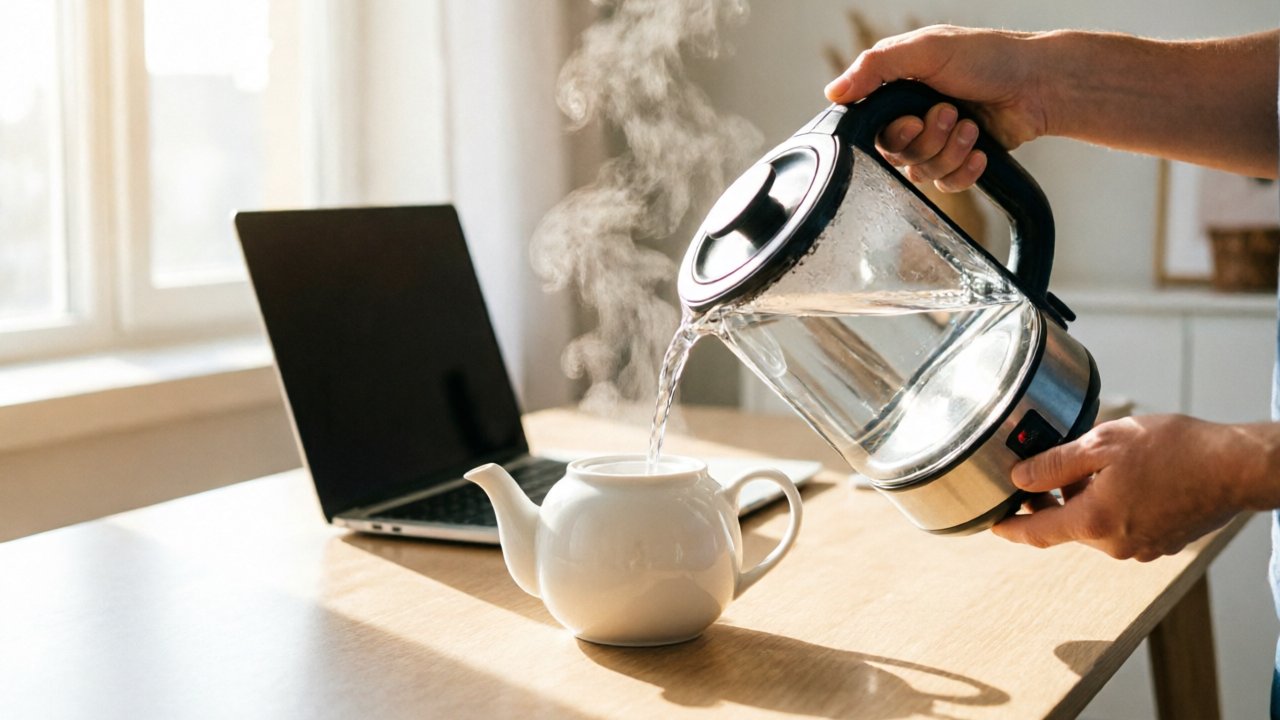
Coffee gives you a spike and a crash. Tea gives you a curve. This guide is a brewing system for desk focus: pick the right leaf, hit the right temperature, and use the three-minute brewing ritual itself as your transition into deep work. It’s not a ceremony, and it’s not a supplement — just a leaf and hot water. It’s what to brew when the coffee crash hits and you still have three hours of work left.
Why Tea Beats Coffee for Sustained Focus
Coffee peaks fast. Caffeine hits your bloodstream within 15 minutes, reaches maximum concentration around 30-45 minutes, then drops. By the 90-120 minute mark, you’re below baseline - that’s the crash [1].
Tea works differently. The caffeine in Camellia sinensis leaves comes packaged with L-theanine, an amino acid that doesn’t exist in coffee beans. L-theanine doesn’t block caffeine - it modulates it. Research suggests the combination produces calmer, sustained attention rather than a spike-and-drop pattern [2]. One meta-analysis found that L-theanine plus caffeine improved cognitive performance and subjective alertness more than caffeine alone [1].
This isn’t about tea replacing medication — it’s chemistry of the leaf: Camellia sinensis produces L-theanine naturally, and you extract it by steeping. For deeper context on caffeine and L-theanine interactions, see our matcha caffeine guide.
Leaf Choices for Different Focus Windows
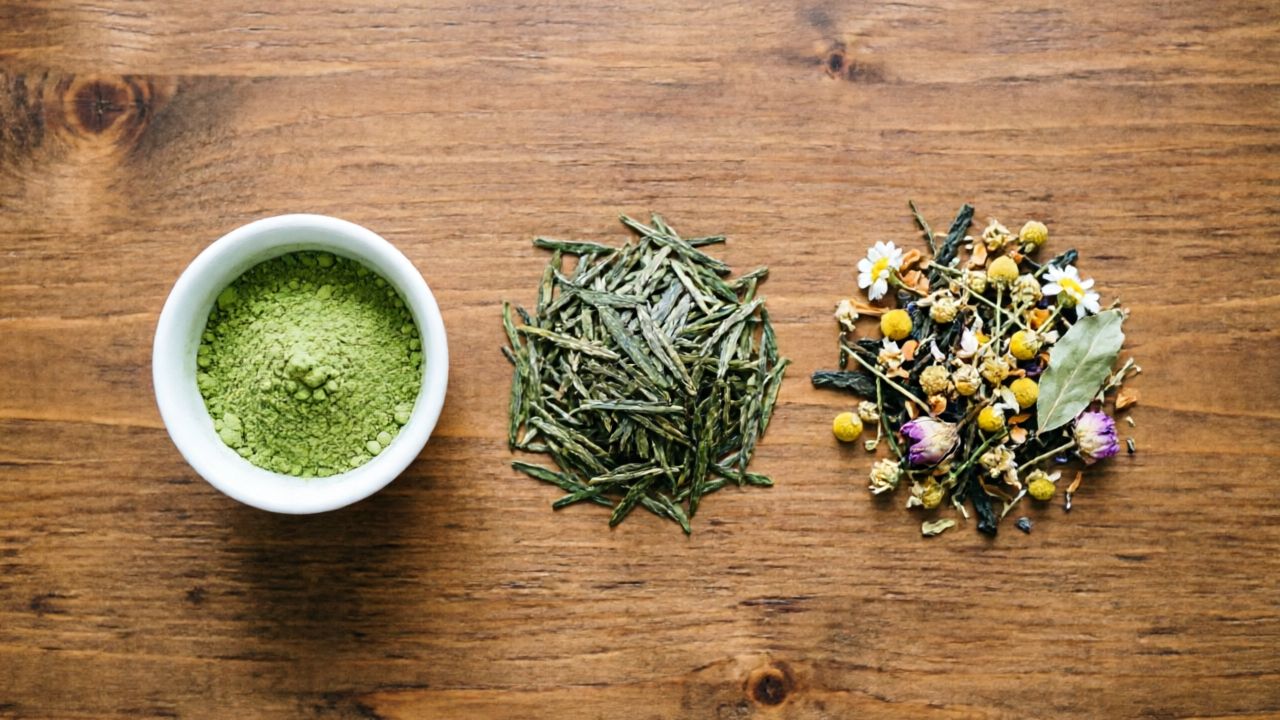
Not every tea fits every work session. Here’s how to match the leaf to the task:
Matcha (ceremonial grade): You consume the entire leaf as suspended powder, so you get the full caffeine and L-theanine content - roughly 70mg caffeine per 2g serving [3]. This is your deep-work fuel. Best for 2-3 hour sessions where you need sustained concentration. The YIBO Matcha Whisk Set gives you the bowl, whisk (chasen), and sifter in one kit.
Green tea (sencha or longjing): Moderate caffeine (30-40mg per cup) with steady L-theanine. Best for 1-2 hour focused tasks like writing, coding, or reading. A bulk loose-leaf like HANDPICK Green Tea (255g, ~127 cups) keeps daily cost low. See our green tea brewing guide for temperature and timing.
Oolong: Middle caffeine (25-50mg), good for afternoon focus when you don’t want over-stimulation. Gongfu-style short steeps work well here - see the leaf-to-water ratio guide for dosing.
Caffeine-free evening option: Herbal blends like Traditional Medicinals Stress Ease Focus or Yogi Spiced Blackberry Focus deliver flavor and aroma without caffeine. Peppermint’s scent is linked to alertness in scent-focused studies [5], though it contains no L-theanine.
| Tea type | Caffeine (mg) | L-theanine | Focus window | Best for |
|---|---|---|---|---|
| Matcha (2g) | ~70 | High | 3-4 hours | Deep work, writing, coding |
| Green tea (2g/150ml) | ~30 | Moderate | 2-3 hours | Focused tasks, studying |
| Oolong (gongfu) | ~25/steep | Moderate | 2 hours | Afternoon sessions |
| Herbal (caffeine-free) | 0 | None | 1-2 hours | Evening, no sleep disruption |
The Desk Focus Ritual: Brew, Don’t Ritualize
This isn’t a 21-step Gongfu ceremony. It’s a 3-minute desk ritual that doubles as a focus trigger - the act of brewing tells your brain it’s time to work.
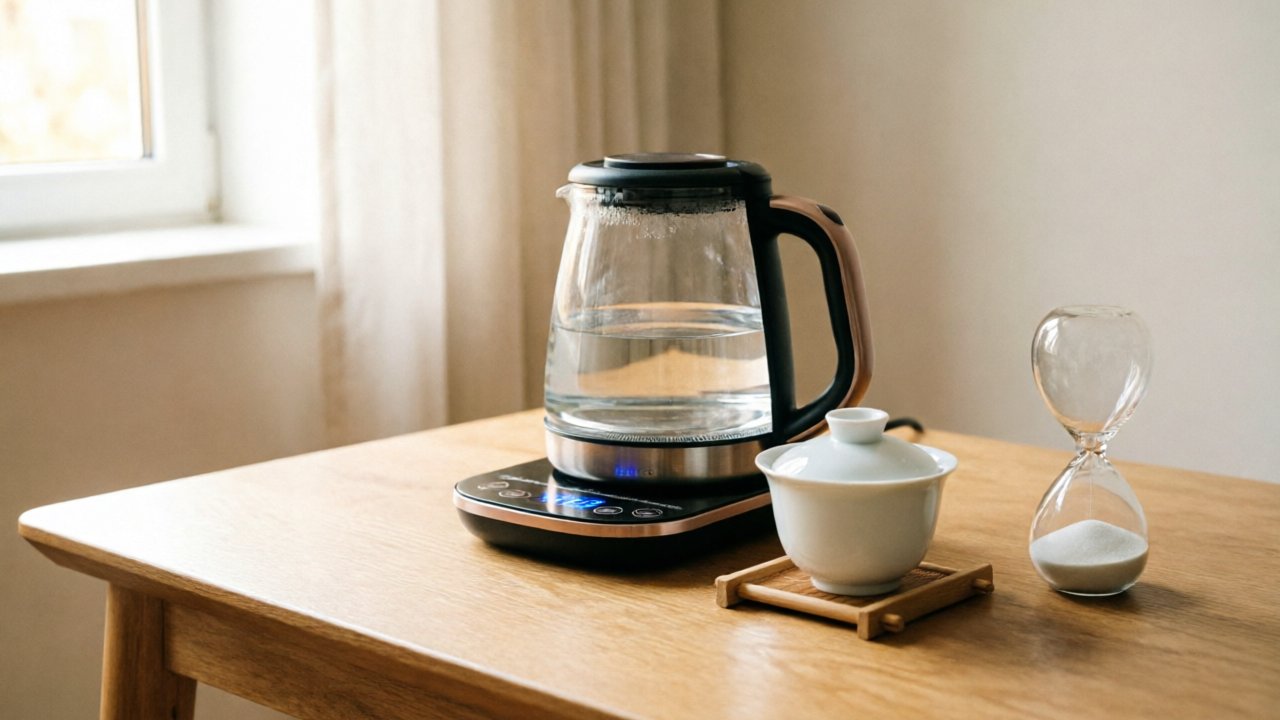
Step 1: Heat. Use a temperature-control kettle. Green tea and matcha need 175°F (80°C); boiling water destroys L-theanine balance and extracts bitter tannins. The Chefman Electric Kettle has 5 presets and a removable infuser - one device handles every tea type.
Step 2: Dose. 2g loose leaf (about 1 teaspoon) in 150ml water for green tea. For matcha, 2g powder (2 bamboo scoops) in 60-80ml water. See the leaf-to-water ratio guide for the full dosing framework.
Step 3: Steep or whisk. Green tea: 2 minutes, then remove leaves. Matcha: whisk 20-30 seconds in a figure-8 motion until a thin foam forms. Use a visual timer - the Teabloom Tea Timer has 2/3/5-minute glass columns so you don’t reach for your phone.
Step 4: Sip and start. The brewing itself is the focus trigger. Your brain associates the heat, the pour, and the first sip with entering deep work. That’s the point - not the ceremony, but the Pavlovian cue.
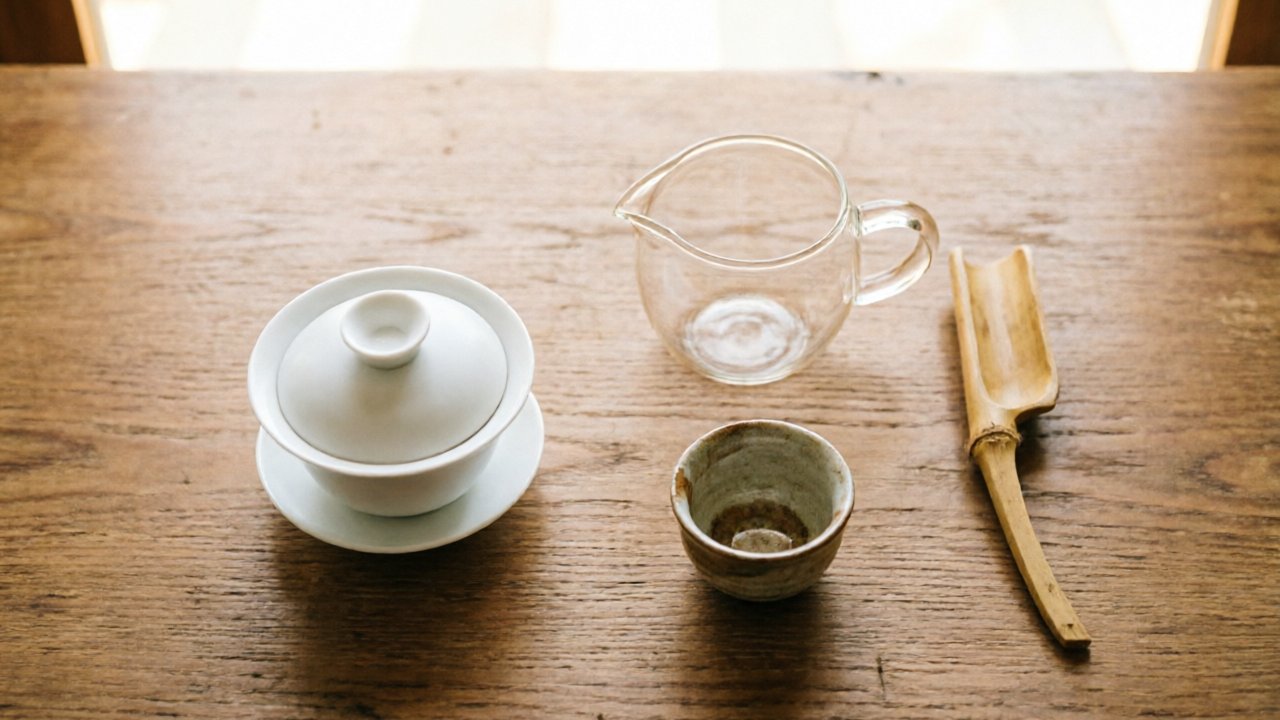
Vessel choice for desk: A REOWONU Gaiwan Set works if you want compact, short multi-infusion brewing without a full ceremony setup. For matcha, the YIBO whisk set includes the bowl and tools. For Western-style green tea, a glass teapot with infuser works fine. See our gaiwan selection guide for size and material tips.
Dose and Steep Time for a Sustained Focus Window
Brewing method changes caffeine extraction. Longer steep times pull more caffeine AND more L-theanine - but also more tannins, which taste bitter. The sweet spot for focus is a shorter steep with a re-steep later.
| Tea type | Water temp | Steep time | Approx. caffeine | Focus duration |
|---|---|---|---|---|
| Green tea (Western) | 175°F / 80°C | 2 min | ~30mg | 2-3 hours |
| Matcha | 175°F / 80°C | Whisk 20-30s | ~70mg | 3-4 hours |
| Oolong (gongfu) | 200°F / 95°C | 30s × multi | ~25mg/cup | 2 hours |
Here’s the key insight: re-steeping green tea gives you a second focus cup with less caffeine - a natural tapering effect. Your first cup carries the full dose; the second steep delivers about 60-70% of the caffeine [4], and the third drops further. This lets you extend a focus window without re-dosing to the same peak.
For daily bulk brewing, the HANDPICK Green Tea loose leaf (255g bag) works out to roughly $0.09 per cup - cheap enough to brew twice daily. For a no-prep option, Republic of Tea SuperShroom Focus adds lion’s mane to green tea for a grab-and-steep desk session. See our steeping time reference for a full timing chart.
Common Mistakes That Kill Your Focus Brew
-
Boiling water on green tea. 212°F water scorches the leaf and extracts bitter tannins that overpower the L-theanine. Fix: use a temperature-control kettle set to 175°F.
-
Over-steeping. 5+ minutes turns a focus tea into bitter jitter tea. The L-theanine doesn’t increase enough to justify the tannin extraction. Fix: set a visual timer and remove leaves at 2 minutes.
-
Too much leaf. 5g of green tea in a small gaiwan doesn’t give you “more focus” - it gives you caffeine overload and a bitter cup. Fix: stick to 2g per 150ml (see leaf-to-water ratio).
-
Drinking on an empty stomach. This amplifies the caffeine spike and shortens the focus window - you’ll feel the crash sooner. Fix: pair with a small snack, or brew after a meal.
-
Using your phone as a timer. The whole point of the ritual is to remove distraction sources. Your phone is the biggest one. Fix: a 3-glass hourglass timer sits on your desk and does one thing.
Your Desk Focus Setup: What You Actually Need
Three items. That’s it. This isn’t a ceremony kit - it’s a focus trigger system.
- Kettle: Temperature control is the one non-negotiable. Boiling water ruins green tea. The Chefman kettle handles 5 presets in a glass body.
- Vessel: A gaiwan for short multi-steeps, a glass teapot for easy Western brewing, or a matcha bowl with whisk. Pick one that matches your tea of choice.
- Timer: Visual, not digital. A glass hourglass or dedicated tea timer that doesn’t ping notifications.
Optional: a small tea tray to catch water. For the full beginner teaware guide, see teaware for beginners.
More occasion-based brewing guides are on our occasions page.
The Mind of Focus
A cup of tea is not a pill. The caffeine and L-theanine in the leaf give you a steadier curve than coffee, but the real focus tool is the ritual itself: heat, pour, wait, sip. In those three minutes you set an intention. Your desk becomes a teatable. The work becomes the tea.
References
[1] Camfield, D. A., Stough, C., Farrimond, J., & Scholey, A. B. (2014). Acute effects of tea constituents L-theanine, caffeine, and epigallocatechin gallate on cognitive function and mood: a systematic review and meta-analysis. Nutrition Reviews, 72(8), 507-522. https://doi.org/10.1111/nure.12120
[2] Haskell, C. F., Kennedy, D. O., Milne, A. L., Wesnes, K. A., & Scholey, A. B. (2008). The effects of L-theanine, caffeine and their combination on cognition and mood. Appetite, 51(3), 459-470. https://doi.org/10.1016/j.appet.2007.09.005
[3] Dietz, C., Dekker, M., & Piqueras-Fiszman, B. (2017). An intervention study on the effect of matcha tea on mood and cognitive performance. Food Research International, 99(Pt 1), 107-114. https://doi.org/10.1080/10408398.2016.1197019
[4] Wikipedia - L-theanine. https://en.wikipedia.org/wiki/Theanine (general chemistry context)
[5] Meadows, S., et al. (2018). The effect of peppermint oil on mood and cognition. International Journal of Neuroscience, 128(8), 703-708. https://doi.org/10.1080/00207454.2018.1485050