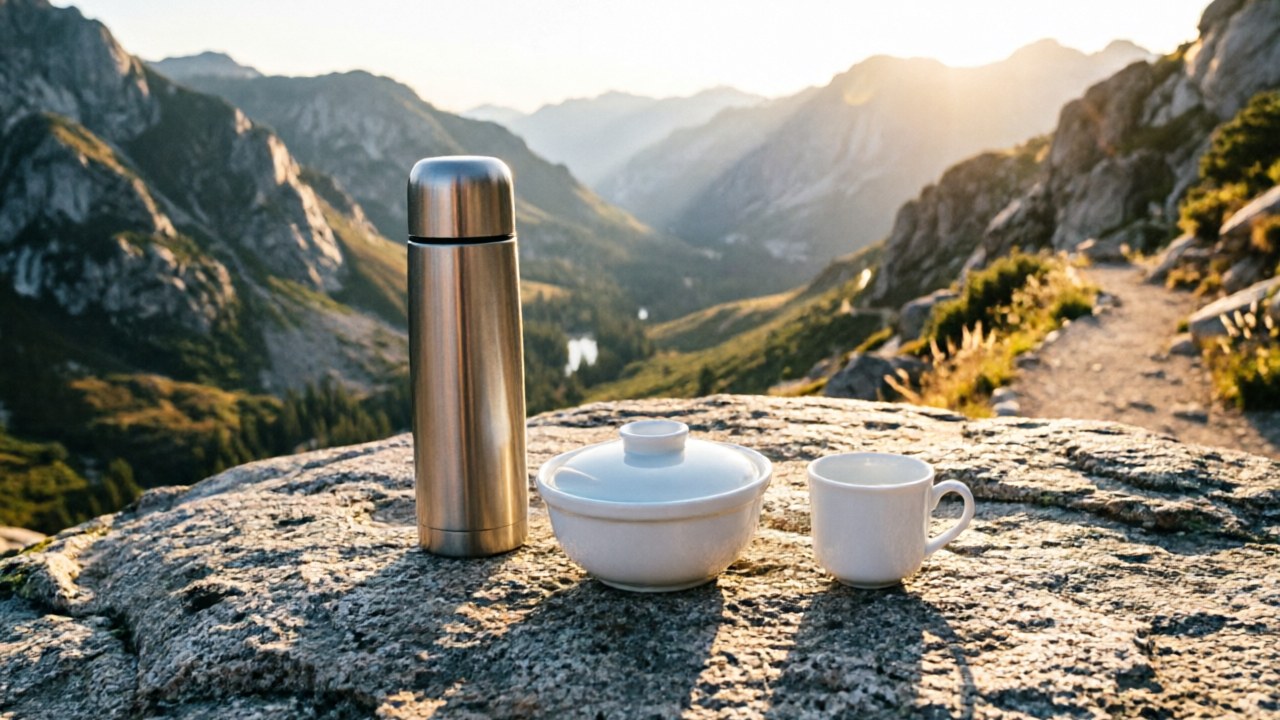
I have carried tea up enough trails to know that tossing bags in a thermos works — but it sells the trail short. Our outdoor brewing system has three variables — method, kit scale, and leaf choice — and the right answers change with your trip. This guide covers the thermos pre-steep, the mug-top infuser, and portable gongfu at a campsite, then shows you which leaves handle wind, altitude, and a bumpy pack. It anchors the Tea-for-the-moment Occasions lane on the brewing hub.
Why Tea Outdoors Is a Different Problem
Your kitchen doesn’t have wind, altitude, or a weight limit. The trail does. Three things change when you brew outside:
- Water cools fast. A mug that holds 85°C in your kitchen drops to 60°C in under 5 minutes with a 10 mph wind [1]. That gap turns a green tea steep into lukewarm dishwater.
- Glass breaks. The gaiwan you use daily is a liability in a backpack. Even wrapped in a sock, ceramic and glass chip on rock scrambles.
- Water quality varies. Stream water carries mineral notes you don’t get from a kitchen tap. Sometimes that’s good (sweet mountain spring). Sometimes it’s iron-heavy or silty, which fights delicate teas.
None of this means you’re stuck with bags. Reddit’s r/tea has at least eight dedicated threads on outdoor brewing methods [2], and the consensus is clear: you can brew real loose-leaf tea outdoors if you match the method to the trip.
Pick Your Method — Thermos, Mug-Top, or Portable Gongfu
Three methods cover nearly every outdoor scenario. Pick by pack weight and trip type, not by what looks best on Instagram.
Thermos Pre-Steep Method (Best for Trail)
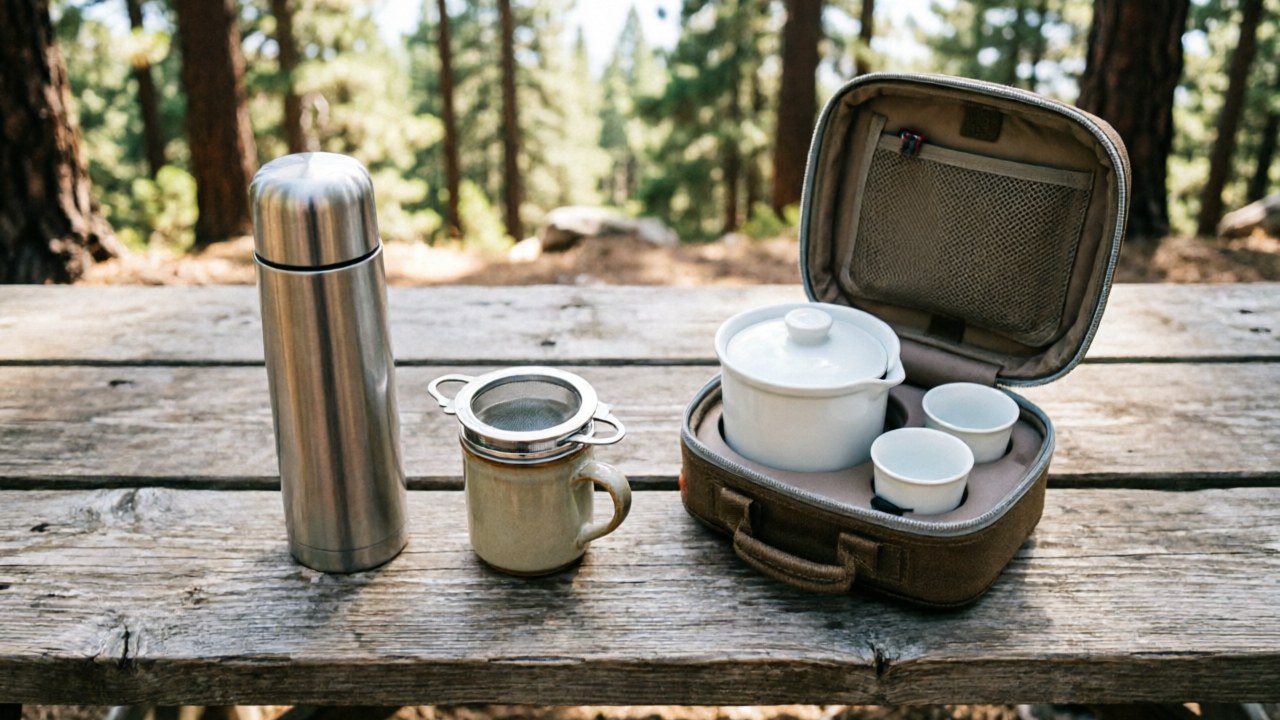
This is the highest quality-to-weight ratio. You brew a concentrated tea at home or at the trailhead, then dilute with hot water throughout the day. Use a vacuum thermos like the Pure Zen Tea Thermos with Infuser (15oz) for solo, or the THERMOS Stainless King 40oz for group sharing — both hold heat above 80°C for 8-12 hours [3].
How it works: pack your thermos with 2-3x the normal leaf ratio, fill with correctly heated water, and seal. At your viewpoint or lunch stop, pour half into a cup and top with hot water from a second bottle. The concentrate dilutes to a normal-strength cup. It’s the same principle as the first cup brewing system — just time-shifted.
Mug-Top Infuser (Lightest Kit)
If you count grams, a fine-mesh infuser is your entire brewing kit. The Reinmoson Extra Fine Mesh Infuser weighs under 30g and fits any mug or cup you’re already carrying. Boil water on a camp stove, drop the infuser in your mug, steep, and pull it out.
The trade-off: you need a heat source on the trail (camp stove or jetboil). You also lose temperature control — water goes from boil to drinkable in minutes outdoors, so green teas are tricky. Best with forgiving leaves like black or oolong. Cross-check your timing with the steeping time reference.
Portable Gongfu (Campsite Pause)
This is the angle most outdoor guides skip entirely. Portable gongfu travel sets — gaiwan, sharing pitcher, small cups, and sometimes a bamboo tray — pack into a padded carrying case. The Dltsli Mini Travel Tea Pot Set (1 pot + 2 cups + bag) is the most compact option. The SonGis Portable Gaiwan Set adds a tray for 1-3 people. For the full experience with a glass teapot and bamboo tray, the Tmtemn Portable Gongfu Tea Set is the premium pick.
These sets weigh 400-600g — not for a 20-mile day hike. But for car camping, base camp, or a deliberate rest stop on a long trail, a few rounds of gongfu with a view you hiked to earn is something no kitchen can replicate. If you’re new to the method, start with gongfu brewing basics before taking it outside.
Leaf Choices by Outdoor Scenario
The leaf you bring matters as much as the vessel you brew it in. Here’s what works on the trail:
| Scenario | Best leaf type | Why it works | Watch out for |
|---|---|---|---|
| Hot day hike | Green (sencha, longjing) | Refreshing, low caffeine | Needs precise 75-80°C water; scorches easily |
| Multi-day trail | Rolled oolong (tieguanyin, da hong pao) | Forgiving, re-steeps 6-8 times | Loose rolls bounce around in a tin |
| Campfire evening | Black (dianhong, keemun) | Full-bodied, handles milk, campfire smoke pairs | Over-steeps bitter if you forget the timer |
| Ultralight pack | Compressed puerh (cake or mini tuocha) | No crumble, portion-controlled | Needs a breaking tool or pre-portioned mini cakes |
Compressed puerh is the unsung hero of outdoor tea. A mini tuocha (7g nest) is a single serving — no measuring, no mess, and it won’t turn to dust in your pack [4]. Rolled oolong runs a close second because it forgives temperature mistakes and re-steeps enough for a full afternoon. For summer hikes, cold brew tea made the night before is another hands-off option.
What to Pack — Three Kit Scales
Your tea kit should match your trip, not your Instagram. Three tiers:
Ultralight — Backpacking
For trips where every gram counts: a fine-mesh infuser + your camp mug + compressed puerh or tea bags. Total tea weight under 50g. You’re brewing simple cups, not sessions — but they’re real loose-leaf cups, not sad bag tea.
Day Kit — Thermos + Cup
Pre-steep concentrated tea in a THERMOS Stainless King 40oz before you leave. Bring one cup for dilution. Add a Fire-Maple camping kettle (1L, ~140g) if you want to reheat water on a stove mid-route. This is the sweet spot: under 500g total, and you’re drinking quality tea all day.
Campsite Gongfu Set
For car camping or base camp, weight doesn’t matter. A full portable gongfu set with tray lets you run proper short steeps at a picnic table or flat rock. The CASA BRAVA complete travel set is the budget option if you’re trying the method outdoors for the first time.
Water, Heat, and the Trail
Two outdoor variables you can’t control from your kitchen:
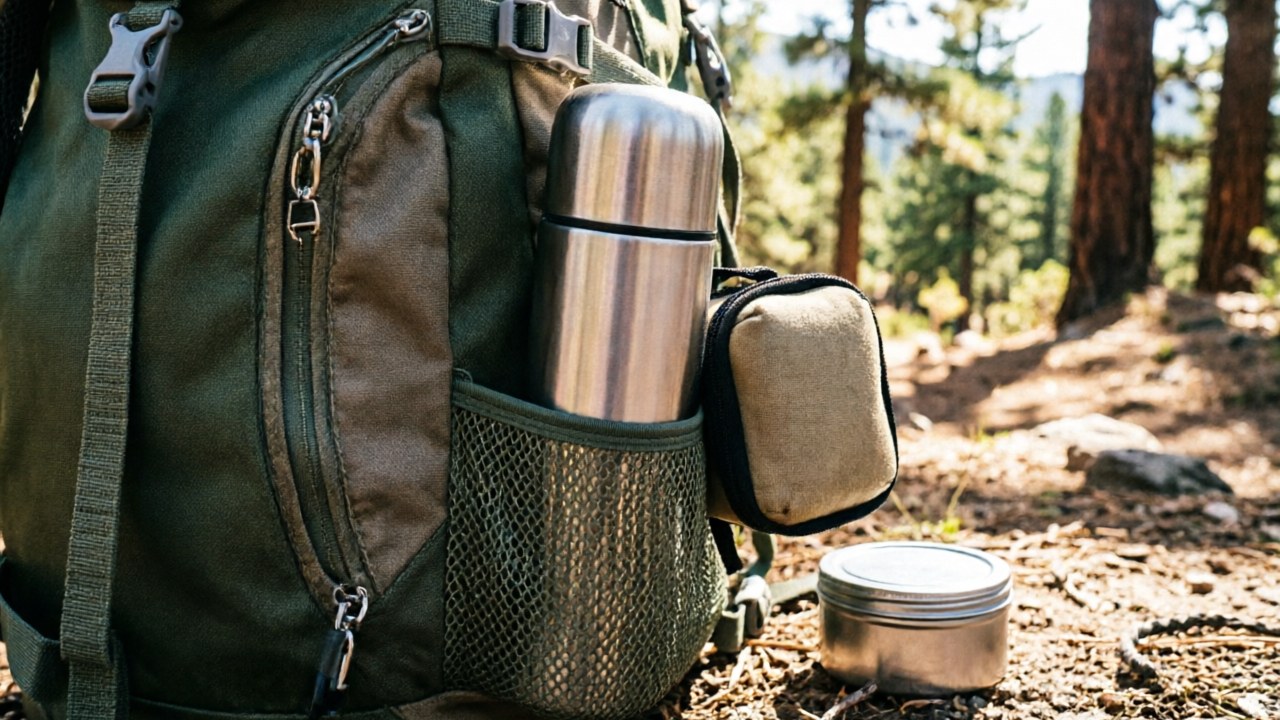
Water source. If you’re filling from a stream or lake, filter first — not just for safety, but for taste. A backpacking filter removes the iron and silt notes that fight green and white teas. Mountain spring water is often naturally soft and low-mineral, which is actually great for tea [5]. Trailhead tap water in a thermos is fine for black and puerh.
Heat. You have two strategies: carry heat (thermos pre-steep) or make heat (camp stove + kettle). A camp stove with a stainless steel camping kettle boils water in 3-4 minutes. At altitude, water boils at a lower temperature — around 93°C at 2,000m instead of 100°C at sea level [6] — which is actually fine for green and oolong but means you can’t get a true rolling boil for puerh without a pressure system.
No ceremonial water purity claims here. Filter your water, heat it, and brew. The trail doesn’t reward perfectionism.
Common Outdoor Tea Mistakes
- Packing glass gaiwans on a backpacking trip → chipped ceramic in your pack. Use a travel tea set with a padded case or stick to thermos/infuser methods.
- Bringing only delicate green tea → scorches in wind-cooled water with no temp control. Pack rolled oolong or puerh as backup.
- Ignoring altitude boiling point → water at 2,000m boils 7°C lower. Adjust your expectations for puerh and black tea.
- No cleanup plan → wet leaves in your pack smell by day two. Bring a small zip-top bag for spent leaves.
- Overpacking for a day hike → a full gongfu set for a 6-hour trail is dead weight. A thermos and a cup is enough.
Gear for Outdoor Tea
Same SKUs, organized by category so you can build your kit:
| Category | Product | Best for | Price |
|---|---|---|---|
| Thermos | THERMOS Stainless King 40oz | Group thermal retention | $36.99 |
| Thermos | Pure Zen Tea Thermos | Solo pre-steep with infuser | $29.95 |
| Infuser | Reinmoson Fine Mesh Infuser | Ultralight, any mug | $9.99 |
| Kettle | Fire-Maple Camping Kettle | Boiling on camp stove | $37.95 |
| Travel set | Dltsli Mini Travel Set | Compact gongfu (pot + 2 cups) | $28.48 |
| Travel set | SonGis Gaiwan Set | Gaiwan + tray for 1-3 | $31.98 |
| Travel set | Tmtemn Gongfu Set | Full premium set with glass pot | $39.89 |
| Travel set | CASA BRAVA Travel Set | Budget complete set | $29.99 |
If you’re new to choosing a gaiwan for any setting — home or trail — the gaiwan selection guide covers size, material, and daily-use trade-offs.
Where to Go Next
This page covers the outdoor angle of the Occasions lane. Other brewing situations: tea for business and hosting, tea gathering with friends. For the foundation every method builds on: how to brew tea — First cup. If you want to take gongfu skills on the trail: gongfu brewing basics. Summer alternative: cold brew tea.
The Mind of the Outdoor Cup
Tea outdoors isn’t about replicating your kitchen ritual on a rock. It’s about what the trail gives you. Wind cools your water faster. Altitude shifts the boil point. A thermos you packed at dawn becomes a shared cup at a viewpoint you didn’t expect. Pack light, choose leaves that forgive, and let the landscape steep with you.
References
[1] Engineering Toolbox. Convective heat transfer coefficients for forced convection over surfaces and liquids. https://www.engineeringtoolbox.com/convective-heat-transfer-d_430.html
[2] r/tea community discussions on outdoor brewing methods (multiple threads, 2021-2024). Reddit. https://www.reddit.com/r/tea/
[3] THERMOS brand vacuum insulation specifications (12-hour heat retention claims). THERMOS LLC product documentation. https://www.thermos.com/
[4] Meng, N. & contributors. “Pu-erh tea: Compression and aging.” Comprehensive Reviews in Food Science and Food Safety (general overview of compressed tea forms). https://ift.onlinelibrary.wiley.com/
[5] UK Tea & Infusions Association. Water quality guidance for tea brewing (hardness, mineral content). https://www.tea.co.uk/
[6] NOAA / standard atmospheric physics. Boiling point of water decreases approximately 1°C per 285 meters of elevation gain. See: https://www.weather.gov/ or standard atmospheric tables.