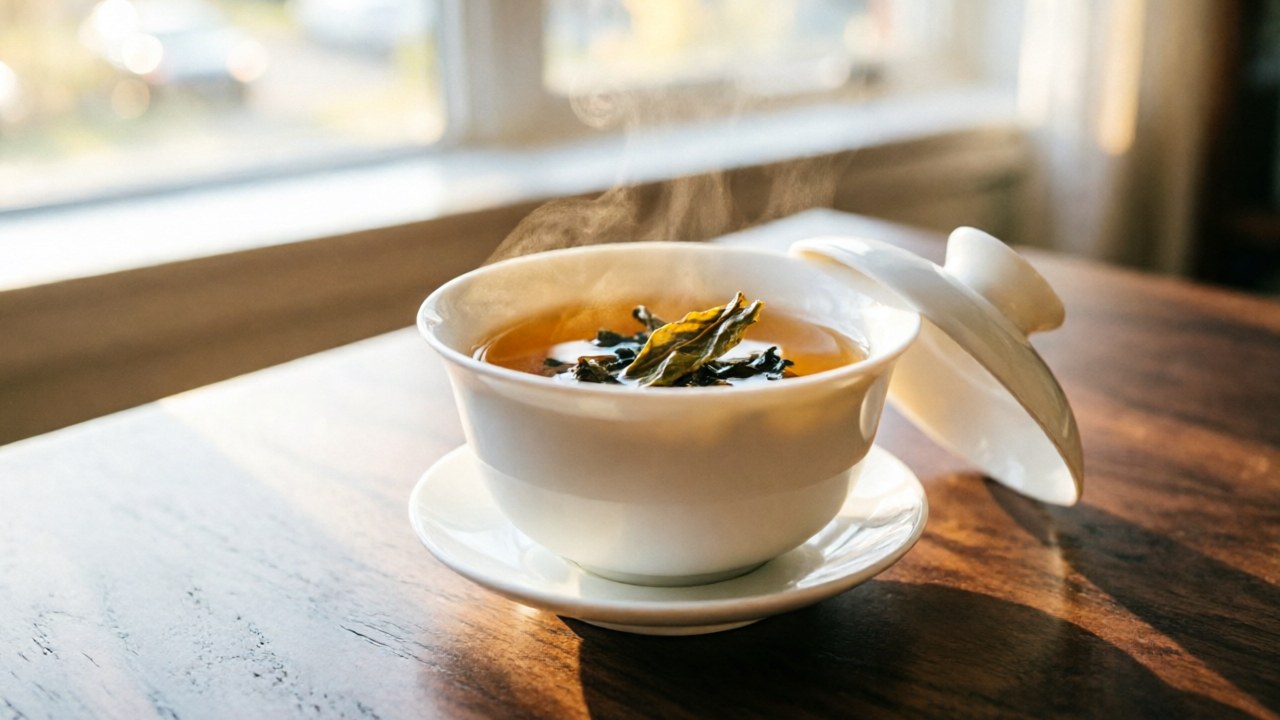
Oolong is half-oxidized — and that’s exactly why one temperature range doesn’t cover it. Leaf shape and roast level, not just the word “oolong,” determine how you brew. This guide splits oolong by shape, gives you both gongfu and Western paths, and maps specific parameters to Tieguanyin, Da Hong Pao, and other varieties you’ll actually find.
Why Oolong Needs a Shape-First Approach
Oolong spans a wide oxidation range — roughly 15% to 80% [1]. That’s the spread between a delicate High Mountain and a heavily roasted Wuyi rock tea. Most online guides give you a single temperature range and call it a day. But the leaf’s physical form matters just as much as its oxidation level.
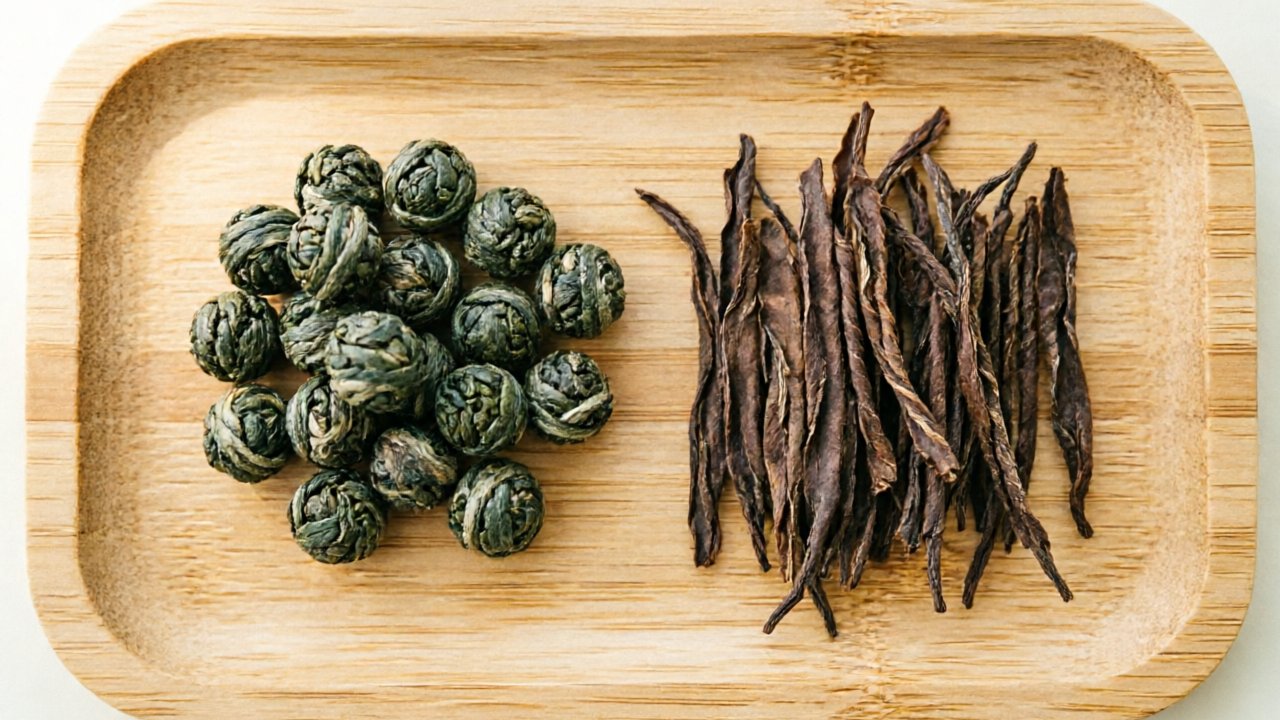
Rolled oolongs (like Tieguanyin) compress leaf into tight pellets that slowly unfurl over multiple infusions. Twisted strip oolongs (like Da Hong Pao) keep the leaf in long, flat strips that expand more gradually. These shapes change how water penetrates the leaf, which changes the steep time, temperature sweet spot, and how many infusions you can pull.
Once you start thinking in terms of shape and roast, oolong stops being a guessing game.
The Leaf-Shape Decision Tree
Before you heat water, look at your leaves.
Rolled Pellet Oolongs (Tieguanyin, High Mountain, Jin Xuan)
These come as tight, spherical balls — sometimes as small as a green pea. When hot water hits them, they expand dramatically, sometimes doubling or tripling in volume. That slow unfurling is what gives rolled oolongs their famous longevity in a gongfu session.
For practice, NASLAPH Tieguanyin is a solid entry point — it’s a classic rolled Anxi oolong that shows the unfurling progression clearly. If you want something lighter, VAHDAM High Mountain Oolong gives you a cleaner, more floral cup at lower temperatures.
Brew these cooler — 185–195°F (85–90°C) — and let each infusion run a few seconds longer than the last.
Twisted Strip Oolongs (Da Hong Pao, Dancong, Wuyi Rock)
These leaves look like dark, wiry strips. They don’t expand as dramatically, which means the first infusion extracts more flavor upfront. They also tend to be more heavily roasted, so they can take hotter water without turning bitter.
FullChea Da Hong Pao is an affordable way to practice with Wuyi rock tea — the roast is pronounced enough that you’ll learn to recognize how heat changes the cup.
Brew these warmer — 195–205°F (90–96°C) — and give the first steep a quick 5-second rinse to open the leaves.
Water Temperature by Oxidation and Roast
Here’s the practical breakdown:
| Oolong category | Oxidation range | Water temperature | Why |
|---|---|---|---|
| Light / green (Tieguanyin, High Mountain) | 15–30% | 185–195°F (85–90°C) | Lower heat preserves floral notes; higher heat turns them bitter |
| Medium (Dancong, some Jin Xuan) | 30–50% | 190–200°F (88–93°C) | Balanced extraction of aroma and body |
| Dark / roasted (Da Hong Pao, Wuyi rock) | 40–80% | 195–205°F (90–96°C) | Heat needs to penetrate the roast layer and reach the leaf underneath |
If your oolong has a heavy charcoal roast, do a 5-second rinse pour — fill the gaiwan, count to five, discard. This opens the roasted shell and lets the second infusion taste clean instead of smoky.
A variable-temperature kettle makes this much easier. The Chefman Temperature Control Kettle hits exact presets in the 185–205°F range. For a smaller footprint, the Seehot 850ml Compact Kettle offers five temperature settings and takes up minimal counter space.
If you only have a standard boil kettle, let boiled water sit for 30–60 seconds before pouring onto light oolongs, or 10–15 seconds for darker varieties.
The Gongfu Method — Short Infusions
Gongfu brewing is where oolong shines. The principle: use a lot of leaf, very little water, and very short steeps. Each pour captures a different layer of flavor.
What you’ll need:
- A small porcelain gaiwan (100–150ml) — the Woonsoon Jingdezhen Gaiwan is a good starting vessel
- Small tasting cups (2oz / 60ml) — a set like the Liang baobao Mini Cups works well
- About 5g of oolong leaf
- Water at the right temperature for your variety
The process:
- Warm the gaiwan and cups with a splash of hot water. Discard.
- Add 5g of leaf to the gaiwan. Shake gently — the aroma of dry leaf tells you what’s coming.
- Rinse: fill with hot water, immediately pour out (5 seconds). For rolled oolongs, you can drink this rinse — it’s often fragrant. For heavily roasted strips, discard it.
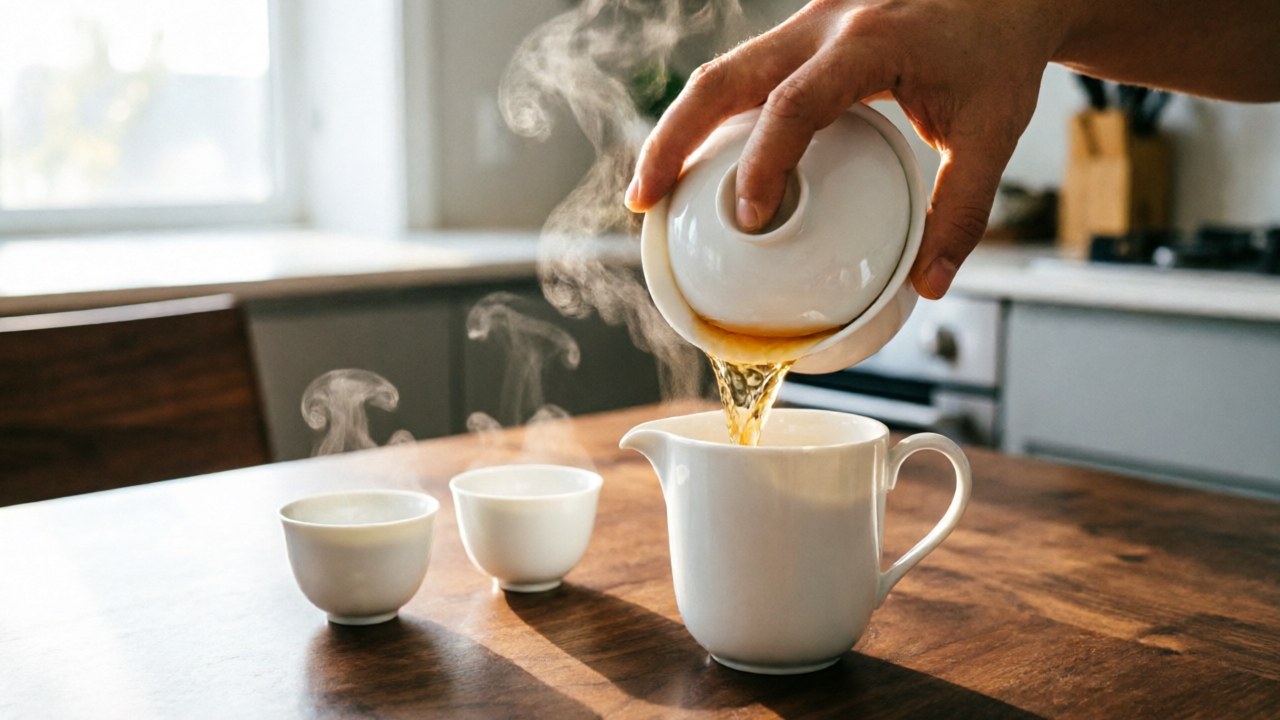
- First infusion: 10 seconds. Pour through the lid gap into a fairness pitcher or directly into cups.
- Second infusion: 15 seconds. Third: 20 seconds. Add 5 seconds per round.
- Continue for 6–10 infusions. Stop when the liquor thins out or turns hollow.
For a deeper look at the method, see our gongfu brewing fundamentals and the gongfu vs Western brewing comparison.
The Western Method — One Good Cup
Not every session needs to be a ten-round flight. Sometimes you just want a mug of oolong to drink at your desk.
What you’ll need:
- 2–3g of oolong leaf per 240ml (8oz) of water
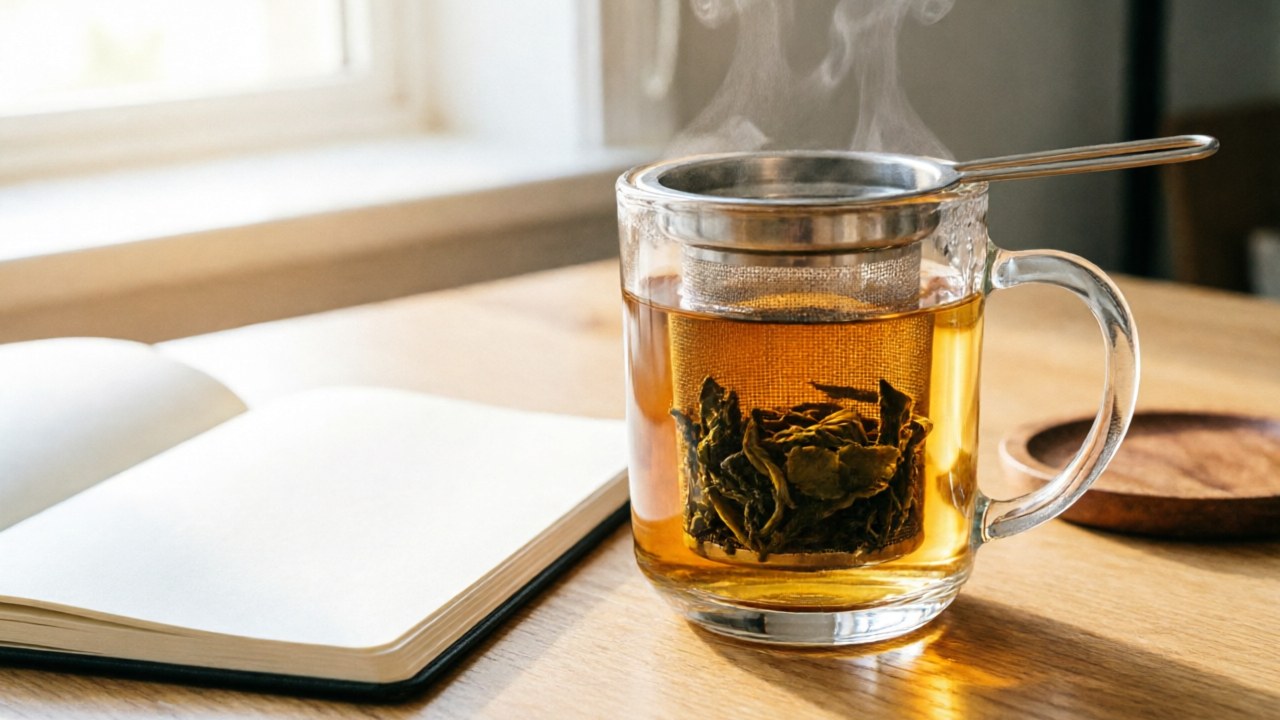
- A teapot or mug with an infuser basket
- Water at 190–200°F (88–93°C)
- A timer
- Place the leaf in your infuser. TIAN HU SHAN Oolong comes in a large 400g bag — good for ratio experiments without worrying about wasting expensive leaf.
- Pour water over the leaves and steep 2–3 minutes.
- Remove the infuser (or decant fully). Drink.
- Re-steep 2–3 times, adding 1 minute per round.
A simple timer takes the guesswork out. The Lily’s Home 3-in-1 Tea Timer has physical 3/4/5-minute dials — no app, no batteries to fuss with.
The trade-off: you won’t taste the subtle shifts that gongfu reveals, but you’ll get a satisfying, full-flavored cup with a fraction of the effort.
Variety-Specific Quick Parameters
Here’s a reference card for four common oolong varieties:
| Variety | Leaf shape | Oxidation | Temp | Gongfu ratio | Western steep |
|---|---|---|---|---|---|
| Tieguanyin | Rolled pellet | 20–30% | 190°F (88°C) | 5g / 120ml | 2 min |
| Da Hong Pao | Twisted strip | 40–60% | 200°F (93°C) | 5g / 100ml | 3 min |
| High Mountain | Rolled pellet | 15–25% | 185°F (85°C) | 5g / 120ml | 2 min |
| Dancong (Phoenix) | Twisted strip | 30–50% | 195°F (90°C) | 5g / 100ml | 2.5 min |
For more on individual varieties, see the Tieguanyin profile and Da Hong Pao profile.
Vessel Choice — Gaiwan vs Yixing
A porcelain gaiwan is the most versatile vessel for oolong. It’s neutral — it won’t absorb flavor — so you can brew Tieguanyin one session and Da Hong Pao the next without any carryover. The wide lid lets you smell the dry leaf, watch it unfurl, and pour with control. If you’re just starting out, a single gaiwan handles every oolong variety you’ll encounter.
Yixing clay teapots are a different beast. The porous clay absorbs tea oils over time, which means a pot “seasoned” with one type of oolong will subtly flavor every subsequent brew. This is desirable if you drink the same rock oolong every day — the pot builds character. But it makes yixing a poor choice for someone who switches varieties often.
For choosing your first brewing vessel, see our guide to choosing a gaiwan.
Common Mistakes
Water too hot for light oolong. Pouring boiling water on a High Mountain or lightly oxidized Tieguanyin extracts tannins fast, giving you a bitter, astringent cup that masks the floral notes. Drop 15–20°F and taste the difference.
One steep and dump. Oolong leaves — especially rolled ones — hold flavor for many infusions. Brewing once and throwing the leaf away wastes most of what you paid for. Even in Western style, you should get 3 solid steeps.
Wrong vessel size for gongfu. A 200ml teapot with 5g of leaf gives you a thin, weak cup in a gongfu session. Gongfu needs a small vessel (100–150ml) so the high leaf-to-water ratio produces concentrated flavor in short steeps.
Skipping the rinse on rolled oolongs. Those tight pellets need a few seconds of hot water to start opening. Without a rinse, your first real infusion will be uneven — some leaves steeped, others still dry.
Leaf-to-Water Ratio as a Skill
Getting the ratio right is the most impactful adjustment you can make for cup quality. Too little leaf and the tea tastes thin. Too much and even a 10-second steep turns bitter.
For gongfu, start at 1g per 20ml of vessel volume — that’s 5g in a 100ml gaiwan. Adjust by taste. If the first infusion is weak, add a gram. If it’s bitter, pull a gram out or shorten the steep.
For Western brewing, 2g per 240ml is a reliable starting point. For more on the fundamentals, read our leaf-to-water ratio guide and the first-cup brewing system.
One practical tip: weigh your leaf the first few times rather than using a scoop. Rolled oolongs are dense — a teaspoon of Tieguanyin pellets weighs more than a teaspoon of fluffy Da Hong Pao strips. Once your eye adjusts, you can switch to volume, but starting with a gram scale builds accurate habits.
Curious about caffeine content across tea types? See our caffeine by tea type reference.
References
[1] International Organization for Standardization. ISO 3103:2019 — Tea — Preparation of liquor for use in sensory tests. Defines standard tea infusion parameters by type, including oxidation ranges for oolong classification. https://www.iso.org/standard/73283.html
The Mind of Oolong Brewing
Oolong is the tea that teaches patience. Unlike green tea’s single window or black tea’s forgiving boil, oolong unfolds across many infusions — each one a slightly different cup. Listen to the leaves. They open at their own pace, and the reward for paying attention is a session that deepens with every pour.