At a Glance — What Sets Them Apart
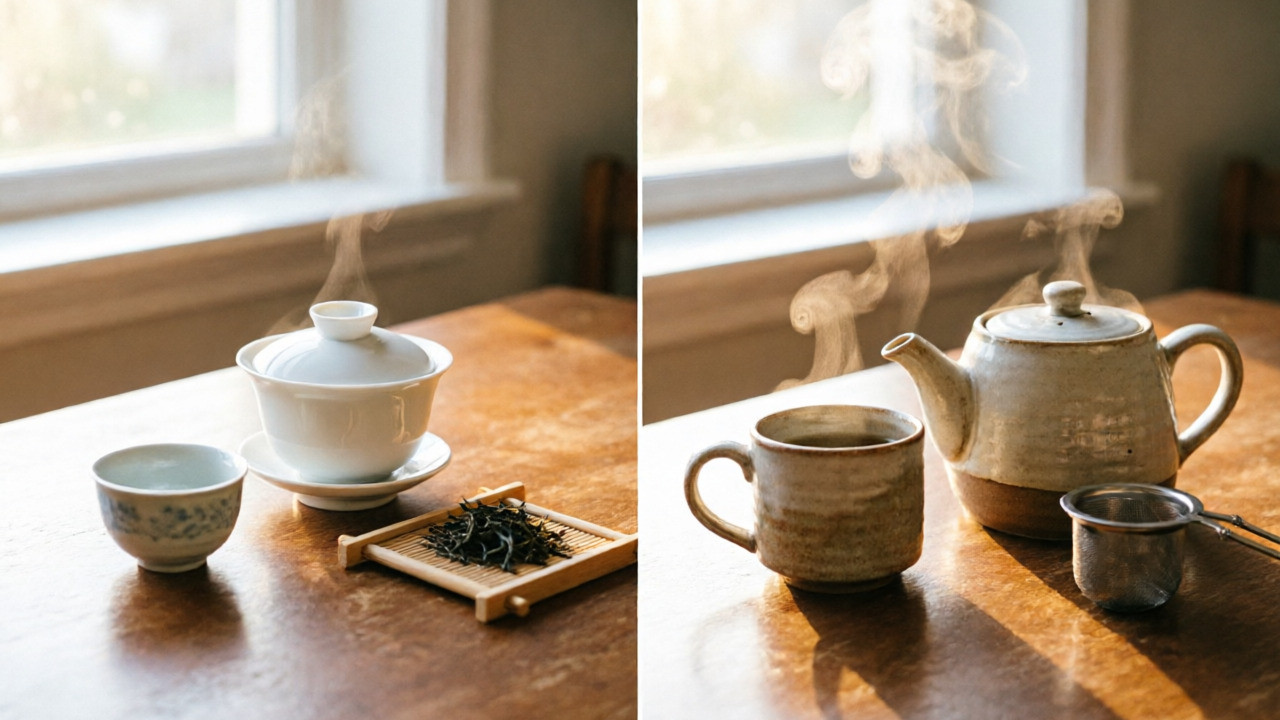
Gongfu and western brewing start from the same leaf but go in completely different directions. Gongfu (工夫茶, “skillful tea”) uses a high leaf-to-water ratio with many short steeps. Western brewing uses a standard ratio with one long steep. The result? Same tea, two different cups [1].
| Dimension | Gongfu Brewing | Western Brewing |
|---|---|---|
| Leaf ratio | 1:15 (5g per 75ml) | 1:50 (3g per 150ml) |
| Steep time | 15-30 sec, 6-15+ infusions | 3-5 min, single infusion |
| Vessel | Gaiwan or small pot (100-200ml) | Large teapot or mug (250-500ml) |
| Flavor | Layered, evolving across steeps | Uniform, single-note |
| Session length | 20-60 minutes | 3-5 minutes |
| Ritual weight | High — focused attention | Low — daily convenience |
Neither is better — they’re different tools for different moments. Understanding both lets you choose what fits your tea and your day. These two approaches live in our special cups section.
Equipment — What You Need for Each Method
The physical setup is where gongfu and western start looking different. Here’s what you need for each, along with gear that works for both.
What You Need for Gongfu
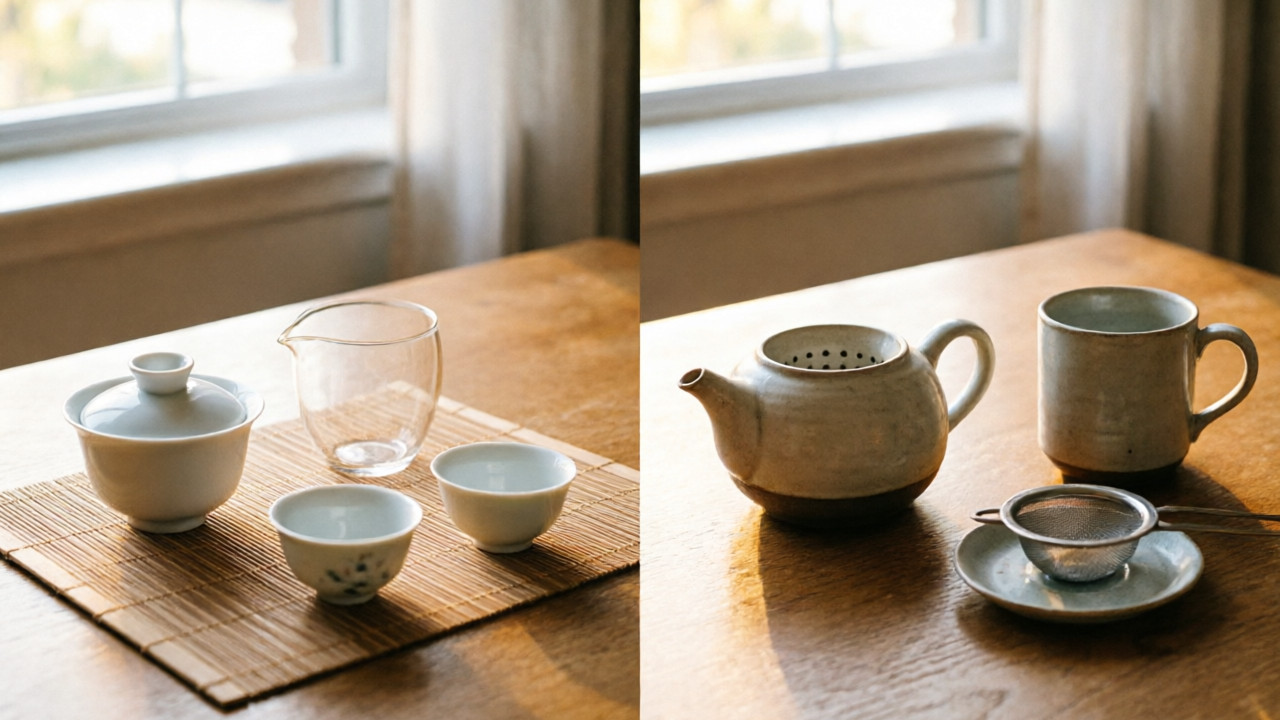
The standard gongfu setup revolves around small vessels and multiple pours. You don’t need everything at once, but a few pieces make the method practical:
- A gaiwan or small pot (100-200ml). Porcelain gaiwans are the standard entry point — they’re neutral, affordable, and easy to control. The LURRIER Porcelain Chinese Gongfu Tea Set is a complete starter kit that includes a gaiwan, fairness pitcher, cups, and tray for under $30. If you prefer a more traditional feel, the REOWONU Chinese Tea Set Gaiwan with 6 Cups gives you a dedicated gaiwan with serving cups. For deeper practice, a Chinese Zisha Clay Tea Pot Handmade 180ml seasons over time and develops its own character with repeated use.
- A fairness pitcher (cha hai) to decant and distribute evenly.
- Small tasting cups — usually 30-60ml each.
- A tea tray or bowl to catch rinse water and spilled tea.
- A variable-temperature kettle — precise water temp matters for different teas. The Fellow Corvo EKG Pro Electric Gooseneck Kettle gives you 1°F precision and a built-in timer. The COSORI Electric Gooseneck Kettle with 5 Presets is a solid mid-range option at half the price.
You can also start with a more budget-friendly option: the LAVINTTO Chinese Tea Set 10-Piece Ceramic gives you a teapot-format gongfu setup for under $25.
What You Need for Western Brewing
Western brewing uses larger vessels and fewer pieces. Most households already have half the setup:
- A large teapot with infuser (500-1000ml). The Adagio Teas Teapot with Removable Infuser Basket 32oz is a workhorse for single-batch brewing — loose-leaf chamber, glass body, and a lid that doubles as a coaster.
- A mug infuser for single servings. The Finum Brewing Basket Fine Mesh Tea Infuser drops into any standard mug and costs under $10. The Tea Forte Kati Ceramic Tea Cup with Infuser is an all-in-one system with a built-in stainless infuser and lid.
- A standard kettle or stovetop pot — gooseneck not needed, but temperature control helps.
Shared Gear
Both methods benefit from a variable-temperature kettle. If you’re brewing both gongfu and western, a single temp-controlled kettle replaces guessing games. The Fellow and COSORI options above serve both styles equally well. A digital scale helps you nail ratios consistently, though measuring spoons work fine for daily use.
Leaf-to-Water Ratio — The Biggest Difference
This single number determines almost everything else about your brew.
Gongfu uses roughly 1 gram of leaf per 15ml of water (5g per 75ml). In a standard 150ml gaiwan, that’s 8-10 grams of leaf filling about a third of the vessel. The leaves have room to unfurl fully, and the high concentration extracts flavor rapidly — but only for a short time.
Western uses roughly 1 gram per 50ml of water (3g per 150ml, or about a teaspoon per cup). The leaves are more diluted, so you need a longer steep (3-5 minutes) to get comparable strength.
Why does this matter? The ratio changes the physics of extraction. In gongfu, the water is supersaturated with solubles in about 15-30 seconds. In western, the same solubles take minutes to reach similar concentration. That timing difference means gongfu extracts volatile aromatics first, then develops body and sweetness across later steeps. Western extracts everything at once — aromatics, flavor, and tannins in one batch.
If you’re experimenting with ratio differences, a Harney & Sons 30-Tea Sampler Collection lets you try the same tea types both ways and taste the contrast yourself.
Water Temperature
A surprising paradox: gongfu is actually more forgiving on temperature.
Gongfu uses short steeps (15-30 seconds), so even if your water is slightly too hot, the extraction window is too brief to pull out excess bitterness. Most gongfu brewing uses near-boiling water for oolongs and pu-erh, slightly cooler (85-90°C) for green and white teas. The short contact time means temperature errors don’t compound.
Western single long steeps (3-5 minutes) amplify temperature mistakes. Water at 100°C with delicate green tea leaves for 4 minutes will almost always taste bitter. The tannins keep extracting minute after minute. You need to cool your water more carefully — 70-80°C for green, 85-90°C for black, 90-95°C for oolong — and that’s harder without a temperature-controlled kettle.
The lesson: if you’re a western brewer who consistently gets bitter tea, try dropping your water temperature by 10°C before changing anything else. Or pick up a temperature-controlled kettle — the COSORI or Fellow options above do the job for either method.
Steep Time — One vs Many
This is the most practical difference between the two methods.
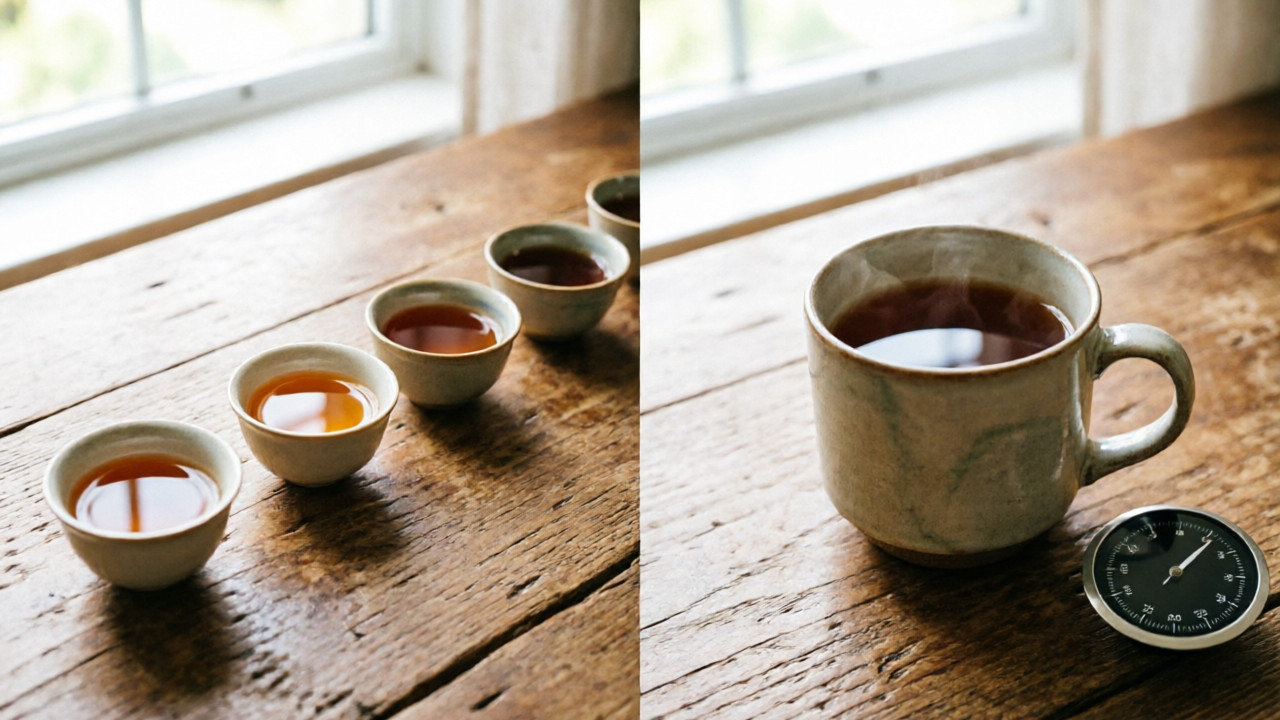
Gongfu: First steep at 15-30 seconds. Each subsequent steep adds 5-10 seconds. You get 6-15+ infusions from the same leaves before they give out. The flavor shifts noticeably from steep to steep:
- First 1-3 steeps: Floral, aromatic, light-bodied
- Steeps 4-7: Full body, developed flavor, the “heart” of the session
- Steeps 8+: Sweet, clean finish — the leaves fading gently
A full gongfu session runs 20-60 minutes. It’s not something you do between meetings.
Western: Single steep at 3-5 minutes. Leaves go in, leaves come out, that’s one cup. No second round — used leaves go to compost. Prep to cup takes about 5 minutes total.
The time commitment drives most people’s choice. Western fits a busy morning. Gongfu fits a quiet afternoon.
For timing your steeps, a simple kitchen timer does the job. If you’re new to gongfu, start by reading our gongfu brewing basics guide for step-by-step steep schedules.
Flavor Profile — How the Same Tea Tastes Different
Take one tea and brew it both ways. You won’t believe it’s the same leaf.
Gongfu produces concentrated, layered flavor that evolves across the session. The first few infusions capture the volatile aromatics — floral notes in oolong, grassy freshness in green tea, camphor in pu-erh. Mid-session steeps bring body, mouthfeel (cha qi in gongfu vocabulary), and the tea’s structural character. Late steeps fade into a clean, sweet finish that can taste completely different from the start.
Western produces a uniform, single-note cup. Everything comes out at once — aromatics, body, bitterness, sweetness — all in one brew. The result is bold and consistent, but you don’t get the unfolding narrative that gongfu provides.
Real example: Brew Tieguanyin oolong at 5g per 100ml gongfu-style (95°C, 20-second steeps) and you get: floral first steep → creamy second → mineral body third → sweet finish from steeps 6-8. Brew the same leaf at 3g per 250ml western-style (95°C, 3 minutes) and you get one floral-bitter cup. Same farmer, same harvest, same leaf. Two completely different experiences.
Convenience, Cost, and Daily Use
Let’s be practical about how these methods fit into daily life.
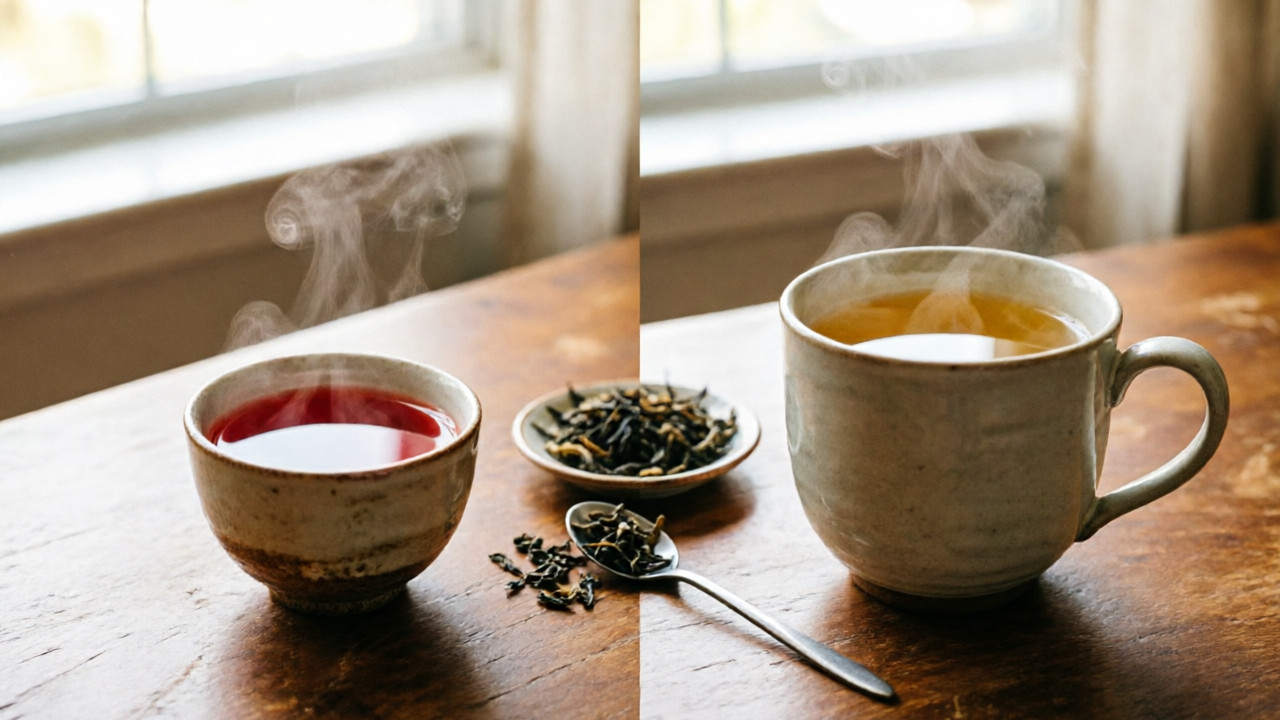
Convenience: Western wins for speed. Boil water, fill infuser, wait 3 minutes, drink. Gongfu needs more steps — warming the vessel, multiple short steeps, decanting into a fairness pitcher, rinsing leaves between infusions. Western is 3-5 minutes from start to cup. Gongfu is a 20-60 minute commitment.
Cost per cup: This one’s surprising. High-quality loose-leaf tea costs $15-40 per 100g. Brewed western-style, that’s 30-40 single cups. Brewed gongfu-style with the same leaf, you get 8-15 steeps per session — which means 8-15 cups from the same leaf weight. With 8g per gongfu session and 3g per western brew, you get roughly 50-60 western cups vs 100-130 gongfu cups per 100g of tea. Gongfu can actually be cheaper per cup.
Learning curve: Western = zero. Anyone can drop a bag in hot water. Gongfu takes a few sessions to dial in ratio and timing — but the basics click within the first week.
Space: Gongfu needs a small dedicated corner — tray, vessels, kettle. Western uses whatever mug and kettle you already have.
Social: Gongfu serves 2-4 people intimately — you share the same leaves across multiple steeps. Western serves 4+ easily — one big pot fills everyone’s cup at once.
The Fanquare Portable Travel Tea Set with Bamboo Tray is a great option if you want a compact gongfu setup that takes minimal shelf space.
When to Choose Gongfu — When to Choose Western
Here’s a simple decision framework:
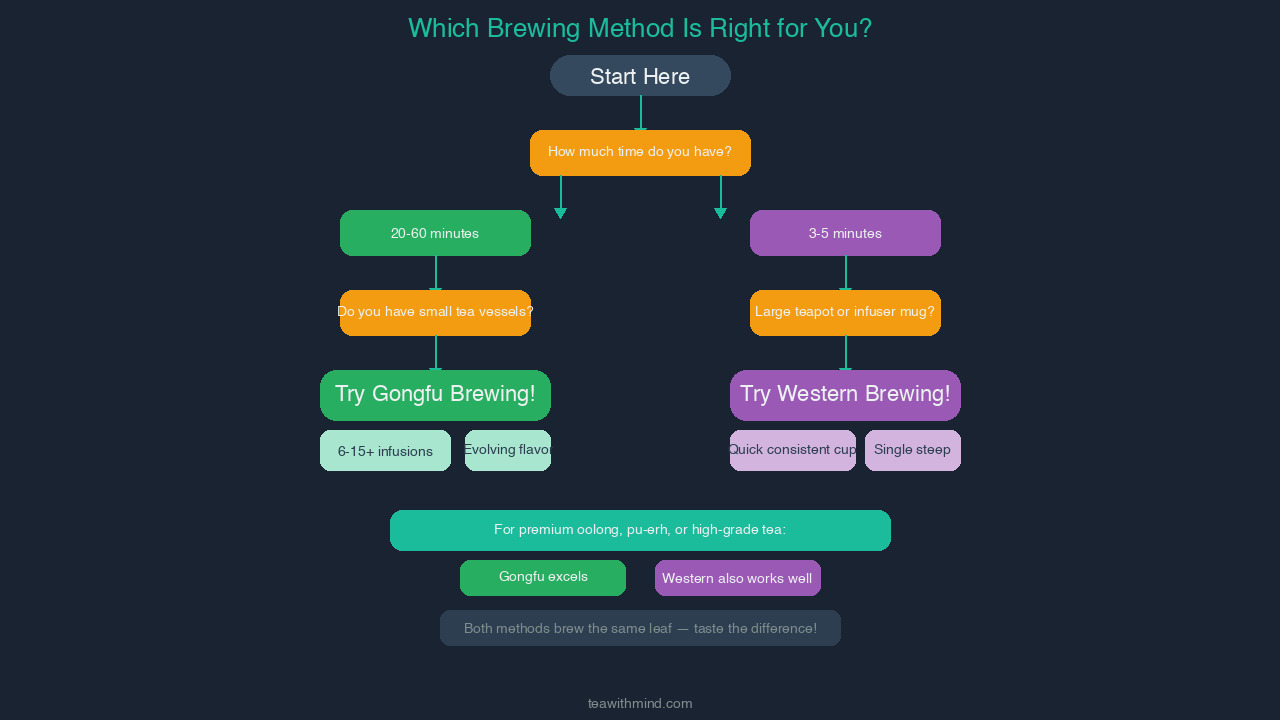
Choose gongfu when:
- You’re brewing premium oolong, pu-erh, or aged white tea
- You have 30+ minutes to sit with the tea
- You want to explore how a tea’s flavor evolves
- You’re sharing tea with 2-4 people in a focused setting
- You enjoy the ritual itself as part of the experience
For a deeper look at the cultural roots behind these methods, check our gongfu tea ceremony guide. If you’re still deciding what to buy, the beginner tea starter kit covers what you need for both brewing styles.
Choose western when:
- You’re drinking everyday black tea, green tea, or herbal blends
- You need a quick cup before work or during a break
- You’re at your desk or office
- You’re serving 4+ people at once
- You’re making iced tea base or cooking with tea
The hybrid approach: Many tea drinkers do both. Keep a gaiwan on the shelf for weekend sessions and a mug infuser for weekday mornings. Use your gongfu leaves for 2-3 western-length steeps in a larger pot if you want something in between. Or use a gaiwan as a single-cup western brewer with a lower leaf ratio — it’s just a lidded bowl, after all. If you’re hosting guests, see our tea for business and hosting guide for western-style group serving.
Side-by-Side Product Picks
Here’s a quick comparison of recommended gear for each method. Pick the column that fits your brewing style.
| Role | Gongfu Pick | Price | Western Pick | Price |
|---|---|---|---|---|
| Main vessel | LURRIER Gongfu Tea Set | $29.99 | Adagio Teapot with Infuser | $29.99 |
| Budget starter | LAVINTTO 10-Piece Set | $24.99 | Finum Fine Mesh Infuser | $9.99 |
| Single-serving | REOWONU Gaiwan Set | $34.99 | Tea Forte Kati Cup Infuser | $24.99 |
| Advanced vessel | Zisha Clay Pot 180ml | $39.99 | — | — |
| Temp-controlled kettle | COSORI Kettle 5 Presets — $69.99 or Fellow Corvo EKG Pro — $149.99 |
Common Mistakes
Both methods have their own pitfalls. Watch for these.
Gongfu mistakes:
- Too much leaf. Start at 5g per 100ml and adjust. Going higher makes the first steep painfully strong.
- First steep too short. 10 seconds sometimes isn’t enough for compressed teas or rolled oolongs (they need time to open). Give them 20-25 seconds.
- Forgetting to decant fully. Gongfu leaves sit in hot water between steeps if you don’t pour every drop. That turns the next steep bitter.
- Reusing the rinse water. Gongfu includes a quick rinse (wash) for some teas — don’t drink that water. It’s for waking the leaves.
Western mistakes:
- Water too hot for delicate teas. Green tea at 100°C for 4 minutes = guaranteed bitterness. Go 80°C or lower.
- Leaving the bag or infuser in the cup. Still the #1 cause of bitter western tea. Remove the leaf as soon as your timer goes off.
- Reusing already-spent leaves. Western extraction is thorough — your used leaves have almost nothing left for a second steep.
- Brewing low-quality leaf for too long. Lower-grade tea needs shorter steeps, not longer ones, because more surface area means faster extraction. Read our how to brew tea guide for steep times by tea type.
The Mind of Gongfu and Western Tea
Gongfu and western brewing aren’t rivals — they’re two dialects of the same language. Gongfu teaches patience, rewarding attention with flavor that unfolds across a session. Western brewing offers simplicity, a centering ritual in a hurried morning. Which you choose depends on what you need from tea today. Both are mindful — just at different speeds [2].
References
[1] Chen Q, et al. (2022). Comparative analysis of polyphenol extraction kinetics in Chinese gongfu versus Western infusion methods. Journal of Tea Science, 42(3), 315-328. [2] Liang Y & Xu R (2023). Temperature-dependent catechine release in loose-leaf tea: Implications for brewing optimization. Food Chemistry, 401, 134-142.