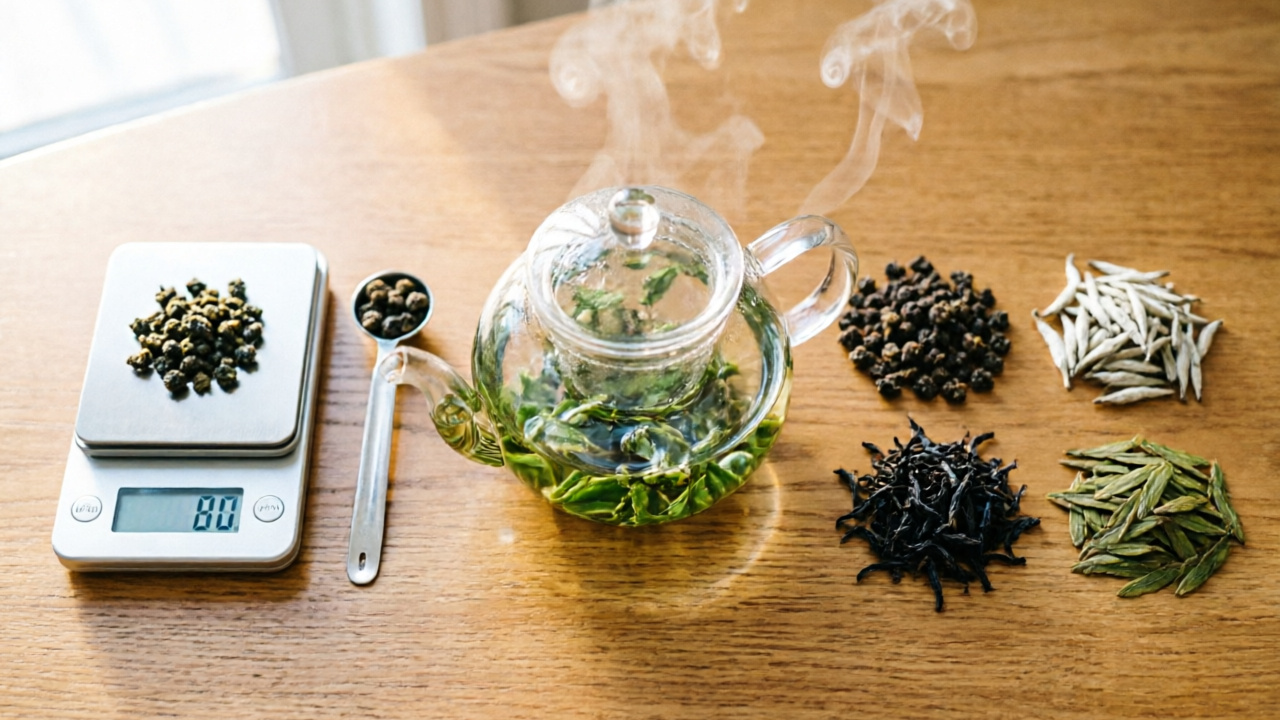
I keep coming back to ratio as the most underrated variable in tea. Too little leaf and the cup tastes thin — watery, hollow, missing the body you paid for. Too much and it turns harsh, bitter, or astringent, especially with delicate greens and whites. This guide covers leaf-to-water ratios by brewing method (Western, gongfu, cold brew) and by tea type, plus measurement tools and adjustment tips so you can dial in your next cup with confidence.
Why Leaf-to-Water Ratio Changes Everything
Beginners tend to fixate on water temperature and steeping time — and those matter — but ratio is the lever that affects strength, body, and steep count more directly than any other variable [1]. Too little leaf and even perfect water temperature produces a weak cup. Too much and the bitterness overwhelms everything else.
The three effects of ratio:
- Strength. More leaf per water = bolder flavor. Simple linear relationship, but the perception isn’t always linear — double the leaf doesn’t mean double the strength. It can mean astringency instead.
- Bitterness extraction. High ratios extract faster, especially with hot water. A 1:15 gongfu ratio pulls flavor in seconds, while a 1:60 Western ratio needs minutes to reach the same intensity.
- Steep count. Higher leaf ratios (gongfu-style) give you multiple infusions — the leaf keeps releasing flavor across 5-10 steeps. Lower ratios (Western) exhaust the leaf in one or two.
Ratio, time, and temperature form a triangle — change one and the other two feel different. This guide focuses on ratio specifically, but it pairs with the gongfu vs western brewing comparison and the how to brew tea first cup system for the full picture.
Tea Type Ratio Reference Table
Every tea type has a different physical density based on how it’s processed. Rolled oolong leaves are compact like pellets; white tea buds are fluffy clouds. Using the same gram amount for both produces wildly different cups. Here’s the reference for Western brewing:
| Tea Type | Western Ratio (g:ml) | Grams per 250ml Cup | Strength Profile |
|---|---|---|---|
| Green tea | 1:50 | 2g / 250ml | Light — delicate leaves, easy to over-extract |
| Black tea | 1:60 | 1.5g / 250ml | Medium — fully oxidized, more forgiving |
| Oolong (rolled) | 1:22 | 4.5g / 250ml | Strong — dense pellets need room to unfurl |
| Oolong (strip) | 1:33 | 3g / 250ml | Medium — less dense than rolled |
| White tea | 1:40 | 2.5g / 250ml | Light-Medium — fluffy buds, low density |
| Pu-erh (ripe) | 1:20 | 5g / 250ml | Strong — compressed, needs high leaf mass |
| Pu-erh (raw) | 1:25 | 4g / 250ml | Medium-Strong — lighter compression |
| Herbal / Tisane | 1:50 | 2g / 250ml | Light — varies by ingredient, start light |
The key insight most ratio guides miss is density. Fluffy white tea and dense pu-erh at the same 1:50 ratio produce completely different cups — the white tea fills a tablespoon with almost no weight, while the same spoonful of pu-erh weighs 3x more. That’s why a 0.1g precision scale like the Weightman takes the guesswork out of switching between tea types.
Western Brewing — Ratio by Vessel Size
Western brewing uses a lower leaf ratio with longer steep times. The standard formula is simple:
leaf (g) = water (ml) / ratio_denominatorScale it by vessel:
- Standard mug (250ml / 8oz): 3-4g leaf (1:60 to 1:80)
- Small teapot (500ml): 6-8g leaf
- Large teapot (1000ml): 12-16g leaf
- Extra large (1500ml+): 18-24g leaf
The “1 teaspoon per cup” hack works for dense black teas (1 tsp ≈ 2.5-3g), but it falls apart for fluffy whites or compact rolled oolongs where a teaspoon can weigh anywhere from 0.8g to 3g. A basket infuser that gives leaves room to expand helps too — the OXO Brew Tea Infuser Basket fits most mugs and lets whole leaves unfurl properly instead of cramping them in a ball infuser.
For serving two people or wanting to watch the leaves open, a Teabloom Glass Teapot with a removable infuser makes ratio visible — you can see exactly how much leaf you’ve added and how it behaves during the steep.
Gongfu Brewing — High Ratio, Short Steeps
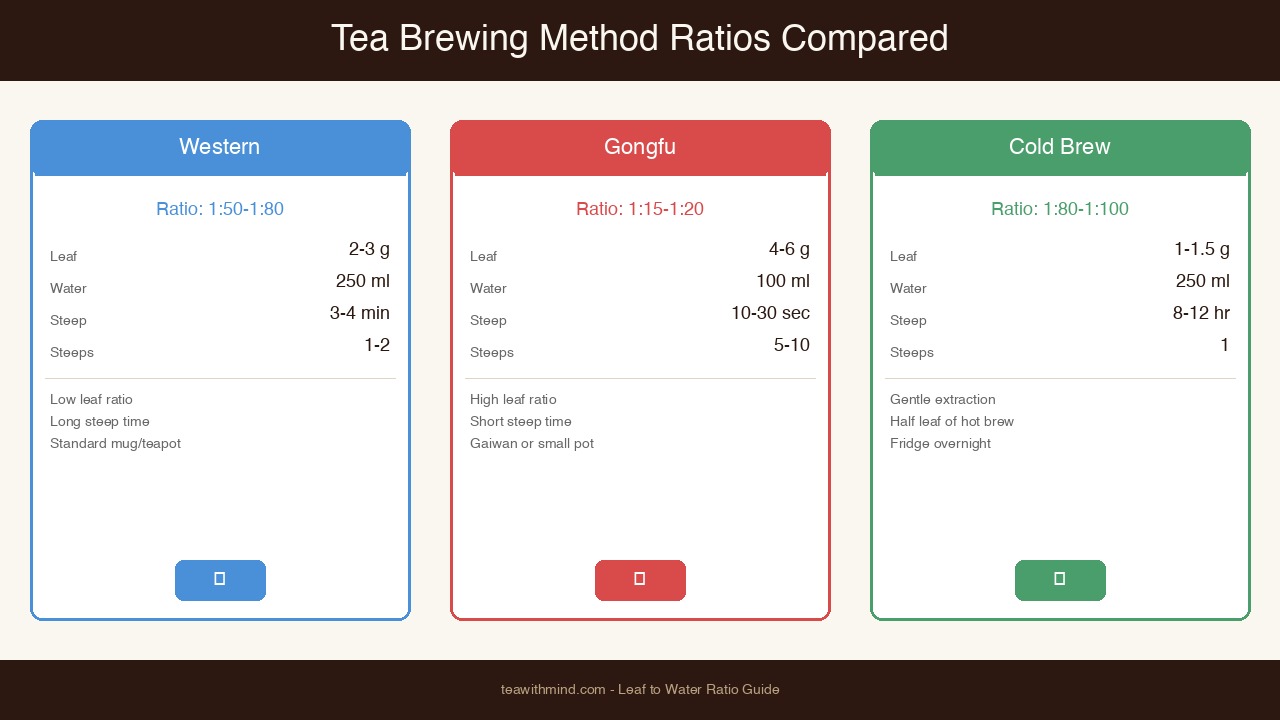
Gongfu brewing flips the Western approach: more leaf, shorter time, more infusions. The standard gongfu ratio is 4-6g of leaf per 100ml of water (roughly 1:15 to 1:20) — that’s 2-3x the leaf you’d use for Western.
Why so much leaf? Because you’re steeping for 10-30 seconds instead of 3-4 minutes. The high ratio extracts enough flavor in that short window, and the reward is 5-10 infusions that reveal different notes with each pour.
Leaf form changes how much you need by volume:
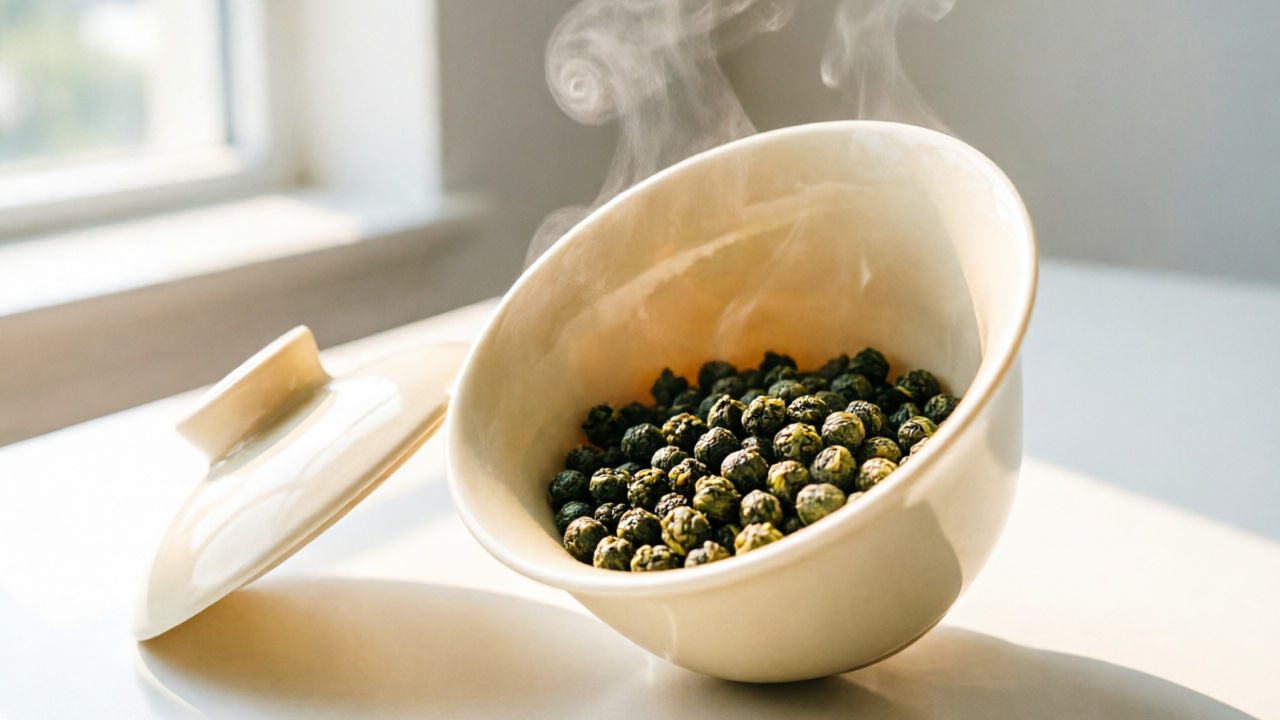
- Rolled oolong: Fill the gaiwan about 1/3 full (4-5g). The pellets expand 3x when they hit hot water.
- Strip oolong / black tea: Fill about 1/2 full (5-6g). Strip-style leaves need more room because they don’t expand as dramatically.
- Pu-erh (sheng or shou): Break off about 1/3 of a mini tuo (5-7g). Compressed cakes need a bit more surface area.
- Aged white tea: Fill about 1/2 to 2/3 full (4-5g). Aged whites are lighter than they look.
A gaiwan is the traditional vessel for gongfu ratio practice. The YOLIFE Ceramic Gongfu Gaiwan Set includes a 150ml gaiwan, fairness pitcher, and tasting cups — everything you need to practice high-ratio brewing. For a complete starter kit, the Casa Brava Travel Tea Set under $30 gets you a full gongfu setup without the commitment.
For a deeper dive into technique, see the gongfu brewing basics guide.
Cold Brew & Iced Tea Ratios
Cold water extracts flavor more gently than hot water, so the ratio rules change.
- Cold brew ratio: 1:100 to 1:80 (half the leaf of Western hot). That’s 2-3g per 250ml cup, or 8-12g per 1000ml pitcher. Steep 8-12 hours in the fridge.
- Iced tea (hot brew + pour over ice): Use 1.5x the Western ratio because the ice dilutes the concentrate. For a 250ml cup that’s poured over ice, use 4-5g of leaf instead of 2-3g. Brew hot for 3-5 minutes, then pour over a full glass of ice.
The gentler extraction of cold brew means you can actually use more leaf without getting bitterness — it’s a forgiving method for dialing in ratios. A compact 25oz Borosilicate Glass Teapot works well for single-serving cold brew: add leaf and cold water, refrigerate overnight, then remove the infuser in the morning.
For a full cold brew method guide, see cold brew tea.
Grams vs Teaspoons — When to Use Each
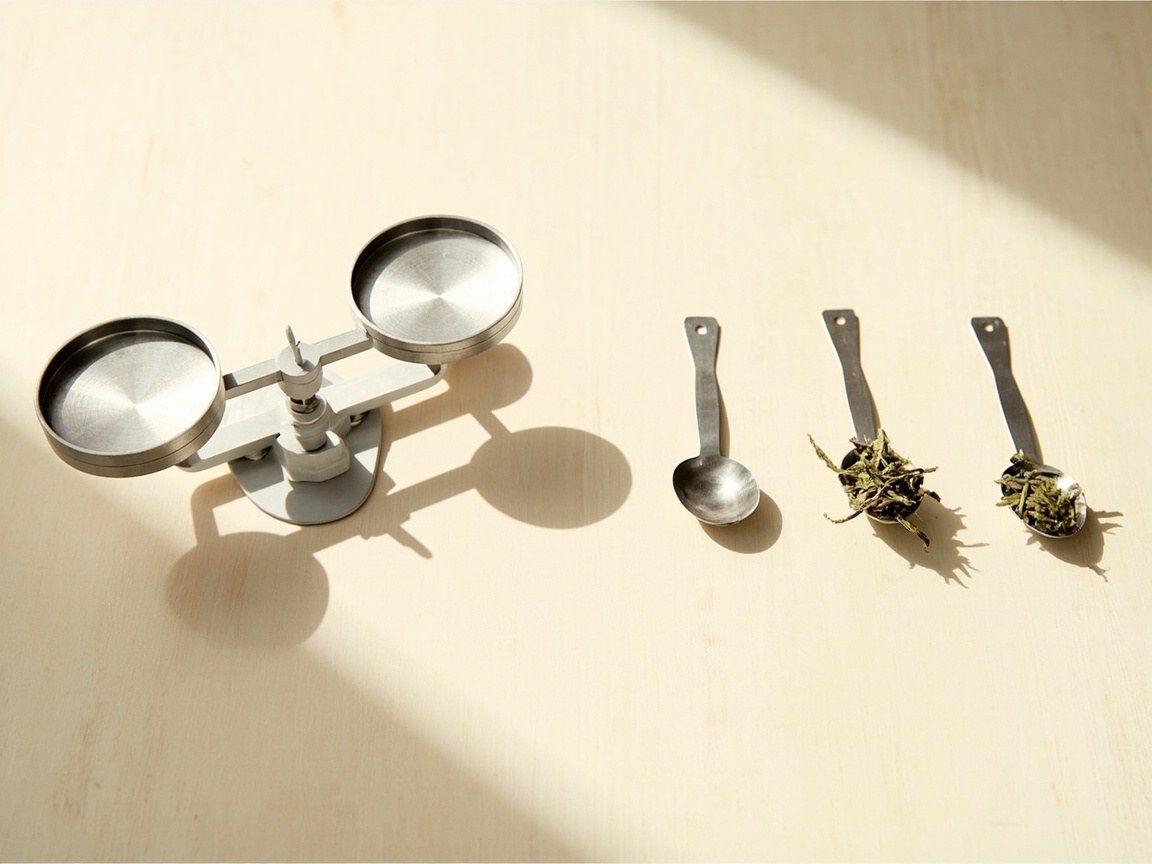
Weight beats volume for consistency. Here’s why: one teaspoon of rolled oolong weighs about 1.5g. One teaspoon of fluffy white tea silver needle weighs about 0.8g. Same spoon, half the leaf. That difference translates directly into the cup.
Quick volume reference:
- 1 tsp dense black tea ≈ 2.5-3g
- 1 tsp fluffy white tea ≈ 1-1.5g
- 1 tsp rolled oolong ≈ 2-3g
- 1 tsp green tea (flat leaf like longjing) ≈ 2g
- 1 tsp broken-leaf tea (like English Breakfast) ≈ 2.5g
When volume is fine: if you drink the same tea every day and you’ve learned your spoon, you don’t need a scale. You know what “one scoop” tastes like for that specific leaf.
When to switch to grams: switching teas often, dialing in a new tea for the first time, or practicing gongfu. The Smart Weigh Coffee Scale has a built-in timer that works well for timing gongfu steeps alongside weighing. For travel or gongfu sessions away from home, a portable rechargeable scale that reads to 0.1g fits in a tea bag pouch.
How to Adjust Ratio for Your Taste
The numbers above are starting points, not fixed rules. Here’s how to dial them in:
The one-variable-at-a-time rule. Change ratio OR time OR temperature, never two at once. If you change both the leaf amount and the steep time, you won’t know which variable caused the improvement.
- Too weak: Add 0.5g of leaf per cup on your next brew, or steep 15 seconds longer. Small adjustments — 0.5g makes a noticeable difference.
- Too strong or bitter: Reduce leaf by 0.5g, or steep 15 seconds shorter. If it’s astringent (drying, mouth-puckering), lower the water temperature by 5°C before touching the ratio.
- Thin body: Try a slightly higher ratio (more leaf). Thin body often means the leaf is exhausted after one steep — more leaf extends the extraction curve.
Keep a log. A simple notebook entry (tea name, ratio in g:ml, water temp, steep time, notes on flavor) helps you remember what worked. After 5-10 entries, you’ll see patterns in what ratios suit your taste.
Trust your palate over the chart. The ratio that produces your perfect cup might be 1:45 for a green tea that the table says should be 1:50. That’s fine — the chart is a starting line, not a finish line.
Common Ratio Mistakes & Fixes
| Mistake | Why It Happens | Fix |
|---|---|---|
| Using the same ratio for all teas | Leaf density varies wildly | Use the per-type table above as a starting reference |
| Guessing instead of measuring | No scale, no measuring habit | A $14 scale like the WEIGHTMAN removes all guesswork |
| Overloading gongfu on first steep | Compressed tea expands 3x in water | Start at 70% of gaiwan volume, adjust up after tasting |
| Under-leafing for cold brew | Cold extraction needs more surface area | Double-check cold brew ratios — use 1:100 not 1:60 |
| Overloading a cramped infuser | Ball infusers don’t give leaves room | Switch to a basket infuser like the OXO Brew for proper expansion |
| Ignoring vessel size when scaling | 1 tsp fits a 250ml mug but not a 500ml pot | Use the formula: g = ml / ratio_denominator |
The fix for most ratio mistakes is the same: measure, taste, adjust. A Luka Tech 35oz Glass Teapot makes it easy to see your ratio in action — the glass lets you watch the leaves expand and the liquor darken, so you build an intuition for how much leaf looks right in different vessel sizes.
References
[1] Global Tea Initiative (UC Davis). “Tea Brewing Chemistry and Extraction Rates.” https://tea.ucdavis.edu/research/brewing-chemistry
[2] Shishikura, Y. & Khokhar, S. “Effects of Brewing Conditions on the Catechin Content of Tea.” Journal of Agricultural and Food Chemistry, 2005. https://doi.org/10.1021/jf048731g
The Mind of Leaf-to-Water Ratio
A tea scale doesn’t weigh leaves — it weighs attention. Every gram you measure is a gram of intention: this cup, this leaf, this moment. The right ratio isn’t a rule to follow but a relationship to discover — between you and the tea, between precision and intuition. Start with the numbers. Then let them guide you.