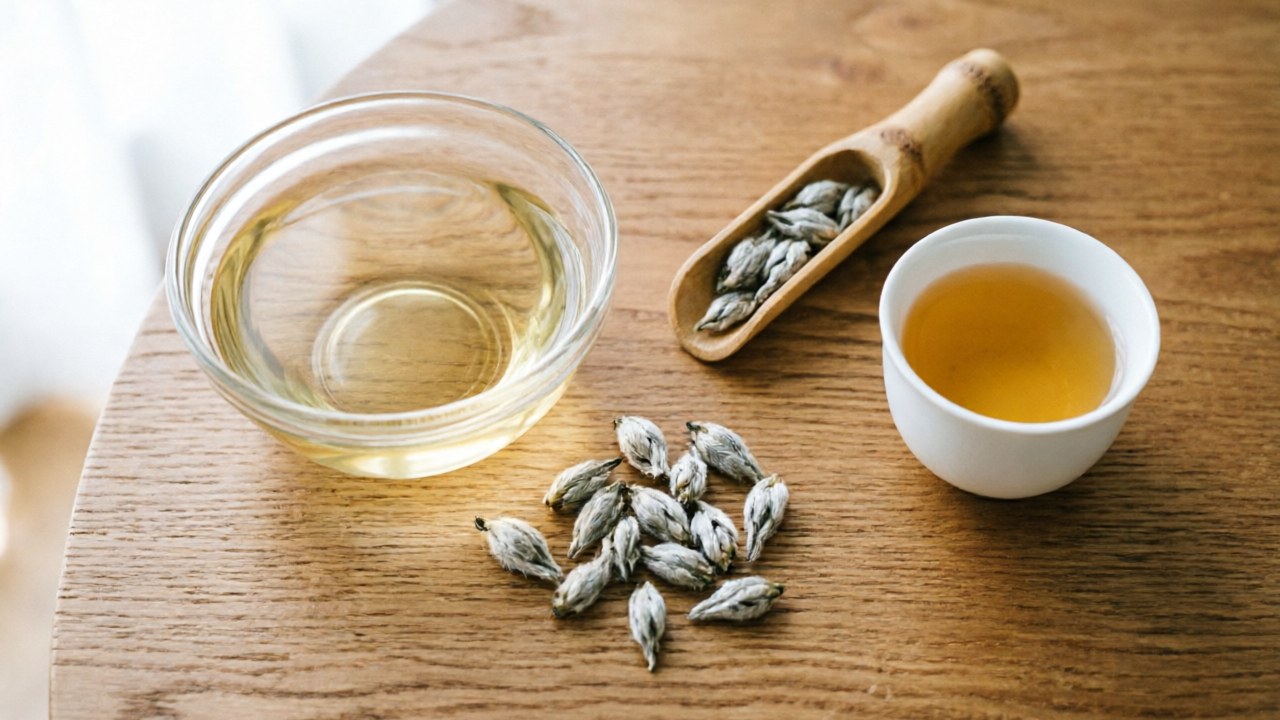
White tea is the least processed of all tea classes — just withered and dried, no oxidation, no rolling [1]. That minimal handling means the buds and leaves keep their delicate structure, and brewing is less about extraction and more about gentle coaxing. The variety changes everything: fresh Silver Needle wants 75°C, Bai Mu Dan takes 85°C, while aged Lao Bai Cha flips the script entirely and demands near-boiling.
This isn’t the all-leaf first cup system. It isn’t the green tea brewing path either, though white and green share a temperature neighborhood. Here we stay on white tea only — variety-specific params, two brewing paths, the aging paradox, and the patience that white tea rewards.
Why White Tea Needs a Different Touch
White tea is defined by what doesn’t happen to it. The leaves are plucked, withered, and dried — no pan-firing like green tea, no oxidation like black. That minimal processing preserves fine downy hairs on the buds and a fragile cell structure that breaks down fast under heat [1].
Four brewing profiles dictate your approach:
- Silver Needle (Yin Zhen): bud-only, covered in silver-white down, the most heat-sensitive of all teas
- Bai Mu Dan (White Peony): bud plus one or two leaves, slightly hardier, more flavor depth
- Shou Mei: larger leaves, often a precursor to aging, handles higher temperatures and longer steeps
- Lao Bai Cha (aged white tea, 3–20+ years): slow enzymatic transformation over years creates new compounds — the leaves darken from silver-green to amber-brown, and the cup shifts from floral to honey, dates, and medicinal sweetness [3]
The common trap is treating all white tea the same way. Boiling water scorches fresh Silver Needle buds and releases bitter tannins — but that same 100°C water is exactly what Lao Bai Cha needs. The window between “bland and thin” and “scorched and bitter” is narrower for fresh white tea than any other tea class. White tea’s low oxidation means bitterness arrives fast at high temps. Aged white tea is the exception: years of slow enzymatic change make it heat-tolerant and complex [3].
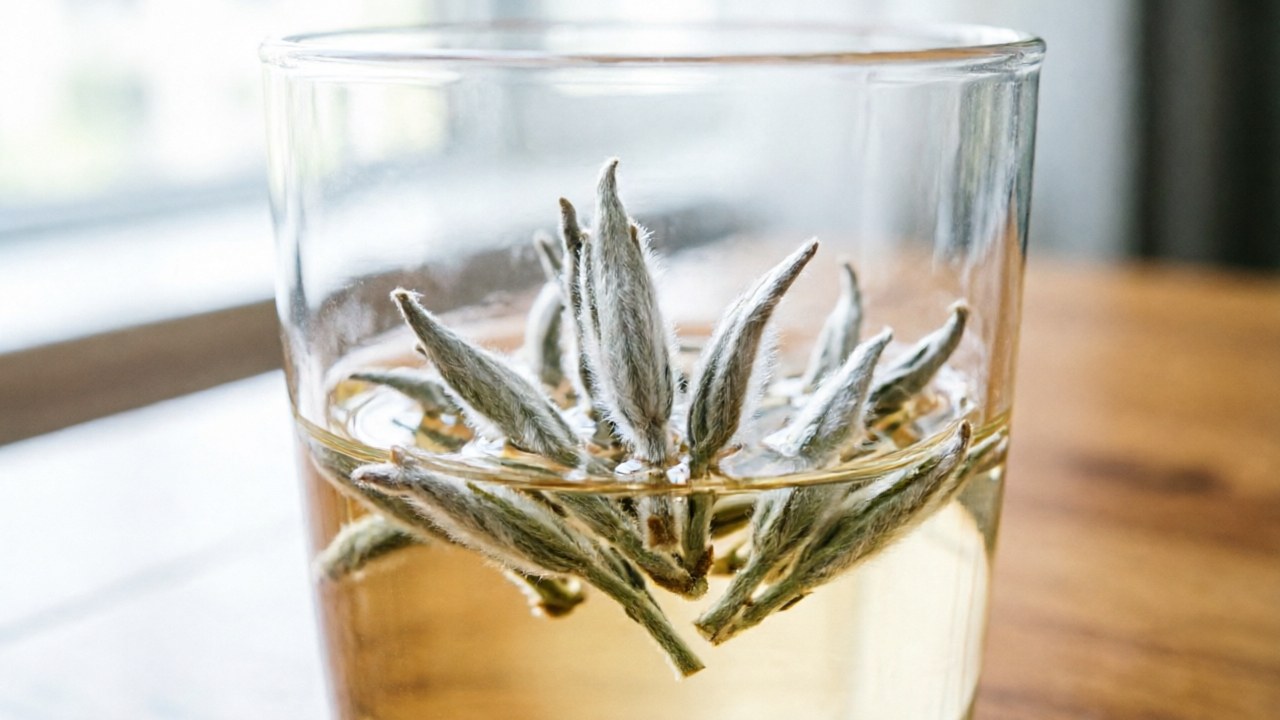
Quick Reference — Temperature and Ratio by Variety
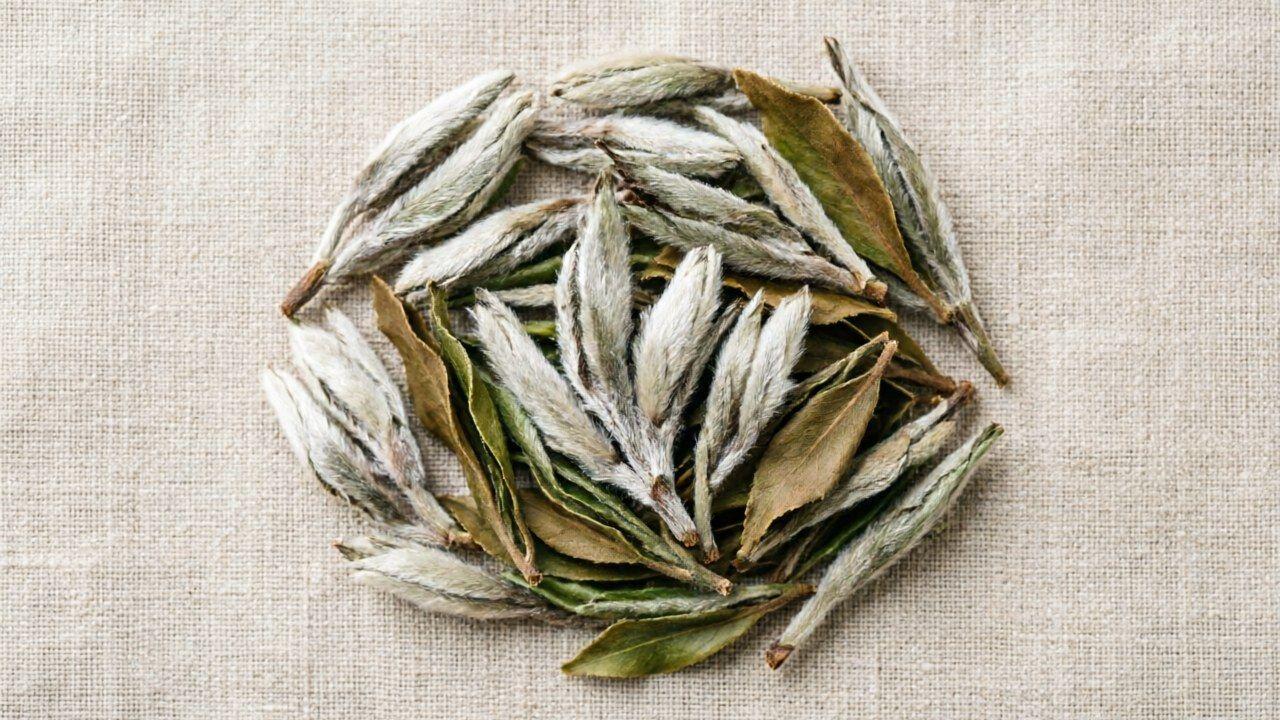
Bookmark this table — you’ll come back to it every session.
| Variety | Water Temp | Leaf / 100ml (gongfu) | Leaf / 240ml (Western) | First Steep | Re-steeps |
|---|---|---|---|---|---|
| Silver Needle (fresh, bud-only) | 75–80°C / 167–176°F | 2g | 2g | 30s gongfu / 3–5 min Western | 5–7 |
| Bai Mu Dan (fresh, bud+leaf) | 80–85°C / 176–185°F | 2g | 2g | 20s gongfu / 2–3 min Western | 4–6 |
| Shou Mei (fresh, leaf-heavy) | 85–90°C / 185–194°F | 3g | 3g | 15s gongfu / 2 min Western | 6–8 |
| Lao Bai Cha (aged 3+ years) | 95–100°C / 203–212°F | 3–4g | 3g | 15s gongfu / 2–3 min Western | 8–12+ |
For different vessel sizes, use the brewing ratio tool. Set a timer with the steeping time tool — white tea doesn’t forgive “forgot about it.”
Gongfu Method — Flash Steeps for White Tea
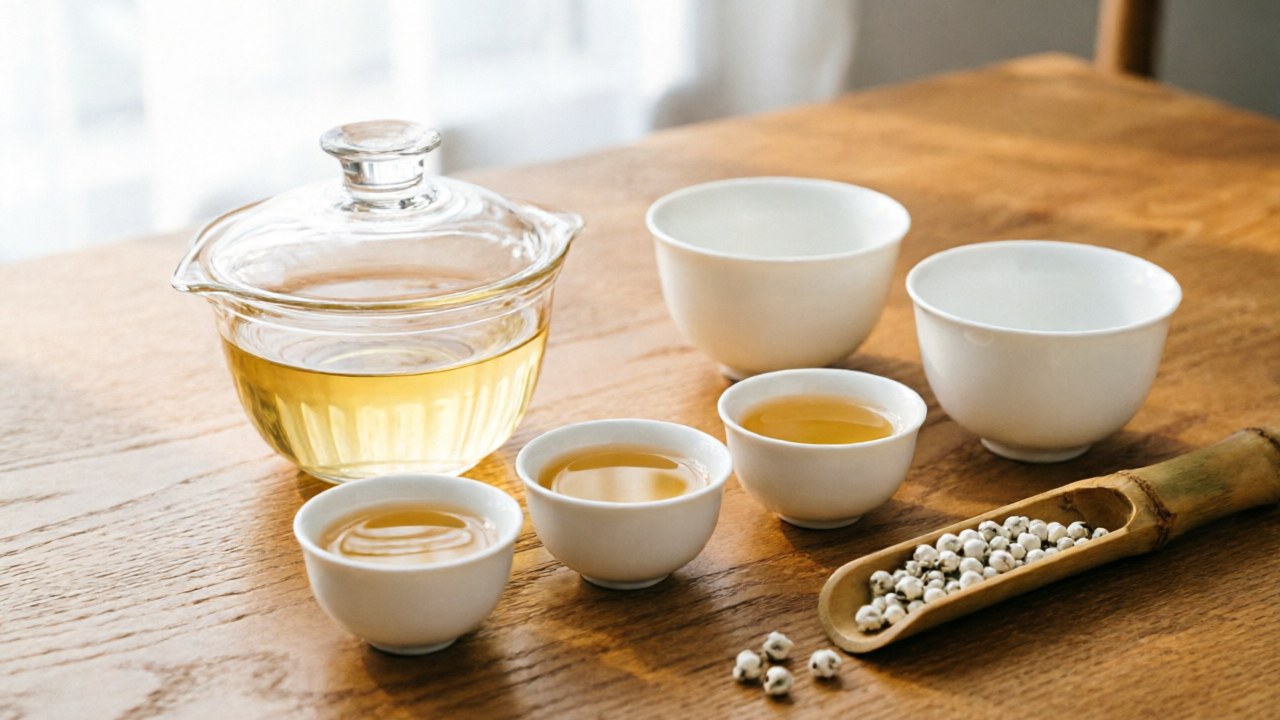
A small vessel and short steeps let you taste each infusion separately. White tea changes character dramatically across 5–7 steeps (fresh) or 8–12+ (aged) — from airy floral to honeyed stone fruit to medicinal date sweetness in Lao Bai Cha. That progression is the whole point of gongfu for white tea.
Vessel: A glass gaiwan is ideal for fresh white tea. You can watch Silver Needle buds drift and unfurl, which is half the experience. A 100–150ml gaiwan keeps ratios manageable — the Woonsoon 170ml glass gaiwan hits the sweet spot. For Lao Bai Cha, switch to porcelain or clay — heat retention matters more than the visual at near-boiling temps.
Steps (fresh white tea):
- Warm the gaiwan — pour hot water in, swirl 5 seconds, discard. Cold porcelain steals heat from your first steep.
- Add leaf — 2g of Silver Needle or Bai Mu Dan per 100ml. The buds look voluminous but weigh almost nothing — use a scale, not a teaspoon.
- Heat water — 75–80°C for Silver Needle, 80–85°C for Bai Mu Dan. The Chefman temp-control kettle removes the guesswork.
- Awakening steep (optional) — 10 seconds, discard. Opens the leaf structure for even extraction.
- Drink steeps — start at 20–30 seconds, add 5–10 seconds each round. Notice the shift: steeps 1–2 are light and airy (honeydew), steeps 3–4 peak in floral sweetness, steeps 5–7 turn gentle and slightly woody.
- Decant fully each time — never leave water sitting on the leaf between steeps.
Want the full set? The REOWONU gongfu tea set includes a gaiwan plus cups for multi-infusion sessions. The porcelain also retains heat well when you move on to Lao Bai Cha.
Western Method — One Cup, Patient Steeping
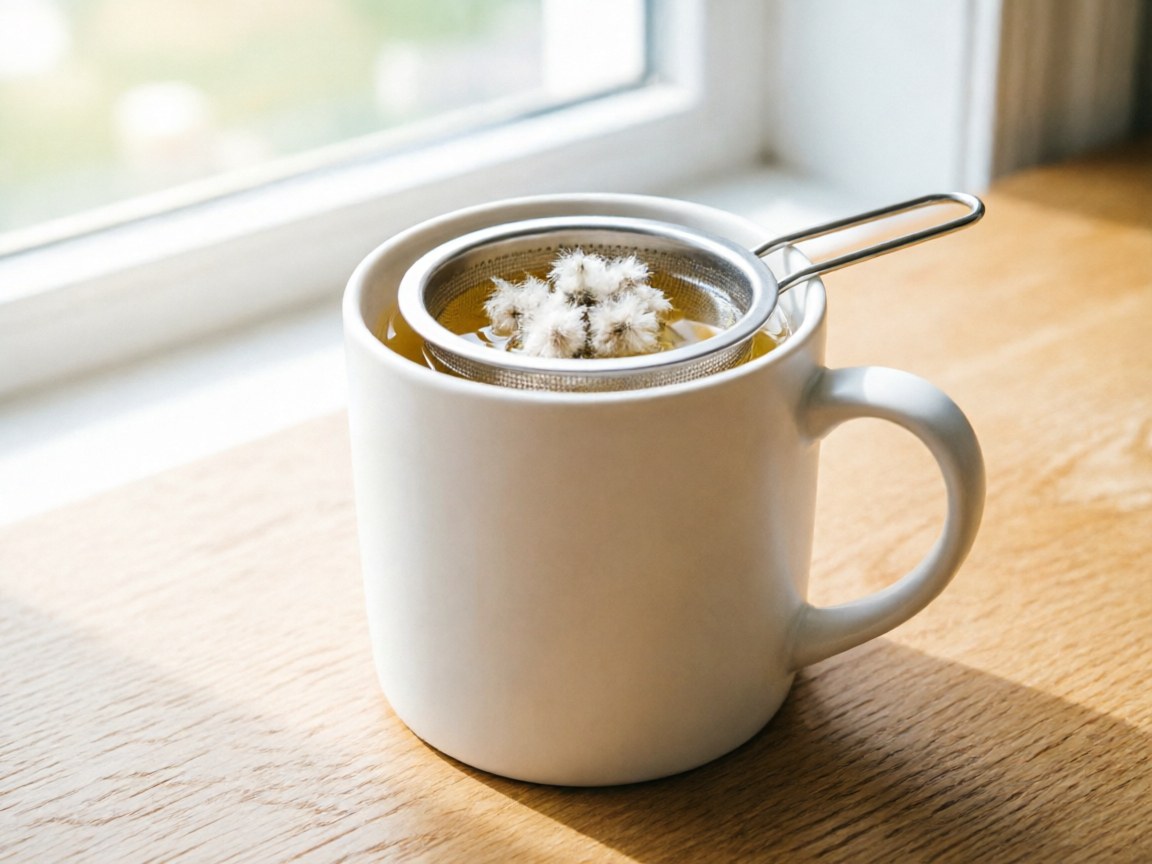
Sometimes you want one mug at your desk, no ceremony, no tracking infusions. That’s the Western path. The trade-off: you get one good cup instead of 5–7 evolving ones.
Vessel: A large infuser basket in a mug or teapot. White tea buds expand significantly — a cramped tea ball chokes them. The Reinmoson extra-large infuser gives buds room to open.
Steps:
- Heat water — 75–80°C for Silver Needle, 80–85°C for Bai Mu Dan. Same Chefman kettle as gongfu.
- Add leaf — 2g per 240ml (8oz). Use a kitchen scale; volume measures are unreliable for fluffy buds. Practice leaf: budget Bai Mu Dan from Fuding.
- Steep — 2–3 minutes for Bai Mu Dan, 3–5 minutes for Silver Needle (buds release slowly).
- Remove the infuser — don’t let it sit. White tea goes flat, not bitter, but you lose the sweetness window.
- Optional second steep — add 1–2 minutes. Still good, lighter body.
For the underlying fundamentals across all tea types, see how to brew tea.
Brewing Lao Bai Cha — Aged White Tea
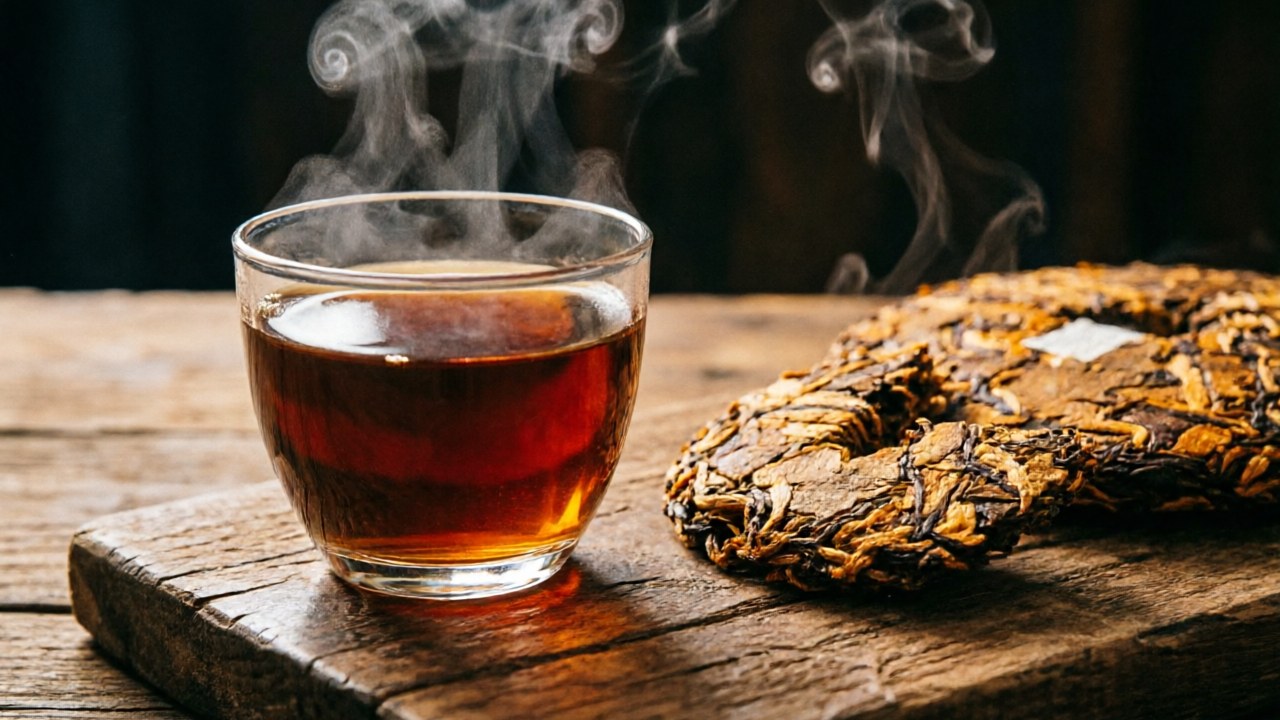
Aged white tea (Lao Bai Cha) flips everything you know about brewing fresh white tea. After 3+ years of careful storage, slow oxidation and enzymatic transformation convert the tea’s chemistry: floral notes shift to honey, dates, and medicinal sweetness. The leaves darken from silver-green to amber-brown [3].
Why aged white tea wants high heat: Enzymatic breakdown over years creates new compounds that need higher temperature to extract. Fresh white tea at 100°C tastes scorched. Aged white tea at 100°C tastes rich, sweet, and complex. Brewing Lao Bai Cha at 75°C produces thin, flat cups — the exact opposite of fresh white tea’s ideal.
Gongfu method for Lao Bai Cha:
- Break the cake — if using a bing (pressed cake), flake off 3–4g with a tea needle. Don’t crush — flaking preserves leaf integrity.
- Rinse twice — 5 seconds each, discard. Aged tea stores dust from years of storage and needs waking up.
- Steep at 95–100°C — flash steeps starting at 15 seconds, adding 5 seconds per round. Use the Chefman kettle at full boil, or the REOWONU porcelain set for heat retention.
- Flavor progression: Steeps 1–3 = woody and date-like; Steeps 4–8 = honey and caramel; Steeps 9–12 = gentle medicinal sweetness.
- Boiling phase (optional) — after steeps exhaust, put leaves in a clay pot with water and simmer 5–10 minutes for a final thick, sweet cup.
Western method for Lao Bai Cha: 3g per 240ml, 95–100°C water, steep 3–5 minutes. Re-steep 2–3 times adding 1 minute each round.
For the parallel aged-tea brewing methodology (cakes, rinsing, boiling), see the puerh brewing guide — both traditions share the same toolkit.
Common Mistakes When Brewing White Tea
Six mistakes that ruin white tea — each has a simple fix.
- Boiling water on fresh buds — scorches Silver Needle, releases bitter tannins. Fix: use a temp-control kettle set to 75–85°C.
- Treating aged tea like fresh — Lao Bai Cha at 75°C is thin and flavorless. It wants 95–100°C.
- Too much leaf — fresh buds are light but concentrated. 3g in a 150ml gaiwan is already strong.
- Too short a steep (Western, fresh) — Silver Needle at 1 minute tastes like warm water. Give it 3–5 minutes.
- Ignoring variety differences — Silver Needle at 90°C loses its entire character. Check the quick-reference table.
- Tossing after one steep — you’re pouring 4–8 good infusions down the drain. Aged white tea can give 12+ rounds.
Recommended White Tea and Gear
A condensed reference for everything mentioned above.
Practice leaf:
- Silver Needle (4oz) — best-value bud-only white
- Bai Mu Dan (4oz) — bud and leaf, more forgiving
- Budget Bai Mu Dan (3.5oz) — authentic Fuding origin
Equipment:
- Glass Gaiwan 170ml — watch buds unfurl (gongfu path)
- Temp-Control Kettle — precise 75°C to boiling
- Large Infuser Basket — room for bud expansion (Western path)
- Gongfu Tea Set — complete set for multi-infusion sessions
Where to Go Next
- Deep dive into Silver Needle — the bud-only variety that defines white tea
- Bai Mu Dan — the sister variety with more depth
- General brewing fundamentals — the first-cup system if white tea is your starting point
- Green tea brewing — sister guide for the next temperature neighborhood up
- Puerh brewing — shared aging, cake, and boiling methodology
- Tools: brewing ratio, steeping time
- Vessel decision: how to choose a gaiwan
The Mind of White Tea Brewing
White tea asks for patience, not precision theater. Its buds carry sweetness that only emerges below boiling — eighty degrees coaxes, one hundred destroys. But aged white tea flips the lesson: sometimes patience means waiting years, not minutes, and what was delicate becomes deep. Brew fresh white tea gently. Brew old white tea boldly. Both reward the attentive hand.
References
[1] Wikipedia contributors. “White tea.” Wikipedia. https://en.wikipedia.org/wiki/White_tea — minimal processing, withering and drying only, variety classification.
[2] Wikipedia contributors. “Bai Mudan.” Wikipedia. https://en.wikipedia.org/wiki/Bai_Mudan — White Peony bud-and-leaf composition and brewing characteristics.
[3] Xiao, Y. et al. “Changes in chemical composition of white tea during storage.” Food Chemistry, vol. 380, 2022. — enzymatic transformation during aging, flavor compound shifts in Lao Bai Cha.