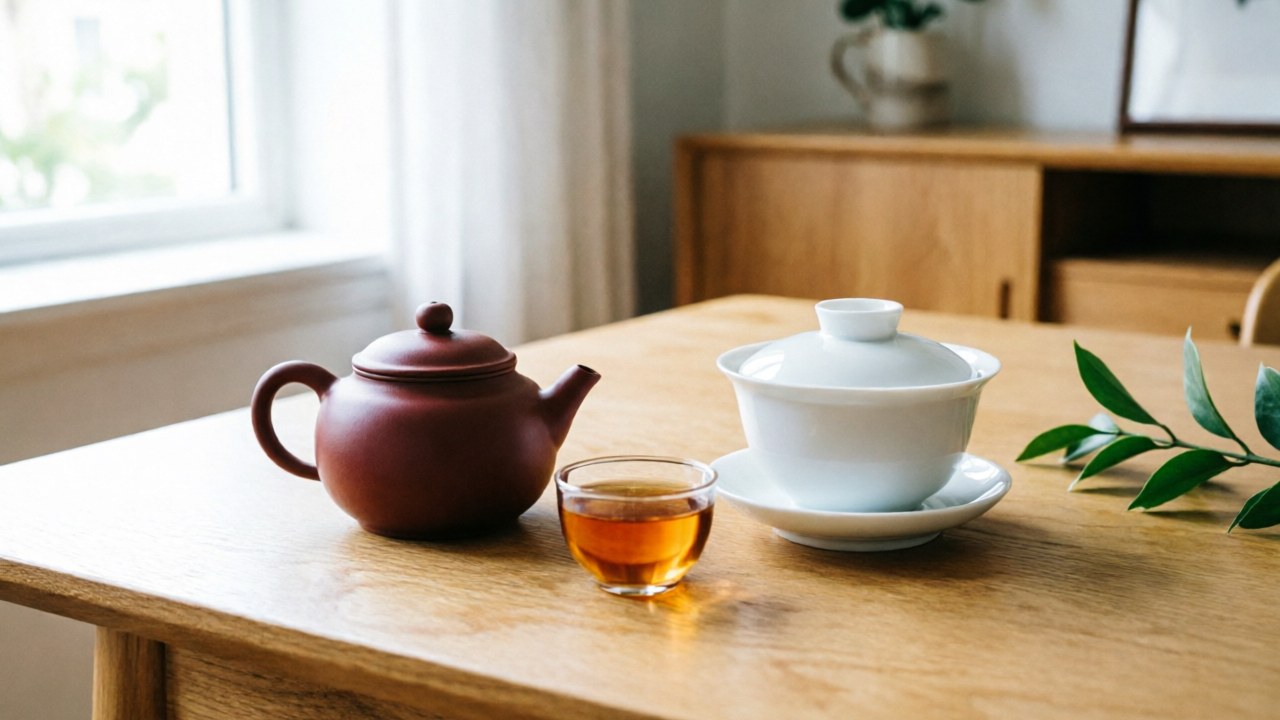
Two vessels, two philosophies. A Yixing clay teapot absorbs tea oils and seasons over months, deepening one tea type. A porcelain gaiwan stays neutral forever, revealing every leaf’s true flavor. The choice isn’t which is “better” — it’s which problem you’re solving today: building flavor memory or tasting across types. This side-by-side covers material, heat, flavor effect, seasoning reality, cost-per-year, filter style, and when to skip the clay. If you’re weighing a first gongfu vessel or deciding whether to add a dedicated clay pot, this is your decision framework.
At a Glance
| Dimension | Yixing Clay Teapot | Gaiwan (Porcelain) |
|---|---|---|
| Material | Porous zisha clay (zini/zhuni/duanni) | Non-porous glazed porcelain |
| Heat retention | High (thick walls, slow cooling) | Moderate (thin walls, fast cooling) |
| Flavor effect | Absorbs oils, rounds edges, deepens body | Neutral, reveals true leaf character |
| Seasoning | Months to years; develops patina | None; stays identical forever |
| Tea-type fit | Dedicated: oolong, pu-erh, black | Universal: all types including green/white |
| Ease of use | Spout pour, harder to clean, one-tea rule | Open bowl, easy rinse, switch freely |
| Filter | Ball / 9-hole / mesh built-in | None (pour through lid gap) |
| Price range | $18–110+ | $12–25 |
For a budget anchor on each side: the YULONGSHENG zini clay teapot ($17.99, 220ml) gives you a real first Yixing without overcommitting, while the Liang baobao porcelain gaiwan ($15.90, 200ml) is the cheapest neutral entry into gongfu brewing.
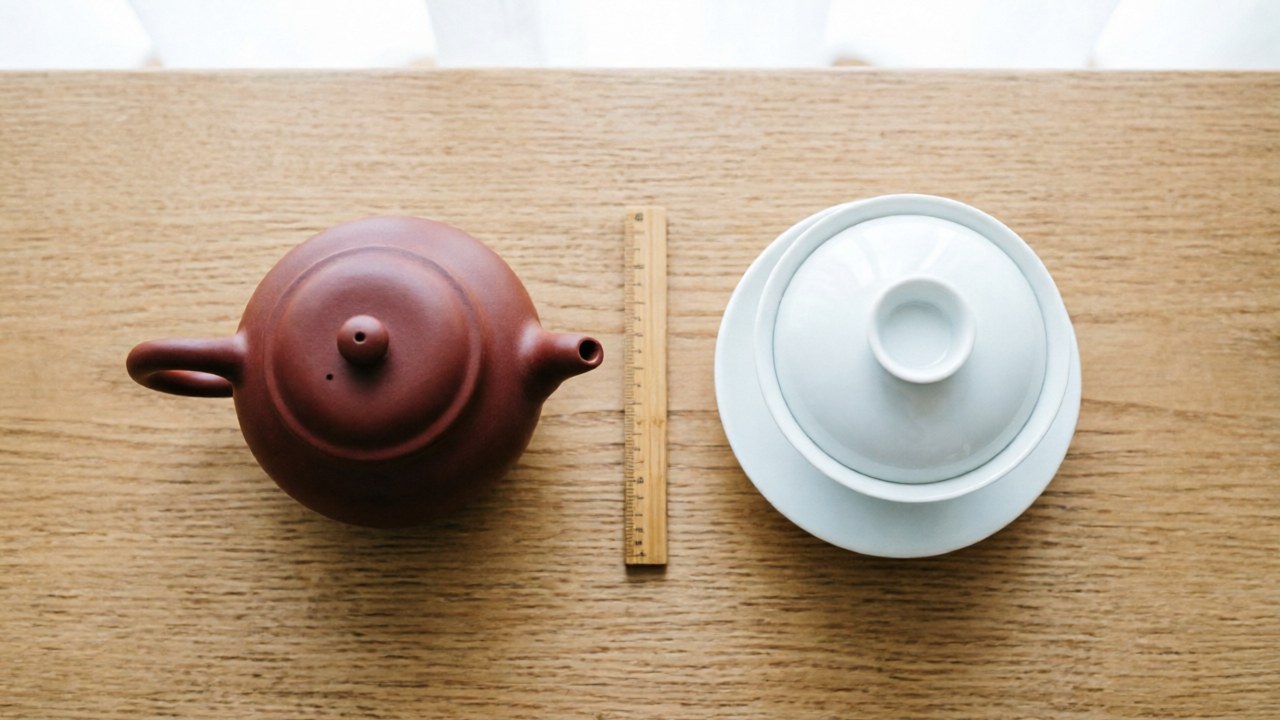
Material and Heat
Yixing clay is porous zisha — purple, red, or yellow depending on mineral content. Micro-pores absorb tea oils over sessions, which is why the pot “remembers” a tea. Thick walls retain heat 20–30% longer than porcelain at equivalent volume [1].
Common clay types and their tea pairings:
- Zini (purple clay): versatile, good for pu-erh and oolong — the most forgiving starter clay
- Zhuni (red clay): higher density, retains more heat, suits dancong and rock tea
- Duanni (yellow clay): lighter body, sometimes used for white or green — less common for seasoning
On the Yixing side, three picks span the range: the YULONGSHENG zini teapot ($17.99, 220ml) for a budget entry, the YXHUPOT zisha pot with infuser ($17.11, 270ml) if you want a strainer included, and the WEOPYCJ zhuni xishi ($39.99, 400ml) as a premium dedicated pot.
Gaiwan porcelain is non-porous glazed ceramic. Zero absorption means zero flavor memory — brew pu-erh today, green tea tomorrow, and the vessel won’t carry anything over. Thin walls release heat faster, which actually protects delicate greens and whites from stewing. For a deeper look at clay types and sourcing, our Yixing buyer’s guide breaks down zini vs zhuni vs duanni in detail.
For the gaiwan side: the Liang baobao 200ml white ($15.90) and the Jingdezhen 150ml sancai ($14.97) both give you a clean, neutral porcelain surface.
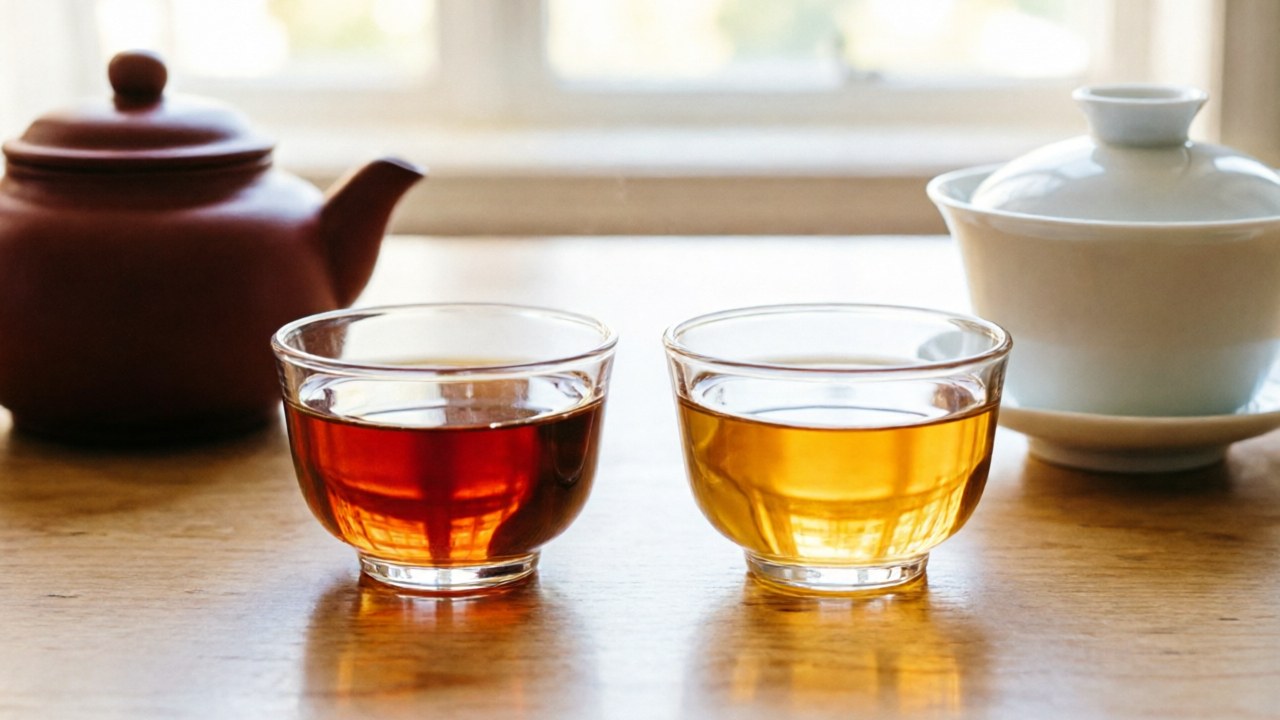
Flavor Effect — The Same-Tea Test
Here’s the section no competitor writes: brew the same leaves in both vessels, same temperature, same ratio. What changes?
In Yixing: clay rounds sharp edges. Astringent young pu-erh or roasted oolong becomes softer, sweeter, with deeper body after 10+ sessions. The clay acts as a natural softener — but you also lose some high-note precision. Floral dancong that sings in porcelain may taste rounder, flatter, less aromatic in a seasoned clay pot.
In gaiwan: you taste the tea as it is, including flaws. Bitter notes stay bitter. Floral highs stay bright. This is why tasting professionals and tea competitions use porcelain — it hides nothing. If you’re building a tasting setup, a gaiwan is your neutral judge.
Decision point: if you want to evaluate tea quality or rotate between 5 tea types weekly, go gaiwan. If you have one tea you drink daily (pu-erh, dark oolong) and want it to taste richer over time, go Yixing. Want to run your own side-by-side? The zini clay teapot ($17.99) and the 200ml porcelain gaiwan ($15.90) together cost under $35.
Seasoning Reality — Timeline and Commitment
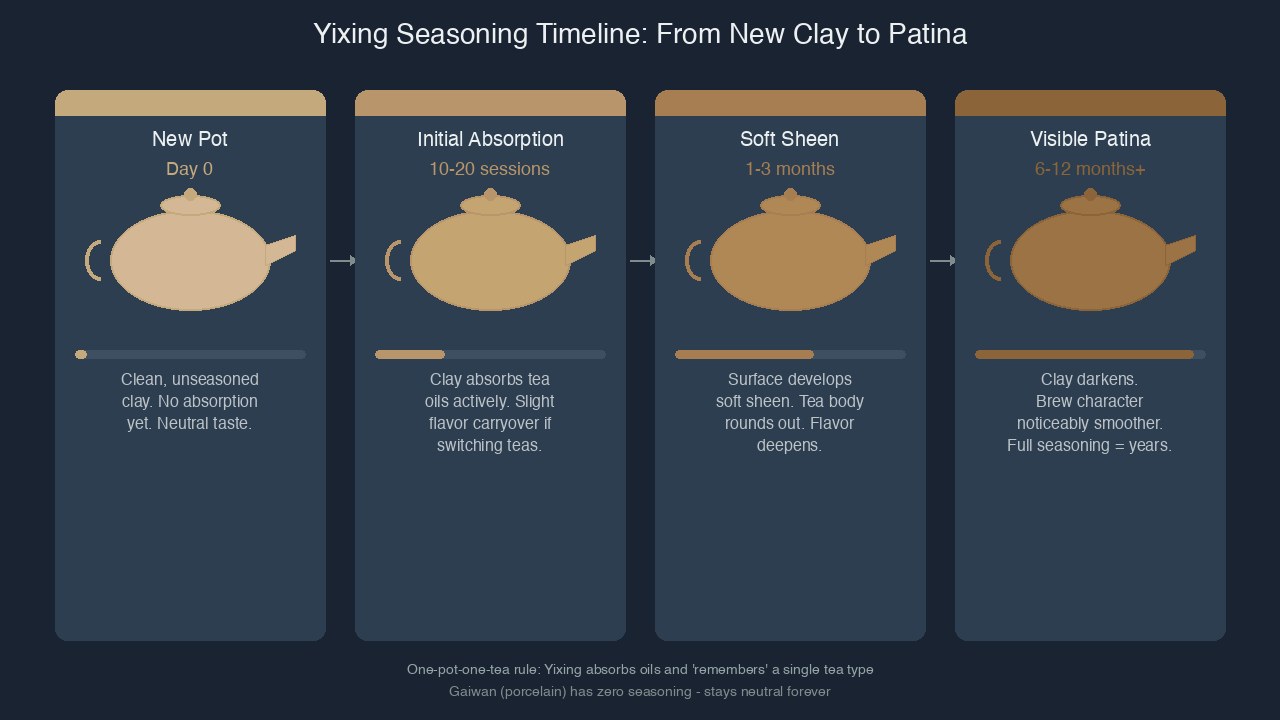
Competitors say “Yixing seasons over time” as a platitude. Here’s what actually happens:
- First 10–20 sessions: clay absorbs actively. You may notice slight flavor carryover if you switch teas — hence the one-pot-one-tea rule.
- 1–3 months: surface develops a soft sheen. Body of the tea rounds out.
- 6–12 months: visible patina. Clay darkens. Brew character noticeably smoother for the dedicated tea type [2].
- Years: full seasoning. The pot becomes a specific instrument for one tea.
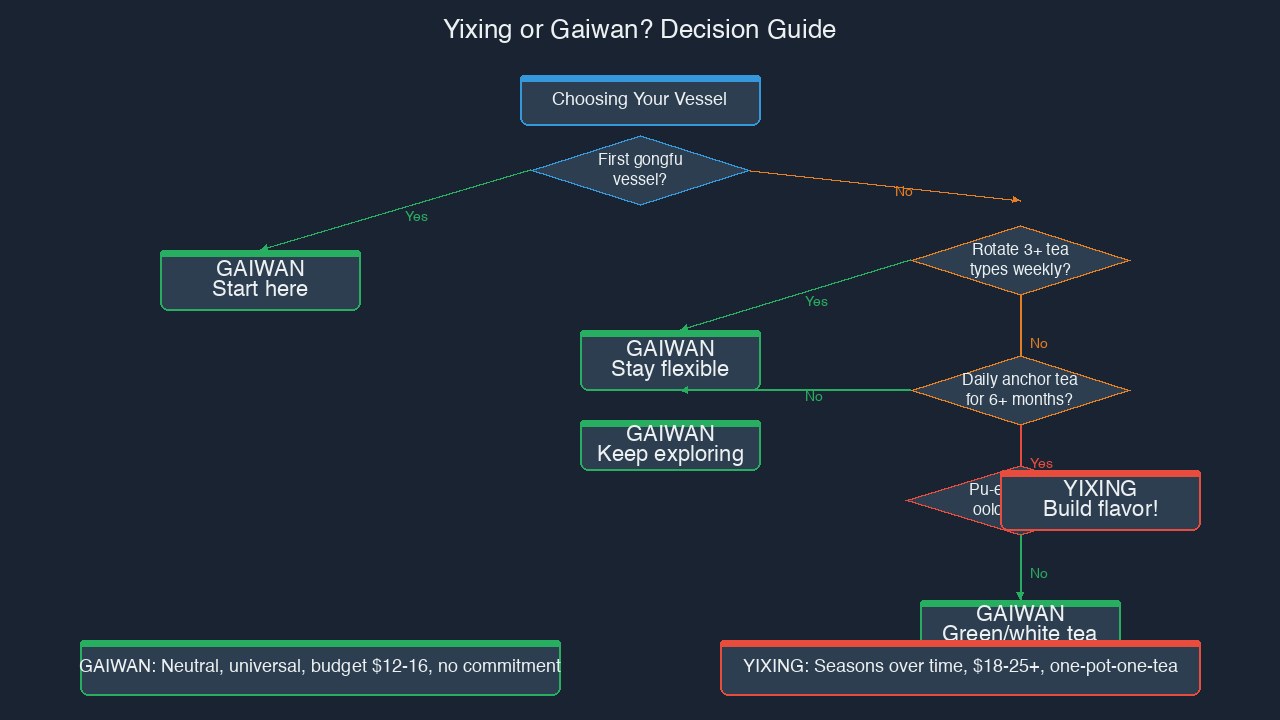
When to go from one pot to two: after 6+ months of daily gongfu with one tea type, you’ll know if that tea is your anchor. If yes, add a second Yixing for a second tea. If you still rotate 3+ teas weekly, stay with gaiwan. The SILINE zisha starter set with 2 cups ($39.98, 210ml) is a natural pick for someone committing to the Yixing path — it includes the pot plus tasting cups.
Gaiwan maintenance: rinse with hot water. No seasoning. No commitment. 30 seconds. For full care protocols on both vessels, see our teaware care guide.
Filter Style and Pour Quality
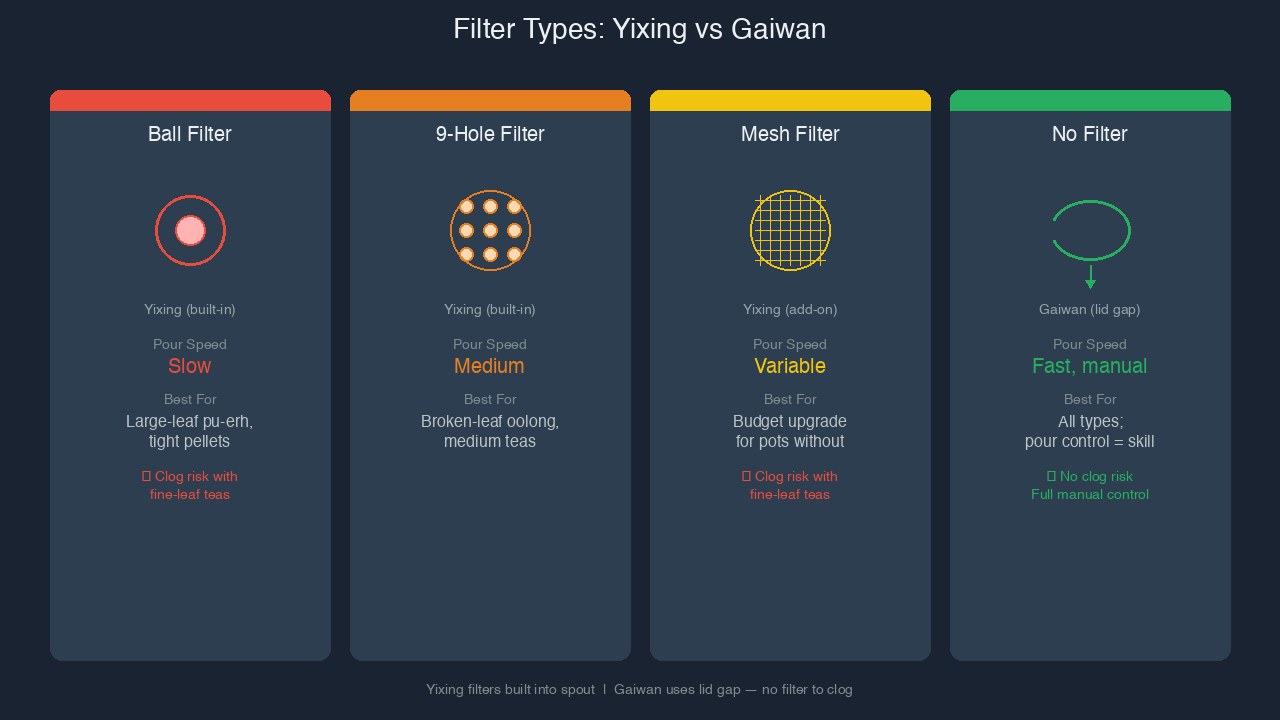
No competitor covers this. Yixing teapots have built-in filters; gaiwans do not.
| Filter type | Vessel | Pour speed | Best for |
|---|---|---|---|
| Ball filter | Yixing (built-in) | Slow | Large-leaf pu-erh, tight pellets |
| 9-hole filter | Yixing (built-in) | Medium | Broken-leaf oolong, medium teas |
| Mesh filter | Yixing (add-on) | Variable | Budget upgrade for pots without |
| No filter (lid gap) | Gaiwan | Fast, manual | All types; pour control = skill |
Yixing filter clog risk: fine-leaf teas (some loose-leaf oolongs) can block ball filters, causing over-steeped pours. If you brew mostly fine-leaf teas, look for a 9-hole filter or use the YXHUPOT with infuser ($17.11) which includes a strainer.
Gaiwan: you control pour speed with the lid gap. No filter to clog, but small particles pass through. A cha-hai (fairness cup) catches them. The JIUMEI glass cha-hai ($12.98, 350ml) serves both methods — pour into it from either vessel, then distribute to cups.
Cost-per-Year Analysis
| Gaiwan | Yixing | |
|---|---|---|
| Entry price | $12–16 | $18–25 |
| Mid-range | $15–25 | $30–50 |
| Premium | $25–40 | $50–110+ |
| Lifespan | Years (porcelain doesn’t degrade) | Decades (clay improves with age) |
| Cost-per-year (3 years) | ~$5/year | ~$8–15/year (but value increases) |
| Hidden cost | None | One-pot-one-tea = 2nd pot for 2nd tea |
Gaiwan is the cheapest entry into gongfu brewing. The porcelain gaiwan at $15.90 gives you years of universal brewing for less than a single dinner out.
Yixing is an investment that compounds — a seasoned pot is worth more than a new one (to the owner, not necessarily at resale). The zini clay teapot at $17.99 is the cheapest real entry, but budget for a second pot if you drink more than one tea type.
Both methods share a wooden gongfu tray ($24.99) — the one surface you’ll need regardless of which vessel you pick.
When to Choose Each
Choose a gaiwan first if:
- This is your first gongfu vessel
- You drink 3+ tea types and rotate weekly
- You want to taste and compare teas honestly
- You’re on a budget or renting (portable, no commitment)
- You’re still exploring which tea type might become your daily anchor
Choose a Yixing teapot when:
- You’ve brewed gongfu for 6+ months and know your anchor tea
- You drink primarily pu-erh, dark oolong, or black tea daily
- You want the clay to enhance (soften, deepen) your regular tea
- You’re ready for the one-pot-one-tea commitment
- You want a vessel that improves with use
When NOT to buy Yixing:
- You primarily brew Western style (large pot, single steep) — clay benefits only show with multiple short infusions
- You’re still discovering which teas you like — clay will limit you to one type
- You drink mostly green or white tea — these benefit less from clay’s heat retention and may taste flat in seasoned clay
- You want to compare teas side-by-side — seasoned clay distorts comparison
Side-by-Side Picks
Both sides represented, one pick per price tier:
| Tier | Yixing pick | Gaiwan pick |
|---|---|---|
| Budget entry | Zini 220ml ($17.99) | White 200ml ($15.90) |
| Mid | Zisha set w/ 2 cups ($39.98) | Jingdezhen 150ml ($14.97) |
| Premium | Zhuni xishi 400ml ($39.99) | — (porcelain ceiling is lower) |
| Shared tool | Glass cha-hai 350ml ($12.98) | — |
| Shared tray | Wooden tray 17” ($24.99) | — |
The glass cha-hai earns the shared-tool pick because it’s the one piece both methods use - every pour goes through it regardless of which vessel you choose.
The Mind of Clay and Porcelain
A Yixing pot remembers; a gaiwan forgets. One deepens a single tea over years of patient use, the other reveals every leaf exactly as it is. The tension between memory and neutrality is not a problem to solve but a choice to understand. Some days you want the clay’s quiet enhancement; other days you need porcelain’s honest clarity. Start with porcelain. Let clay find you when one tea becomes daily, and you’ll know.
References
[1] Heat retention comparison - clay vs porcelain teaware. Teasenz, “Gaiwan vs Yixing: Material” section. https://www.teasenz.com/chinese-tea/gaiwan-vs-yixing.html [2] Yixing clay seasoning timeline and patina development. Steepatlas, “Seasoning a New Clay Teapot” section. https://steepatlas.com/compare/gaiwan-vs-yixing/ [3] One-pot-one-tea principle and flavor carryover. Tealibere, “Seasoning and Cleaning” section. https://tealibere.com/blogs/explore-teaware/yixing-teapot-vs-gaiwan