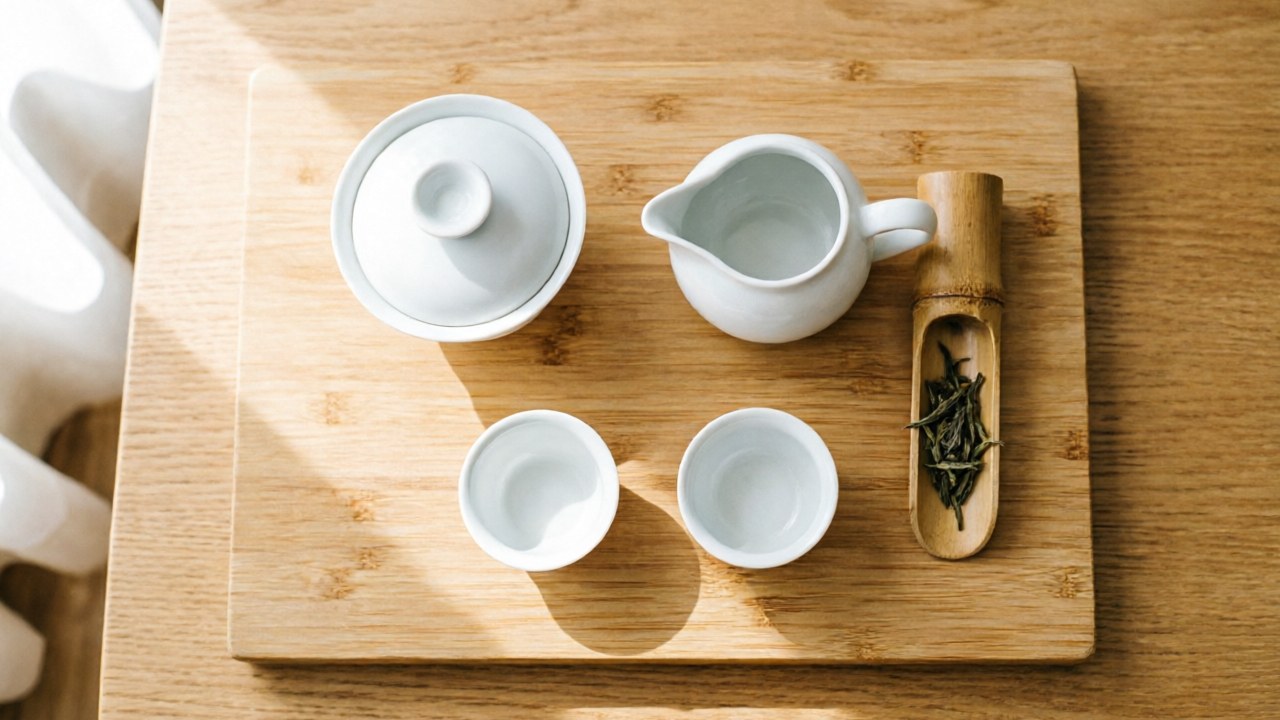
A tea tray (cha pan) is not just a surface — it catches rinse water, frames your gongfu setup, and changes how you pour. Choose by session size first, then material, then drainage type. Bamboo is the default first tray for most home brewers; stainless is the outlier for outdoor or minimalist setups. For the full vessel landscape, start at the Vessels lane on Teaware.
This page is a vessel decision framework - not a tea ceremony sequence, not a decor catalog. If you’re building your first full setup, see teaware for beginners first.
Choose in 3 Steps
Step 1: Measure Your Table
Measure your brewing surface first. You need at least 1.5x the tray’s width in clear table space for kettle, cups, and cha-hai.
Step 2: Pick Your Drain Type
Reservoir trays serve most home sessions - no tube, no bucket. Drawer-style is easiest to clean. Tube drainage suits heavy daily brewing. Dry tray plus waste bowl for travel.
Step 3: Select Material
Bamboo is the default first tray ($20-80, lightweight, warm) [1]. Stone or ceramic for permanent table pieces. Stainless steel for outdoor use.
What a Tea Tray Is (and Is Not)
In Gongfu practice, the tea tray is the work surface that catches rinse water, holds your gaiwan or teapot, and defines the brewing zone. It is not a decoration — it is a functional tool that handles hot liquid and frames your pour motion.
The naming varies by culture: cha pan (茶盘) is the general Chinese term for tea tray; a tea boat has a raised rim that keeps water contained on the surface; a tea sea is a larger serving tray for multiple vessels. All three share the same core job — catch overflow, keep the table dry.
A tea tray is not a tea table (those are furniture-scale pieces with built-in drainage), not a tea mat (no drain, no raised rim), and not a decor-only piece. If it doesn’t serve the pour, it is not doing its job.
Drain or Dry: Two Workflows
Your drain choice determines portability, cleaning frequency, and setup complexity. Most home sessions work best with a reservoir tray — no external bucket, no tubing.
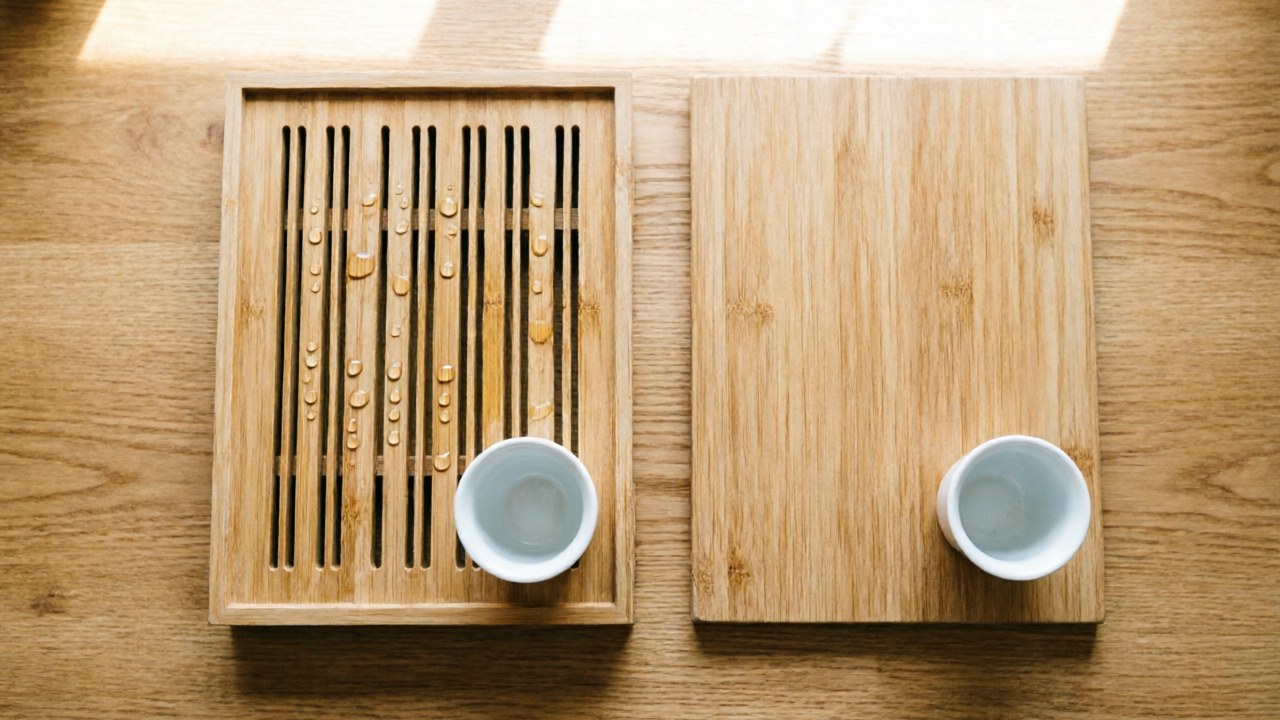
Built-in drainage (wet tray with tube)
Water flows through slats into a tray bottom, then out through a silicone tube into a bucket or bottle underneath. This works for heavy daily sessions — the tube routes wastewater away continuously. The Bamboo Chinese Tea Tray 13.6x8.9 inch with Water Storage uses this system, and at $36.90 it is the best all-round choice for daily Gongfu.
Reservoir tray (sealed bottom)
Water collects in a sealed bottom layer that you empty after each session. No tube, no bucket. The 15 Inch Bamboo Gongfu Tea Tray with Water Storage is a solid mid-size reservoir tray for solo to duo sessions at $29.99.
Drawer-style (pull-out collection)
A pull-out drawer sits below the slats and catches wastewater. It is the easiest type to clean — slide out, empty, rinse, slide back. The RORA Bamboo Tea Tray with Drawer Water Storage at $22.99 is my pick for daily use where you want quick empty-and-rinse cycles.
Dry tray + waste bowl (no plumbing)
A flat surface with a separate waste bowl on the side. This setup is portable, silent, and has nothing to clean on the tray itself. It works best for Western-style brewing or minimalist sessions where you pour only once or twice. No ASIN needed here — any flat bamboo board plus a ceramic bowl handles it.
Decision flow: Reservoir for daily home sessions. Drawer if you want the easiest clean. Tube if you brew multiple hours every day. Dry + waste bowl for travel or Western-style.
Size by Session Pattern
Measure your table or desk before you look at trays. Your tray needs at least 1.5x its own width of clear space around it for your kettle, cups, and cha-hai.
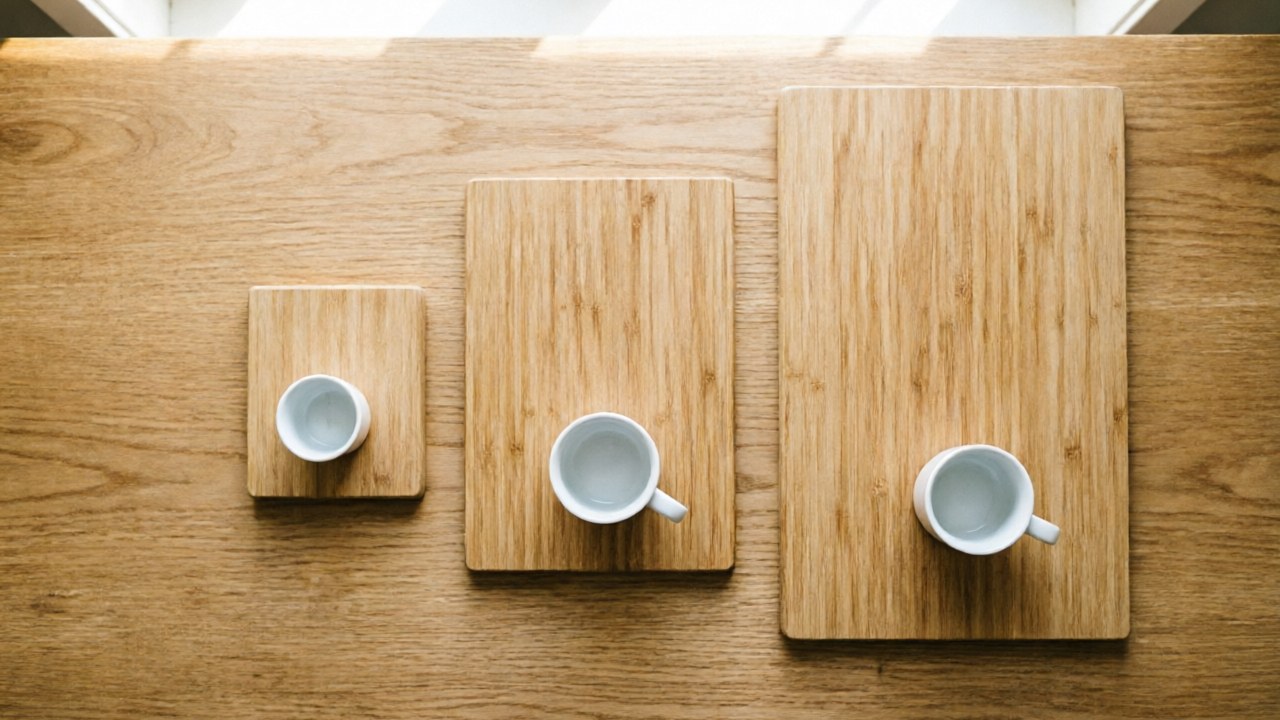
Compact (25-35 cm / 10-14 inch) — solo or duo
Fits a gaiwan or small pot plus one cup. Travel-friendly, desk-friendly. The Bamboo Tea Tray 11x7 inch with Water Storage at $19.85 is the budget compact pick. For a slightly nicer travel version, the Mini Bamboo Chinese Tea Tray 11x7 inch with Water Storage at $27.50 has the same footprint with a cleaner build.
Medium (35-45 cm / 14-18 inch) — 2-3 people
Room for a pot, cha-hai, and 2-3 cups. This is the most versatile size for home practice. The 15-inch reservoir tray (B0DJX6VJ1L) covers this range. The 14 Inch Chinese Gongfu Bamboo Tea Tray with Water Storage at $21.99 is another well-priced option at the smaller end of this band. If you prefer compact at 11.8 inch, the Bamboo Tea Tray Chinese Kungfu Serving Tray 11.8 inch with Water Storage at $27.89 straddles compact and medium.
Large (45+ cm / 18+ inch) — 4+ or full set
Full gongfu table layout with room for a pot, cha-hai, 4+ cups, and a tea pet. The 17 Inch Chinese Gongfu Tea Tray with Water Storage at $24.99 is surprisingly affordable for a large bamboo tray. For the full premium experience, the JIKUGO Bamboo Tea Tray 19.5x13.3x2.55 inch at $77.99 gives you a spacious work area for multiple pots and a full tea pet collection.
| Session size | Length | Recommended pick |
|---|---|---|
| Solo or duo | 25-35 cm | B08XHZBQKM ($19.85) or B083TF1F59 ($27.50) |
| 2-3 people | 35-45 cm | B0DJX6VJ1L ($29.99) or B0CZF1PLGT ($21.99) |
| 4+ or full table | 45+ cm | B0CL4H4XJQ ($24.99) or B0BHSQTHMV ($77.99) |
Material Path
Material affects weight, care, durability, and how the tray interacts with your hot vessels.
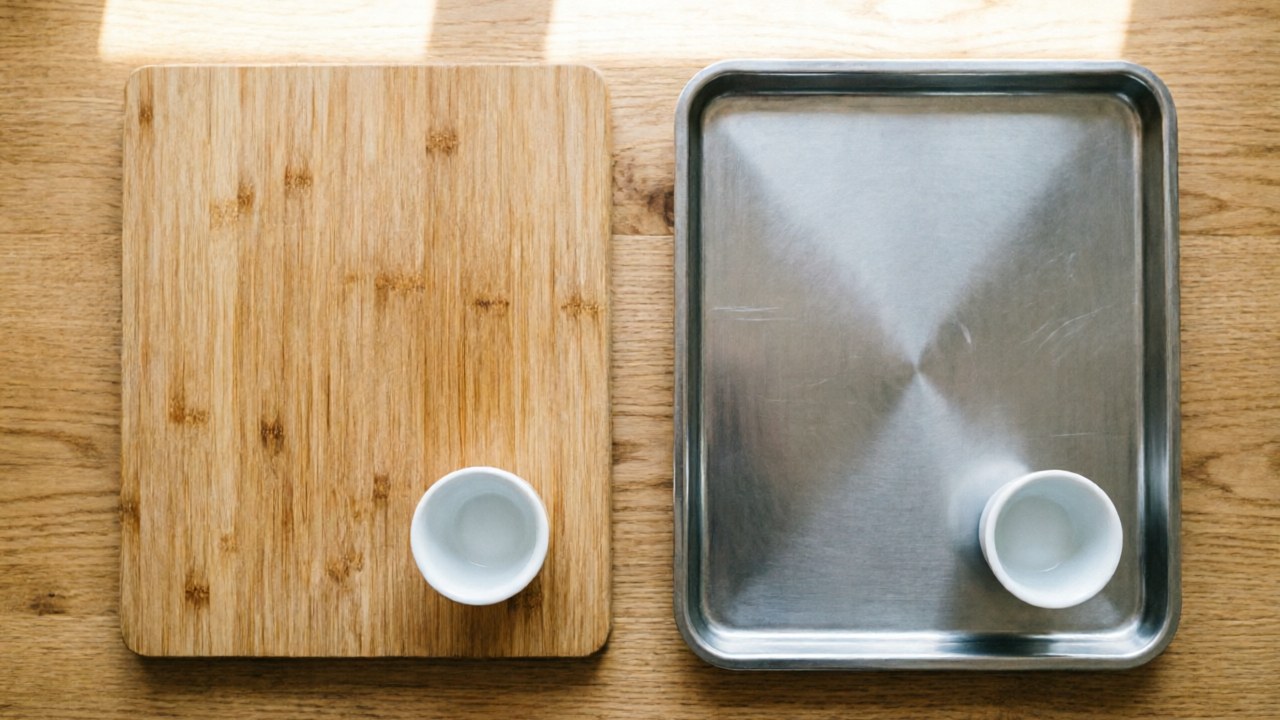
Bamboo — lightweight, affordable, classic
Bamboo is the most common tea tray material for good reason: it is light, warm to the touch, and affordable ($20-80). Most of the products in this guide are bamboo. The trade-off is maintenance — bamboo needs drying after every session or it mildews. Best for dry climates or brewers who wipe down after every pour. Most first-time buyers get bamboo.
Stone — durable, heavy, premium feel
Stone trays are naturally moisture-resistant and heavy. They stay cool to the touch and handle hot water without warping. At $50-200+, they are a step up in both quality and weight. No stone ASINs are in our product pool — most stone tea trays come from specialty tea vendors rather than Amazon.
Ceramic — glazed, easy-clean, decorative
Glazed ceramic seals out moisture completely. Wipe-clean, no drying needed. The downside is fragility — one drop against a kettle and you have shards. $40-150 range. Like stone, ceramic trays are more common from specialty stores.
Wood (rosewood, ebony) — traditional, high-end
Traditional Chinese tea tables are often solid wood with integrated drainage. These are furniture-level pieces at $100-500+. They need monthly oiling and immediate drying after contact with water. Best as a permanent table fixture rather than a portable tray.
Stainless steel — modern, indestructible
Stainless steel is light, dishwasher-safe, and needs zero maintenance. It does not look traditional, but it survives outdoor sessions, camping, and clumsy pours. The Stainless Steel Tea Tray, Traditional Chinese Gongfu Tea Serving Tray at $20.95 is a solid budget option for outdoor or minimalist use.
Decision flow: Bamboo for your first tray (~90% of buyers). Upgrade to stone, ceramic, or wood when you want a permanent table piece. Stainless for outdoor or camping.
Portability & Storage
If you travel with your tea setup, choose a compact bamboo tray (25-30 cm) with a reservoir — no tube, no external bucket, just a sealed tray that fits in your luggage. The compact models listed above all work for this.
For home storage, most trays stay on the table between sessions. Bamboo trays need to air-dry standing on their edge or propped vertically, not flat on a damp surface.
For outdoor or patio use, the stainless steel tray is the clear winner — hose it off, dry it, done.
Matching Your Gongfu Setup
Your tray needs to fit the vessels you actually use, not the ones you plan to buy later.
- Tray + gaiwan: Center the gaiwan. Cup sits in front. See how to choose a gaiwan for volume matching.
- Tray + cha-hai: A fairness pitcher sits alongside the gaiwan. The tray surface must be wide enough for both. For details on the cha-hai role, read cha-hai pitcher necessity.
- Tray + teapot (yixing/kyusu): A yixing pot is wider than a gaiwan. Center or offset the pot depending on your pour hand. See how to choose a yixing teapot for sizing.
- Full table layout: Pot, cha-hai, 4 cups, tea pet — you need 45+ cm of tray length. The premium large tray (B0BHSQTHMV) handles this layout.
If you are still building your understanding of how vessels work together, the teaware personal system guide walks through the full setup logic.
Maintenance & Cleaning per Material
Each material has different care rules. Bamboo is the most demanding; stainless and ceramic are the easiest.
| Material | Care routine | Avoid |
|---|---|---|
| Bamboo | Wipe dry after every session. Air-dry upright. Oil monthly with mineral oil. | Soaking, leaving wet, dishwasher |
| Stone | Wipe clean. No special drying. | Abrasive cleaners, thermal shock |
| Ceramic | Wipe or rinse. Dishwasher-safe if glazed all over. | Dropping, sudden temperature changes |
| Wood | Wipe dry immediately. Oil monthly. | Prolonged wet contact, soap |
| Stainless | Wipe or rinse. Dishwasher-safe. Rough pads may scratch. | Nothing special |
For deeper care instructions per material, the teaware care guide covers bamboo oiling, stone sealing, and ceramic handling.
Common maintenance mistakes: letting bamboo sit wet overnight (mildew within 48 hours), soaking the tray to clean it (warps bamboo), using soap on unglazed wood or stone (absorbs residue).
Budget Tiers
| Tier | Price | What you get |
|---|---|---|
| Budget | $15-25 | Compact bamboo, basic reservoir (B08XHZBQKM, B0CL4H4XJQ) |
| Mid | $25-50 | Medium bamboo, drawer or reservoir (B0CWQ2V8CM, B0DJX6VJ1L, B09BM66P73) |
| Premium | $50-100+ | Large bamboo or premium build (B0BHSQTHMV) |
| Specialty | $100-500 | Stone, ceramic, or wood — specialty stores |
Most home brewers should spend $25-50 on their first tray. That gets you a mid-size bamboo tray with reservoir that will last 2-3 years with proper care.
Common Mistakes
Buying too small for your setup
Measure your largest vessel, then add 50% for kettle and cups. A tray that barely fits the gaiwan will frustrate you every session. Medium (35-45 cm) is the safest default.
Ignoring drain type
Reservoir trays serve most home sessions well. Tube trays add setup complexity. Dry trays need a waste bowl. Choose your workflow before you choose the tray.
Letting bamboo stay wet
Bamboo is not waterproof. It is water-resistant bamboo fiber [2]. Left wet, it warps and mildews within days. The drawer-style tray (B09BM66P73) makes emptying and drying easier because you slide the drawer out, not tip the whole tray.
Matching tray to decor before function
Choose by workflow first (wet vs dry), then material, then color. A beautiful tray that cannot handle rinse water is a decoration, not a tool.
Overlooking table size
Your tray needs 1.5x its width of clear table space. A 45 cm tray needs ~70 cm of table length. Measure before you buy.
Where to Go Next
- First full setup: teaware for beginners
- Tasting with a tray: teaware for tasting
- Build your system: teaware personal system
- Vessels hub: Teaware vessels
- Gongfu basics: gongfu brewing basics
Recommended First Buys
| Product | Best for | Price |
|---|---|---|
| Bamboo Tea Tray 13.6x8.9 inch with Water Storage (B0CWQ2V8CM) | Best all-round first tray | $36.90 |
| 17 Inch Gongfu Tea Tray with Water Storage (B0CL4H4XJQ) | Large tray for 4+ people | $24.99 |
| Bamboo Tea Tray 11x7 inch with Water Storage (B08XHZBQKM) | Compact for desk or travel | $19.85 |
| JIKUGO Bamboo Tea Tray 19.5x13.3 inch Premium (B0BHSQTHMV) | Full gongfu table layout | $77.99 |
| RORA Bamboo Tea Tray with Drawer Water Storage (B09BM66P73) | Easiest daily cleaning | $22.99 |
References
[1] Bamboo Tea Tray Care and Maintenance Guide - TeaWithMind teaware care documentation. [2] Gongfu Tea Practice: Vessel Selection and Session Workflow - TeaWithMind brewing fundamentals.
The Mind of the Tea Tray
The tea tray is the stage, not the performer. It catches what spills, frames what matters, and asks only that you pour with intention. A good tray disappears into the session — bamboo warm under the pot, water finding its way quietly below. The best tray holds your practice without asking for attention. Choose one that lets you forget it’s there.