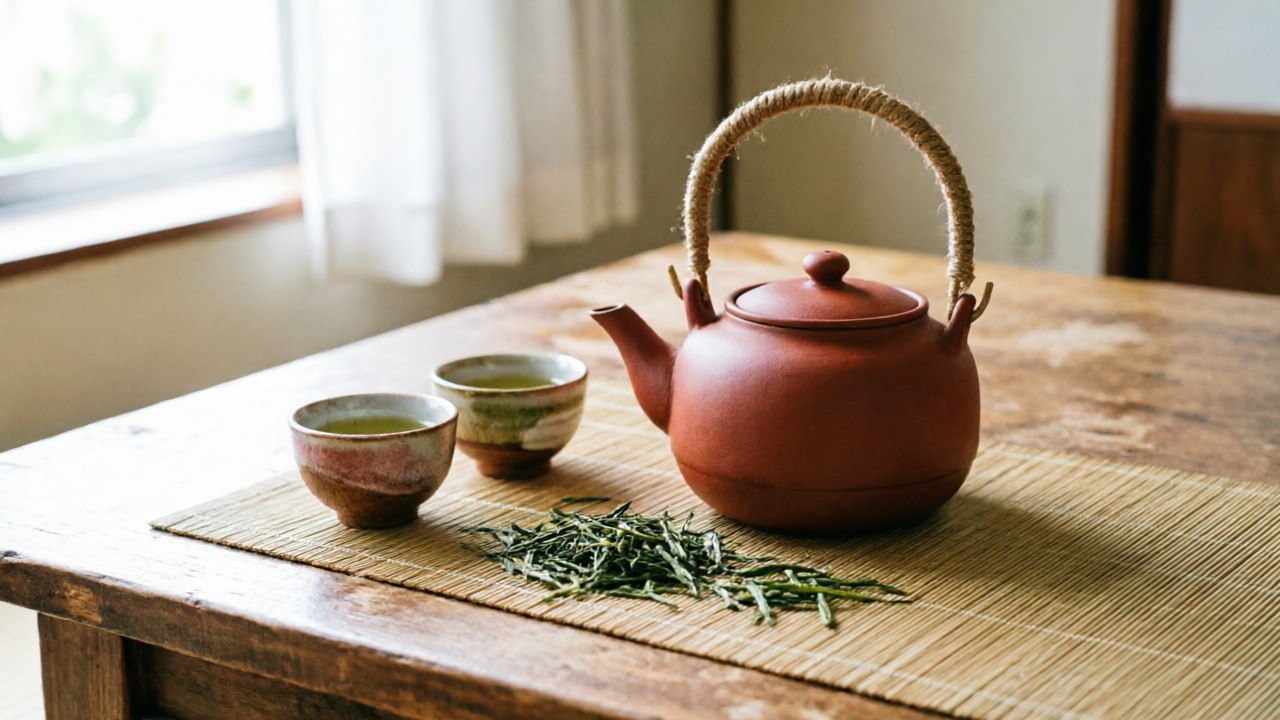
A kyusu (急須) is a side-handled teapot for Japanese green tea. Choose by handle style (yokode, ushirode, or dobin), clay type (Tokoname shudei seasons, glazed Banko stays neutral), filter (ceramic mesh vs stainless steel), and size by session. This guide maps each decision and marks the honest boundaries — when a gaiwan, yixing, or a simple mug is still the better call.
For the wider vessel tree, start at the Vessels lane on the Teaware hub.
What a Kyusu Is (and Is Not)
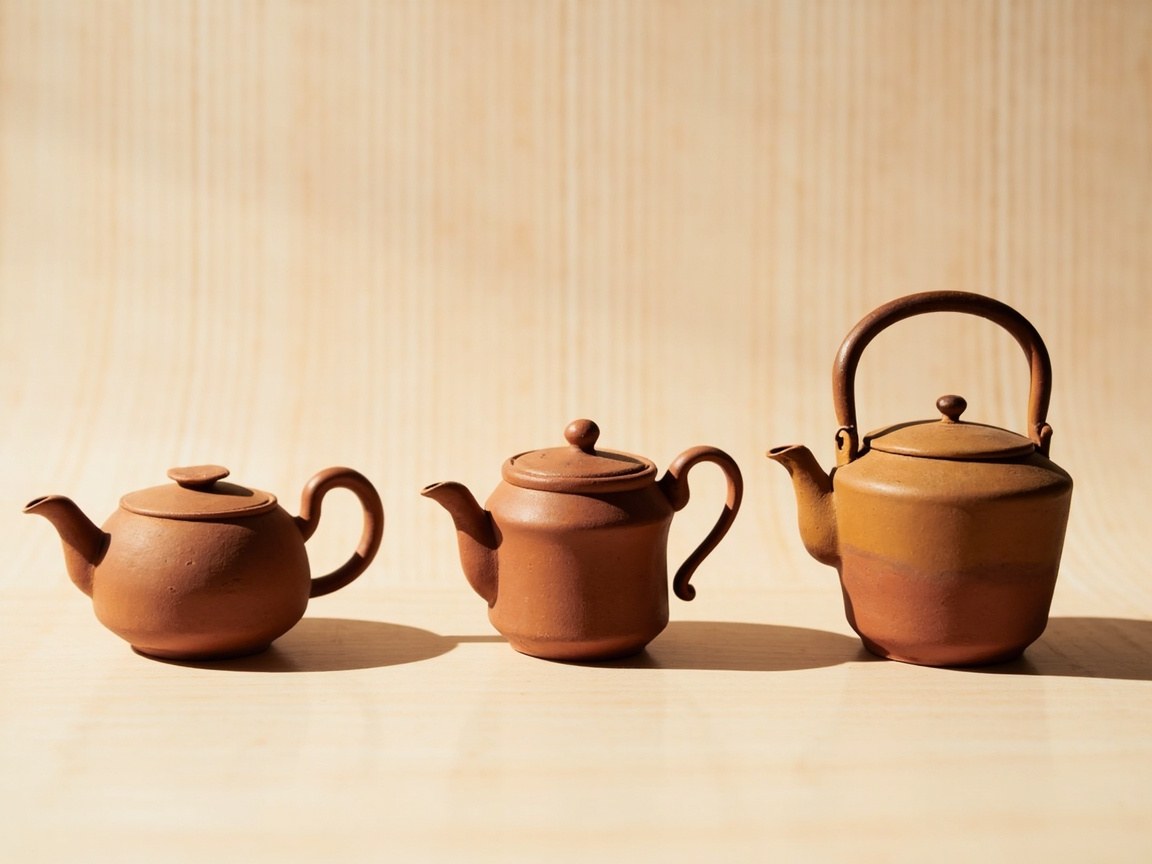
A kyusu is a side- or top-handled teapot with an integrated filter, used in Japan for brewing green tea [1]. Unglazed Tokoname clay or glazed Banko ceramic are the two main bodies.
What it is not:
- Not a gaiwan — Gaiwan is an open Chinese lidded bowl for oolong, pu-erh, and green tea, poured with finger control. Kyusu pours through a fixed side handle and spout, better for straight needle-shaped Japanese leaf. See how to choose a gaiwan.
- Not a yixing pot — Yixing pots are smaller, unglazed Chinese zisha clay with a detachable handle, for dedicated oolong or pu-erh. See how to choose a yixing pot.
- Not a tetsubin — Cast iron tetsubin are kettles for heating water, not for brewing. Enamelled “tetsubin-style” kyusu exist as a visual brew-pot alternative.
Handle Style — Yokode, Ushirode, Dobin
The handle decides how the pot sits in your hand.
Yokode (横手) — Side handle
The handle attaches at roughly 90°. Most common kyusu style. Pours naturally right-handed — cradle with thumb, steady the body. Best for daily sencha at 200–300 ml. Most Tokoname and Banko pots are yokode.
The Side Handle Japanese Kyusu Teapot (350ml) is an entry-level glazed yokode example.
Ushirode (後手) — Back handle
Handle behind the body, like a Western teapot. Familiar if you grew up with regular pots. Often glazed Banko or Seto. Good entry if side-handle grip feels awkward.
Dobin (土瓶) — Top handle
Loop handle across the lid, held with thumb and two fingers. Traditional for hojicha and genmaicha. Rustic, unhurried feel. Good as a second pot.
| Style | Grip | Best for |
|---|---|---|
| Yokode (side) | Cradle with thumb + fingers | Daily sencha, standard daily use |
| Ushirode (back) | Hold from behind, like a Western pot | Entry point, familiar feel |
| Dobin (top) | Pinch from above | Traditional hojicha/genmaicha, casual |
I find that handle preference beats heat retention and aesthetics for most first-time kyusu buyers. Yokode is the safest default. Dobin suits traditionalists. Ushirode is the familiarity bridge.
Clay & Kiln — Tokoname, Banko, Shudei
Porous clay that seasons vs glazed ceramic that stays neutral.
Tokoname (常滑) — Seasons over time
Tokoname, Aichi prefecture, is Japan’s most famous kyusu kiln. Its iron-rich red clay (shudei, 朱泥) is slightly porous — it absorbs trace tea oils and seasons over repeated use [2]. Drinkers who keep a Tokoname pot for one tea type report the clay rounds bitterness and softens astringency [3].
The Tokoname Kyusu with Ceramic Filter (200ml) is the mid-price standard sencha pick. The Japanese Tokoname Kyusu (250ml) is the same clay at a slightly lower entry price.
Banko (萬古) — Glazed, easy care
Banko, Mie prefecture, is the second major kiln. Most Banko kyusu are glazed ceramic — non-porous, flavor-neutral, no seasoning [3]. Good for rotating tea types without flavor carryover.
The Ceramic Japanese Kyusu with Infuser (400ml) is the budget glazed starter.
Seto and other kilns
Seto produces glazed ceramics as a Banko alternative. The Seto Glazed Japanese Teapot (300ml) is a versatile glazed option.
Shudei vs “iron-rich”
True shudei = Tokoname red clay with measured high iron content. Some non-Tokoname products use “iron-rich” loosely. Color (deep red/brown) is a visual signal, not provenance proof.
| Clay | Porous | Seasons | Cleaning | Best for |
|---|---|---|---|---|
| Tokoname shudei | Yes | Yes | Hot water only, no soap | Dedicated sencha / gyokuro drinkers |
| Banko glazed | No | No | Wipe clean, versatile | Multi-tea users, easy care |
| Seto / other glazed | No | No | Wipe clean | Budget entry, rotation |
Size by Session Pattern
Map volume to how you actually drink.
Solo gyokuro — 150–200 ml
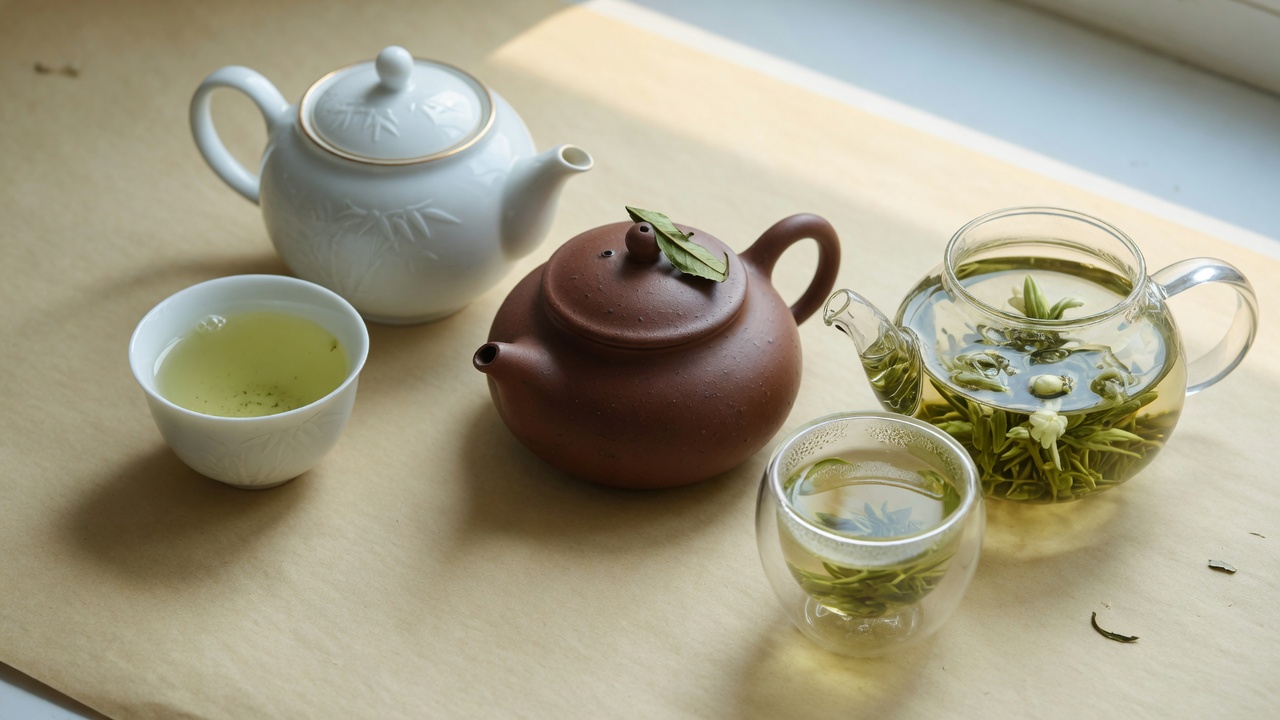
Japanese green tea is a short-steep multiple-infusion practice. A 150 ml kyusu gives 3–4 infusions. Small body retains heat for gyokuro at 50–60°C.
The Traditional Tokoname Banko Kyusu (150ml) is the gyokuro size.
Daily sencha (1–2 people) — 200–300 ml
Sweet spot for most households. Easy to handle, fast heat recovery.
The Japanese Tokoname Kyusu (250ml) and Tokoname Kyusu with Ceramic Filter (200ml) both sit here.
Guest pours — 350–400 ml
For three or more people. Larger pot loses heat faster — compensate with hotter water or shorter gaps. The Ceramic Kyusu with Infuser (400ml) handles this volume.
Large batch — 500–700 ml
For water heating or casual hojicha and genmaicha sessions. The Japanese Glazed Kyusu with Removable Infuser (500ml) and Tetsubin-Style Kyusu (700ml) cover larger volumes.
| Session | Volume | Pick |
|---|---|---|
| Solo gyokuro | 150 ml | B0D2KFBKWC |
| Daily sencha | 200–300 ml | B0BP68YGR4 / B0CPVNJVH1 |
| Guest pours | 350–400 ml | B0BSPMWMC7 |
| Large batch | 500–700 ml | B0CHPNXQDP / B0DBM37DG6 |
Don’t buy too big as your only pot. A 150–200 ml kyusu gives 3–4 infusions — enough for a full session.
Filter Decision — Ceramic Mesh vs Stainless Steel vs Built-In
Ceramic mesh (integrated)
The traditional Tokoname filter — holes molded into clay near the spout. Flavor-neutral. Can clog with fukamushi (deep-steamed) sencha’s fine leaf particles [4]. The Tokoname Kyusu with Ceramic Filter (200ml) uses this style.
Stainless steel mesh
Finer, replaceable mesh for fukamushi sencha drinkers who want clear liquor. Easy to rinse. Some note a faint metallic taste, most can’t tell blind [4].
The Sencha Kyusu with Stainless Steel Mesh (220ml) targets fukamushi specifically.
Built-in clay strainer (no mesh)
Holes molded into the clay body itself — coarser than either mesh type. More leaf particles reach your cup, which some traditionalists prefer. Common on older or rustic-style kyusu.
None / add-on basket
Some glazed kyusu ship without a fixed filter, using a removable infuser basket instead. More versatile for larger-leaf teas (hojicha, genmaicha), but less authentic and can strain the pour speed.
| Filter type | Leaf clarity | Fukamushi | Cleaning |
|---|---|---|---|
| Ceramic mesh | High | Can clog | Rinse |
| Stainless mesh | Very high | Handles fine | Rinse + scrub |
| Clay strainer | Low (sediment) | Passes through | Rinse |
| Add-on basket | Moderate | Catch | Empty + rinse |
Pour Quality — Before You Buy
Check these before buying:
- Lid fit — Should sit flush, no rattle. Loose lid = steam loss and messy pours.
- Spout drip — Sharp cut-off at the spout interior drips less.
- Handle balance — Fill with water in your mind: does the pour feel natural? Yokode angles vary.
- Interior finish — Unglazed: smooth, even clay, no cracks. Glazed: no drips blocking the filter.
- Filter coverage — Full spout base coverage. Gaps = leaf in your cup.
For post-purchase prep, see the teaware care guide.
Kyusu by Tea — Matching Vessel to Leaf
| Tea | Best kyusu type | Why |
|---|---|---|
| Sencha (standard) | Tokoname yokode, 200–250 ml, ceramic mesh | Porous clay rounds astringency |
| Fukamushi sencha | Any kyusu with stainless steel mesh, ~200 ml | Fine filter for clean liquor |
| Gyokuro | Small Tokoname ~150 ml, ceramic mesh | Low temp, short steeps, heat retention |
| Genmaicha / Hojicha | Dobin or glazed kyusu, 300–500 ml | Coarse leaf won’t clog |
| Matcha | Not for kyusu | Use chawan + chasen — matcha tools |
Standard sencha drinkers reach for the 200 ml Tokoname with Ceramic Filter. For genmaicha and hojicha, the 500 ml Glazed Kyusu with Removable Infuser works well.
When NOT to Buy a Kyusu Yet
- Drinking Chinese oolongs or pu-erh? A gaiwan or yixing pot gives better leaf visibility and pour control for those styles.
- Mostly bag tea? A glazed mug with basket infuser is simpler. Save the kyusu for loose-leaf Japanese greens.
- Only want matcha? You need a chawan and chasen — matcha tools.
- Still mastering pour control? Start with the first-cup system.
Kit Companions — Cha-Hai, Yunomi, Kettle
| Role | Why | Path |
|---|---|---|
| Cha-hai (fairness cup) | Evens strength across infusions — kyusu pours fast, cha-hai distributes fairly | Cha-hai necessity |
| Yunomi cups | Tall Japanese teacups, light interior shows liquor color | Planned (Phase 2) |
| Gooseneck kettle | Precise temp control for 60–80°C Japanese greens | How to choose a kettle |
The cha-hai is the piece most people skip and then regret when two cups taste different.
Seasoning & Care
First use (unglazed Tokoname)
- Rinse with hot water only (no soap).
- Optional: Boil in rice water (nuka) 10–15 min to seal clay and remove kiln dust, then rinse. Or brew a sacrificial pot of the same tea.
- Never use soap — porous clay absorbs it [5].
Ongoing care
- Rinse after each use. Dry completely before storing.
- Unglazed: store lid off to prevent mold.
- Glazed (Banko, Seto): wipe clean like any ceramic pot.
- Never microwave or dishwasher an unglazed kyusu.
See the teaware care guide for the full system.
Recommended First Buys
- Tokoname daily sencha: Tokoname Kyusu 200ml, Ceramic Filter ($59.99)
- Value Tokoname: Japanese Tokoname Kyusu 250ml ($49.99)
- Budget glazed: Ceramic Kyusu 400ml with Infuser ($24.99)
- Yokode test: Side Handle Kyusu 350ml ($34.99)
- Fukamushi: Sencha Kyusu with Stainless Mesh 220ml ($36.99)
- Gyokuro: Traditional Tokoname 150ml ($45.99)
- Large casual: Glazed Kyusu 500ml ($28.99)
- Artisan: Handcrafted Tokoname 200ml ($79.99)
The Mind of the Kyusu
A kyusu is not a gadget. It is a quiet agreement between your hand, the clay, and the leaf. The side handle teaches patience — you cannot rush a pour. The clay learns your tea over months. What you are choosing today is not a teapot but a daily practice: slow water, short steeps, and the ritual of paying attention. Let the pot teach you.
References
[1] Wikipedia contributors. “Kyūsu.” Wikipedia. https://en.wikipedia.org/wiki/Ky%C5%ABsu — side-handled teapot definition, shudei red clay characteristics.
[2] Far East Tea Company. “Kyusu Guide.” https://www.fareastteacompany.com/blogs/news/kyusu-guide — handle style taxonomy (yokode, ushirode, dobin), clay properties, seasoning method.
[3] Tezumi Blog. “How to Choose Your First Kyusu.” https://tezumi.com/blogs/tezumi-blog/how-to-choose-your-first-kyusu — Tokoname vs Banko differences, ceramic vs stainless filter comparison.
[4] Tezumi Blog. “Kyusu Filters: Ceramic vs Stainless Steel.” https://tezumi.com/blogs/tezumi-blog/kyusu-filters-ceramic-vs-stainless-steel — filter type comparison, fukamushi sencha compatibility.
[5] Far East Tea Company. “Teaware Care: Kyusu Seasoning and Maintenance.” https://www.fareastteacompany.com/blogs/news/teaware-care — seasoning instructions, soap warning, lid-off storage.