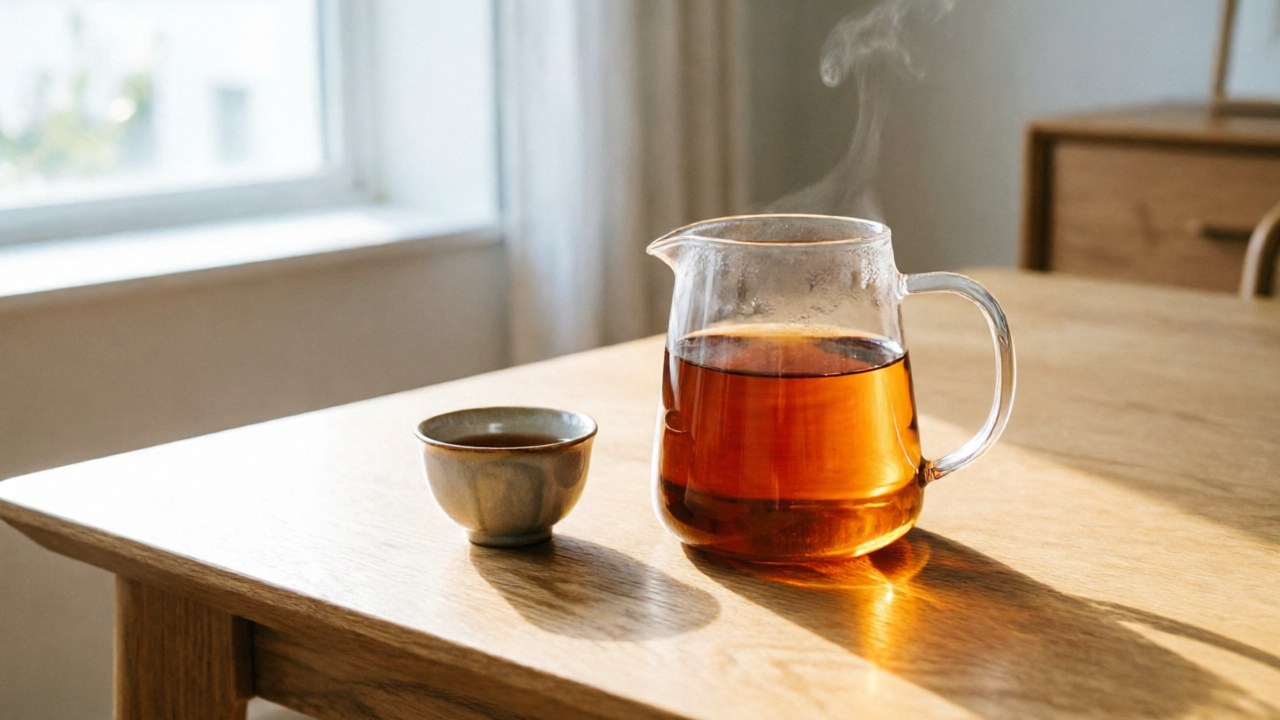
Every new Gongfu brewer hits this wall within their first few sessions — you’ve got a gaiwan, a cup, hot water, and now someone tells you need a third vessel just to pour into. Do you, really?
The short answer: you don’t need one for solo drinking. But the moment you pour for two, or want your tea evenly strong across multiple infusions, a cha hai (also called a fairness pitcher or gong dao bei) becomes the most useful piece on your tray. This guide breaks down the three reasons it earns its place, the materials worth knowing, the honest cases where you can leave it in the drawer, and how to pick the right one for your tea.
What Is a Cha Hai (and What It Is Not)
A cha hai (茶海, “tea ocean”) or gong dao bei (公道杯, “impartial cup”) is a small pouring pitcher that sits between your brewing vessel and your drinking cup [1]. It typically holds 150-380 ml, with a wide mouth for easy pouring and a spout designed to drip less [2]. Some come with lids for heat retention; most don’t.
Its job is simple: collect the full brew from your gaiwan or teapot, then distribute it evenly.
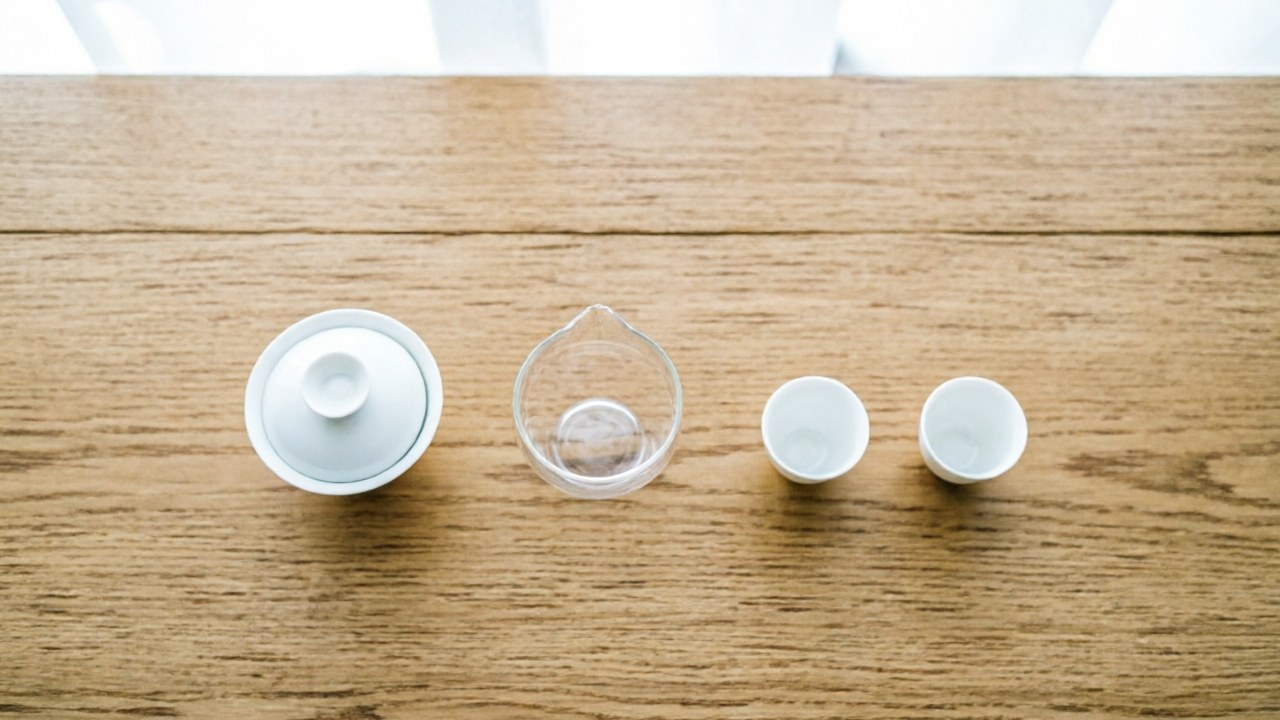
What it’s not: a teapot, a gaiwan, or a drinking cup. You don’t brew tea in a cha hai — it has no lid for steeping control and no filter to hold leaves back. It’s a server, not a brewer. If you’re looking for which brewing vessel pairs best with one, the how to choose a gaiwan guide covers the companion piece. Keep them separate: brew in the gaiwan, collect in the cha hai, drink from the cup.
The two names hint at its dual nature. “Cha hai” (tea ocean) is the practical name — the vessel collects tea like an ocean collects rivers. “Gong dao bei” (impartial cup) is the philosophical one, pointing to fairness as the pitcher’s real purpose [1].
Why Use a Cha Hai? Three Reasons It Earns Its Place
Three distinct functions make the cha hai worth buying for anyone who pours more than one cup at a time.
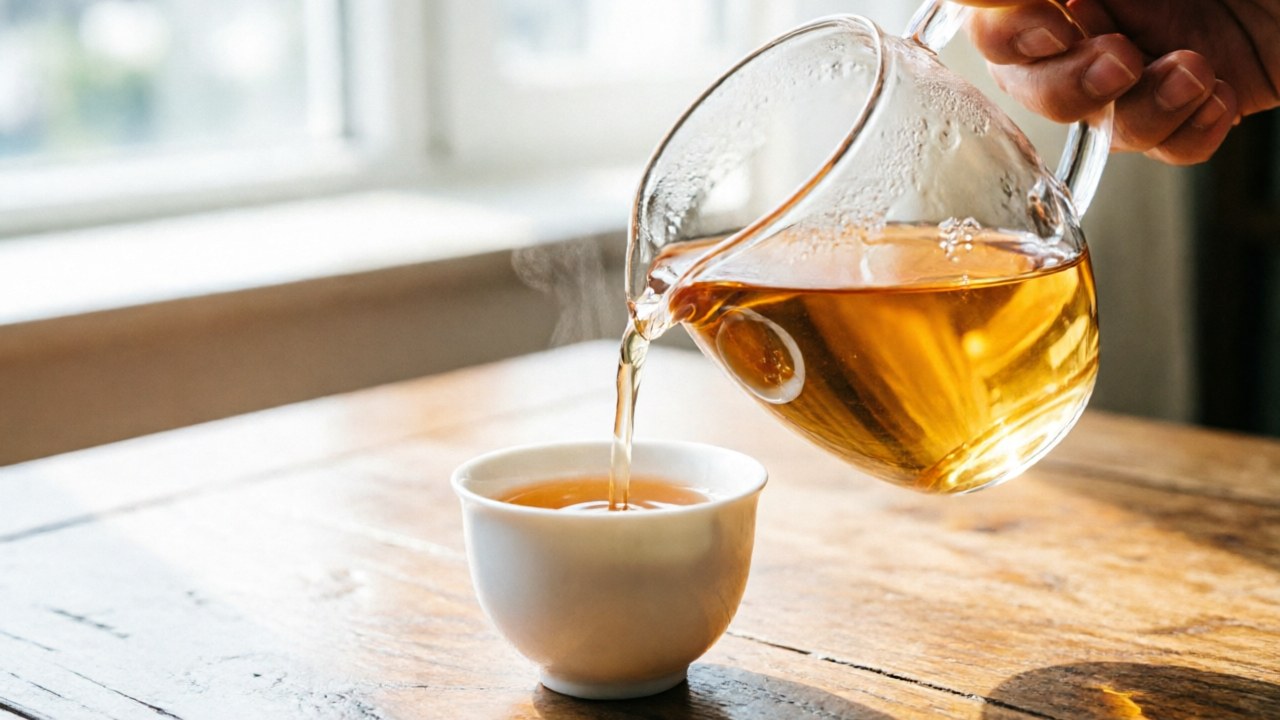
Fairness — the core reason. Without a pitcher, the first cup you pour gets the weakest liquor (the rinse hasn’t fully opened the leaves). The last cup gets the strongest. Use a cha hai and you collect the full brew first, then pour identical liquor to every cup. This matters most with oolong and puerh, where flavor changes dramatically across a pour. A transparent glass option like this 200ml Glass Gong Dao Bei shows you exactly how full your decant is.
Sediment settling. Fine leaf particles and dust make it past most gaiwan strainers. In a cha hai, they sink to the bottom in the 5-10 seconds before you pour. You leave the last few ml in the pitcher, not in someone’s cup. With a compact 180ml borosilicate glass pitcher, you can watch the sediment settle — a small but satisfying detail for taster-minded brewers.
Temperature modulation. Different materials change the tea’s temperature before it reaches your cup. Glass cools quickly — good for green and white tea that want lower serving temps. Ceramic holds heat — better for aged oolong and puerh that benefit from warmth. A thickened 260ml glass pitcher strikes a middle path: thick walls slow the cooling without making it a heat sink.
For a deeper look at how different vessels affect your drinking experience, the teaware for tasting guide walks through the full upgrade path.
When You Can Skip the Cha Hai
Honesty matters more than selling gear. Here’s when you genuinely don’t need one.
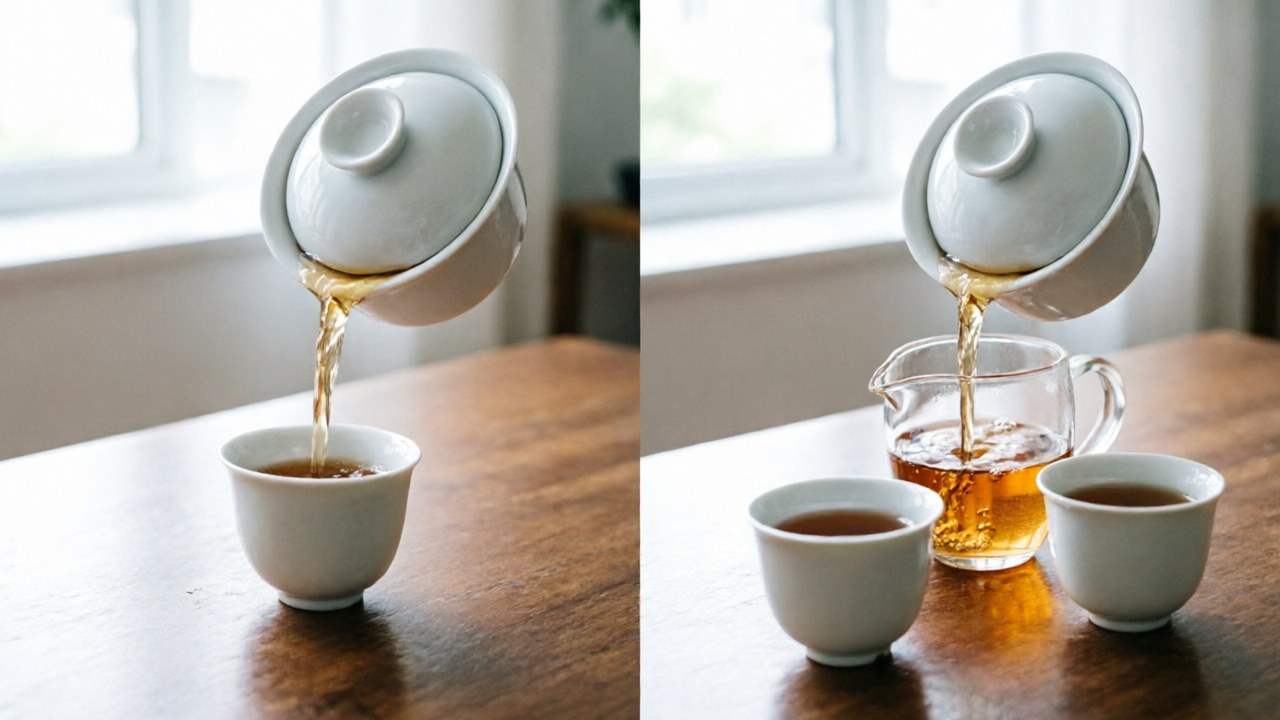
Solo sessions. Drinking alone? Pour straight from gaiwan to cup. No one to split with, no fairness problem. Use a round-robin approach with your single cup — pour small amounts, drink, repeat — and you lose nothing.
Direct pouring technique. If you’re pouring for two and don’t want the extra wash step, pour half the gaiwan into each cup in sequence. The first cup gets the lighter half, the second gets the stronger half. Not perfectly even, but acceptable for casual sessions.
Travel or minimalist setups. When every gram of pack weight matters, the cha hai is the first piece to drop. A gaiwan and a single cup is the lightest functional tea kit you can carry. Add a pitcher only when your tea corner is stable at home.
Western-style brewing. Large teapot with a built-in infuser, pouring directly into a mug — the cha hai adds nothing. Western brewing produces a single batch at consistent strength, so there’s nothing to equalize [2]. The only exception is if you’re serving Western-brewed tea at a table — a ceramic pitcher at the table adds convenience without pretension.
If you’re new to building a tea setup, the teaware for beginners guide suggests starting without a pitcher and adding one when your guest pours begin.
Material Guide — Glass vs Ceramic vs Porcelain vs Yixing
The material of your cha hai changes how the tea tastes, looks, and feels in your hand. Here’s what each brings.
Glass is the most common starting point for good reason. You see the liquor color across steeps, watch sediment settle, and the material doesn’t add or absorb flavor. Best for oolong, black tea, and any session where color appreciation matters [2]. The 200ml Glass Gong Dao Bei is the best all-round option at $19.99. For a tighter budget, the 250ml thick-walled glass pitcher at $24.33 is an excellent entry point.
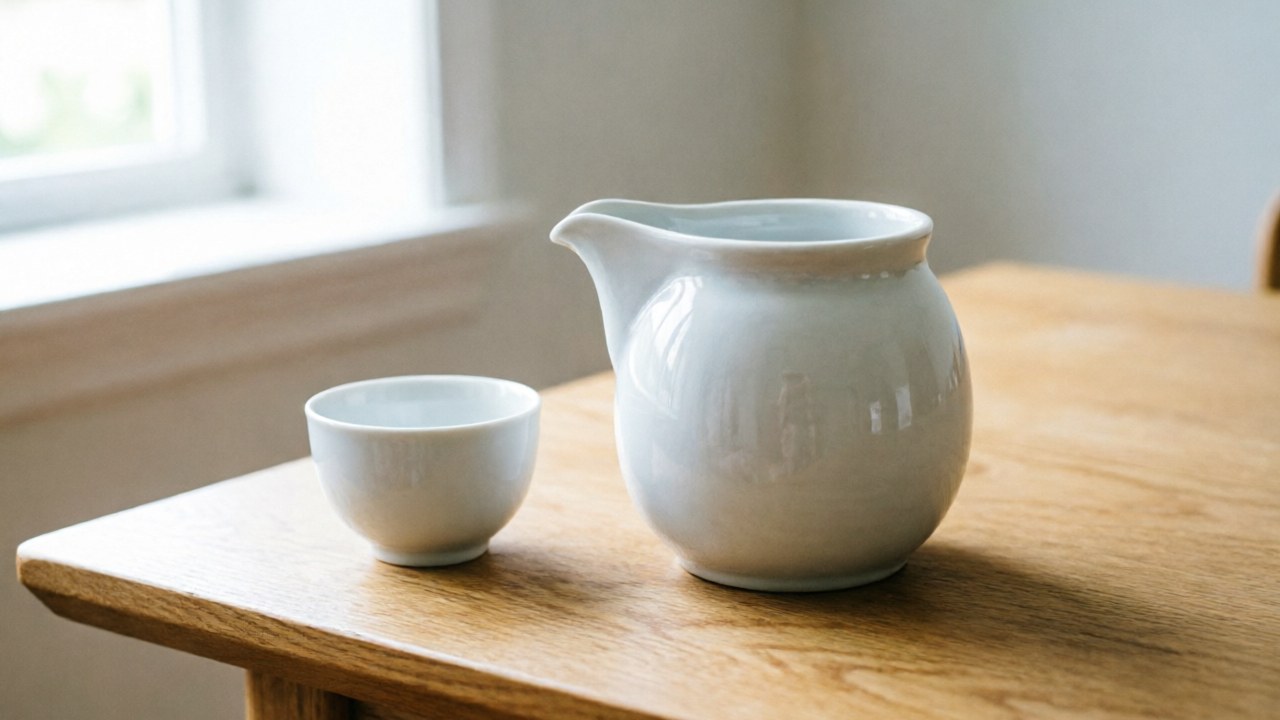
Ceramic and porcelain offer a neutral interior that shows the tea’s true color without the refraction of glass. They hold heat better than glass, making them a good match for green and white teas that benefit from stable lower temperatures. Porcelain is the most practical daily choice — easy to rinse, flavor-neutral, and forgiving with hot water. The 230ml handmade ceramic cup has a clean white interior for accurate color evaluation. For something with more character, a 175ml hand-drawn ceramic pitcher brings artistry to the tray.
Ru kiln celadon sits between ceramic and Yixing. The celadon glaze is non-porous like porcelain, but the clay body retains heat like stoneware. It’s a premium choice for aged oolong and puerh where stable serving temperature matters across a long session. The 220ml Ru kiln celadon cup at $29.99 is the best mid-premium pick. For easier handling, the side-handle Ru kiln version at $31.99 combines ceramic heat retention with an ergonomic angled grip.
Yixing and jianzhan are porous clay. These pitchers season over time, absorbing the character of teas you pour through them. They’re for advanced brewers who want to dedicate one pitcher to a single tea family. You trade the visual feedback of glass and the neutrality of porcelain for earthy character — a fair trade if you already know which teas you drink most. One clay pitcher dedicated to shou puerh develops a depth that no glass vessel can match after six months of daily use.
For more on the heat and aroma trade-offs between materials, see the porcelain vs glass teaware comparison. For brewers who appreciate vessel craft, the fine vessels worth studying section covers kiln styles and form.
How to Choose Based on Tea Type and Brewing Style
Different teas have different needs from a cha hai. Here’s a quick match.
- Oolong (Gongfu): Small glass, 150-180 ml. Watch the color change across 6-10 infusions. The 180ml borosilicate glass pitcher is ideal for this.
- Green and white tea: Ceramic or porcelain, 180-220 ml. Stable lower temperature preserves the delicate flavors.
- Black tea: Glass or ceramic, 200-260 ml. Transparency lets you appreciate the deep amber color. The 260ml thickened glass works well here.
- Aged puerh and oolong: Ru kiln or Yixing, 200-250 ml. Heat retention keeps the tea warm through long, meditative sessions. The 220ml Ru kiln is the go-to.
- Group sessions (3-4 people): Larger 260-380 ml with a handle for steady pouring. The 380ml handled glass pitcher is the easiest pour for beginners and guests. Even if you prefer ceramic for yourself, keep a handled glass pitcher on hand for group pours — the handle prevents the fumbling that happens when you pour hot tea while talking.
Brewing style matters too. Gongfu brewers pour small volumes frequently — a 150-180 ml cha hai is plenty. Western-style brewers who make larger batches might still benefit from a pitcher at the table for serving, even if they don’t need it for fairness.
For a full system view, the build your teaware personal system guide shows how a cha hai fits on a multi-vessel shelf.
Pros and Cons at a Glance
| Pros | Cons |
|---|---|
| Even cup strength every pour | Extra item to wash and dry |
| Sediment stays in the pitcher | One more pour step in your rhythm |
| Temperature tool (glass vs ceramic) | Takes space on a small tray |
| Better presentation for guests | Costs $15-35 for a decent one |
| Lets you watch liquor color evolve | Not needed for solo sessions |
| Gives each steep its own character | Can crack if thin glass meets boiling water |
Common Mistakes
1. Buying too large. A 380 ml pitcher for solo gongfu leaves the tea half-empty and cooling fast. Fix: use a 180 ml compact glass pitcher for one-person sessions.
2. Choosing opaque for color-critical teas. A Yixing or jianzhan pitcher hides the liquor entirely. If you enjoy watching the color evolve across steeps, stick with glass. The 200 ml glass gong dao bei is the fix here.
3. Skipping the cha hai for group pours. Without a pitcher, your guests get imbalanced strength — the first cup weak, the last cup strong. A larger 230 ml ceramic with neutral interior solves this for 3-4 person sessions.
4. Using a cha hai as a brewing vessel. It has no lid and no strainer. If you need a brewing vessel, the how to choose a gaiwan guide covers the right tool for steeping.
The Mind of the Cha Hai
A cha hai is the pause between brewing and drinking — the moment that makes every cup equal. In that small glass or clay pitcher, fairness becomes a physical act you can hold in your hand. Choose one that fits your tea, your brewing style, and the people at your table.
References
[1] Gongfu tea — Wikipedia. https://en.wikipedia.org/wiki/Gongfu_tea
[2] What Is a Cha Hai? The Gong Fu Fairness Cup — Path of Cha. https://pathofcha.com/blogs/all-about-tea/what-is-a-cha-hai-and-what-do-we-need-it-for
[3] What’s a Fairness Pitcher & Why You Need It — Hello Tea Cup. https://helloteacup.com/2017/06/30/fairness-pitcher-mug-cup/
[4] Newbie question — do I really need a cha hai? — Reddit r/GongFuTea. https://www.reddit.com/r/GongFuTea/comments/1pxzqul/newbie_questiondo_i_really_need_a_cha_hai/