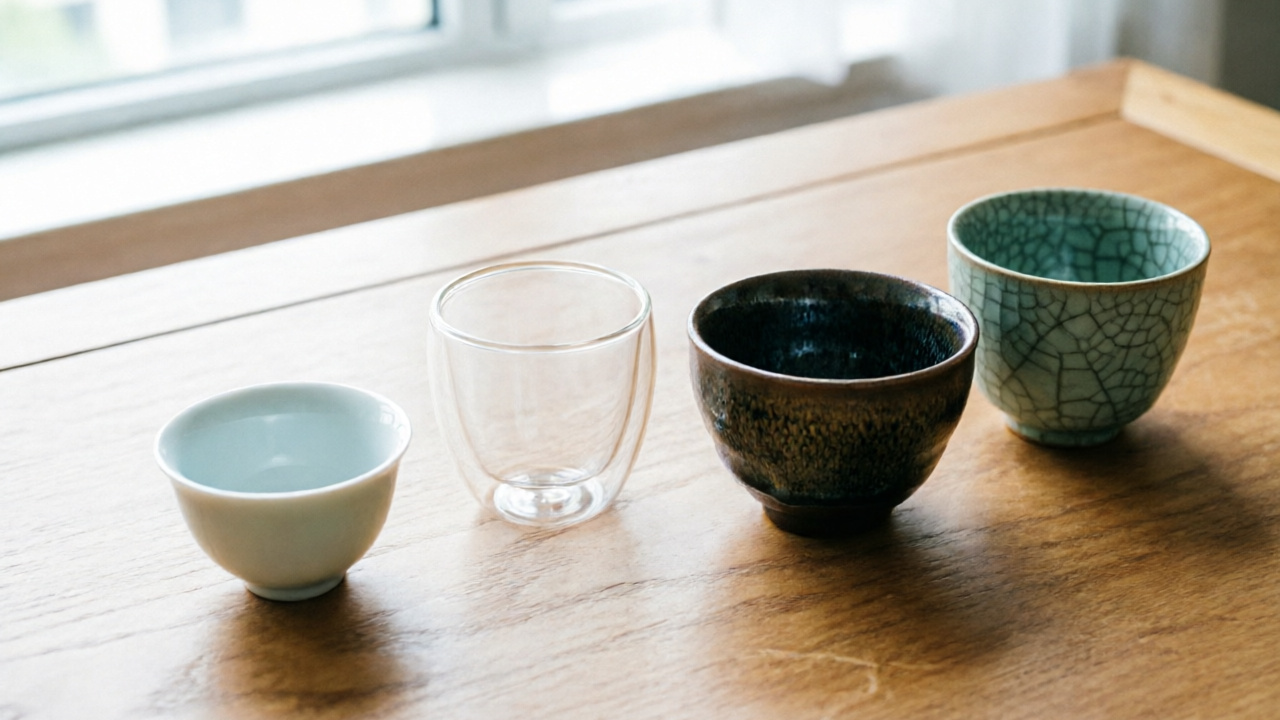
I have been through this decision myself, and choosing a tea cup is three decisions in one: match volume to your session, pick an interior glaze that shows your tea’s true color, and then choose a material that suits how you drink. That sequence — size first, interior second, material third — keeps the decision from turning into a rabbit hole of glaze chemistry and kiln lore.
This guide covers 30-200ml cups for gongfu practice, daily loose-leaf, and tasting. For the full vessel tree, start at the Vessels lane.
What This Guide Means by “Tea Cup”
The term “tea cup” covers everything from a 30ml gongfu tasting cup to a 350ml Western mug. This guide stays on the small side: 30-80ml gongfu tasting cups, 50ml pinming bei (tasting cups), 120-200ml daily tea cups. Mugs belong to a different category. Chawan belongs in matcha.
The key difference between these is not just size — it is how you drink from them. Gongfu cups are designed for frequent small pours where each steep releases a new layer of flavor. Daily cups hold a full brew’s worth at once. Knowing which camp you sit in is the first filter before any buying decision [1].
For the full vessel taxonomy, see the Vessels lane on Teaware.
Size by Session — Solo, Shared, and Tasting
Volume is the single most practical filter.
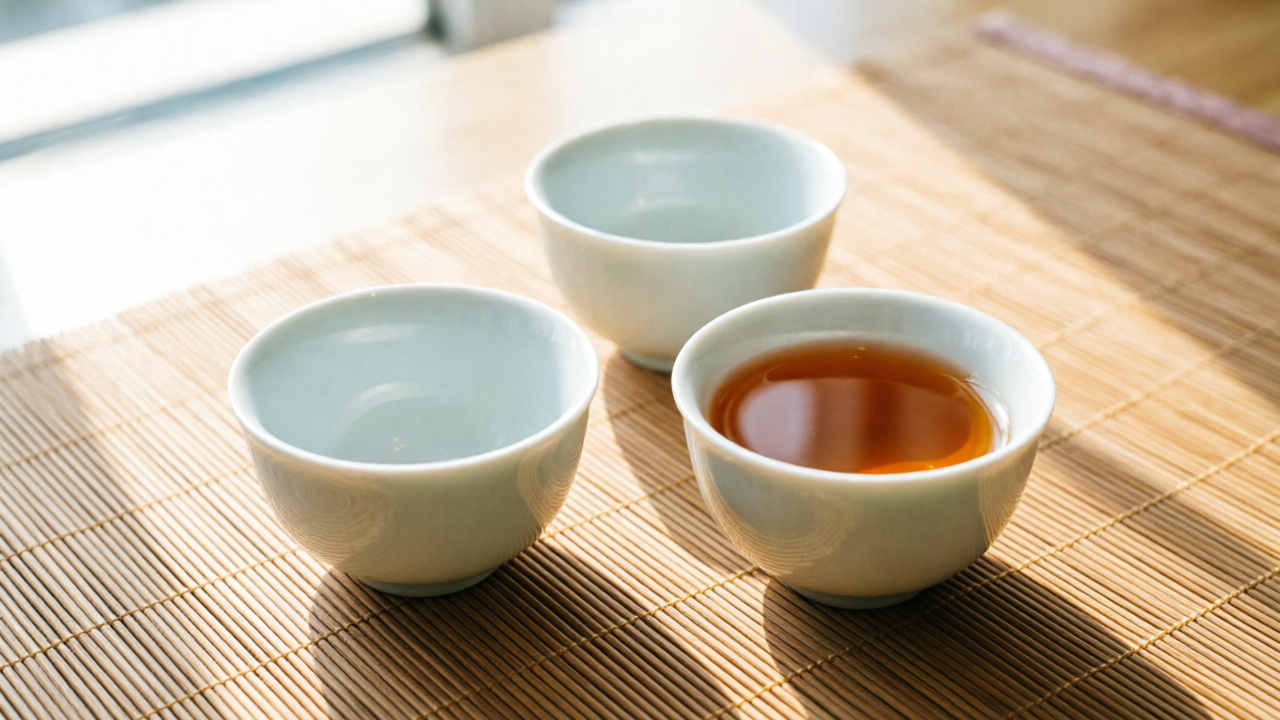 Map it to how you actually drink:
-
30-50ml — Solo gongfu tasting. Each pour fills about two to three mouthfuls. You sip, set the cup down, and pick up the next pour. Perfect for focused sessions where you want to follow one tea across multiple steeps. Start with the Porcelain Pinming Bei 50ml for evaluation, or the Gongfu Tasting Cup Set (4-pack) if you share occasional pours.
-
60-80ml — Small shared pours. A 60-80ml cup fills two per gongfu brew through a cha-hai. The Ceramic Gongfu Cup 80ml holds heat well and works for solo or guest sessions.
-
120-200ml — Daily solo drinking. One steep fills the cup. Good for desk work, casual mornings, or Western-style brewing. The Double-Wall Glass Tea Cup 200ml shows liquor color through clear glass with a cool-touch outer wall.
-
200-350ml — Western mug territory. One brew, long drink. Not covered in detail here, but worth mentioning because many first-time gongfu buyers accidentally grab a 200ml cup and wonder why their tasting session feels like a different sport.
| Session type | Volume | First pick |
|---|---|---|
| Solo gongfu tasting | 30-50ml | Pinming Bei 50ml or 4-pack tasting set |
| Shared gongfu (2 pours) | 60-80ml | Ceramic Gongfu Cup 80ml |
| Daily solo drinking | 120-200ml | Double-wall glass 200ml |
| Group gongfu | 50ml × 6 | Small tasting cups 6-pack |
For group sessions, the Small Ceramic Tasting Cups (6-pack) give everyone matching pale-glazed 50ml cups — practical for guest pours and easy stacking afterward. If you’re building a gongfu kit from scratch, the cha-hai pitcher guide explains why a fairness cup changes pour control even with perfectly sized cups [2].
Interior Color — Why Pale Glaze Matters
This is the detail most buying guides miss. The inside of a cup changes how tea looks and, by extension, how you perceive its quality before it even touches your tongue.
A pale white or celadon interior shows liquor color clearly: green tea’s pale jade, oolong’s golden amber, puerh’s deep ruby. Dark interiors hide this entirely. For tasting sessions where you assess a tea’s appearance, bloom, and clarity, a pale interior is non-negotiable [1].
The Porcelain Pinming Bei 50ml is the cleanest option — thin white walls with no glaze pattern to distract. The Celadon Tasting Cup Set adds crackle glaze texture while keeping the pale interior that shows liquor.
Dark-glazed cups like jianzhan serve a different purpose: they hide the liquor entirely, directing attention to mouthfeel and body rather than appearance. That is a valid choice — just know what you are trading off. See the Jianzhan appreciation guide for the full case on dark-glaze drinking.
Material Effect on Tea Tasting
Each material changes the drinking experience in ways that go beyond looks:
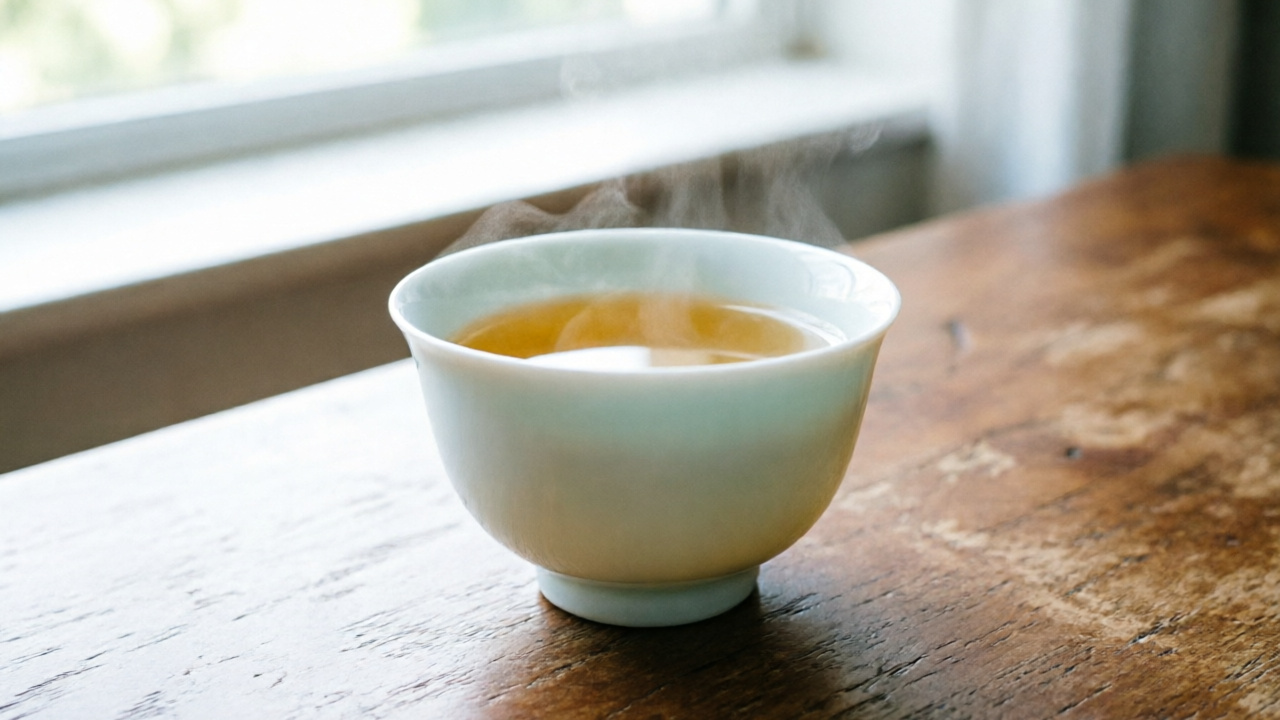
Porcelain (thin)
Neutral, shows color, no flavor transfer, and rinses clean. This is the best first cup material, just as porcelain is the best first gaiwan material. Thin walls cool faster, which suits green and white teas that don’t need prolonged heat [2].
Porcelain (thick)
Holds heat longer, heavier feel in the hand. Good for cooler environments or when you want your last sip as warm as your first. The Porcelain Tea Cup with Lid and Strainer 250ml sits in this middle ground — thick enough to hold heat, with a built-in strainer for loose-leaf daily use.
Glass
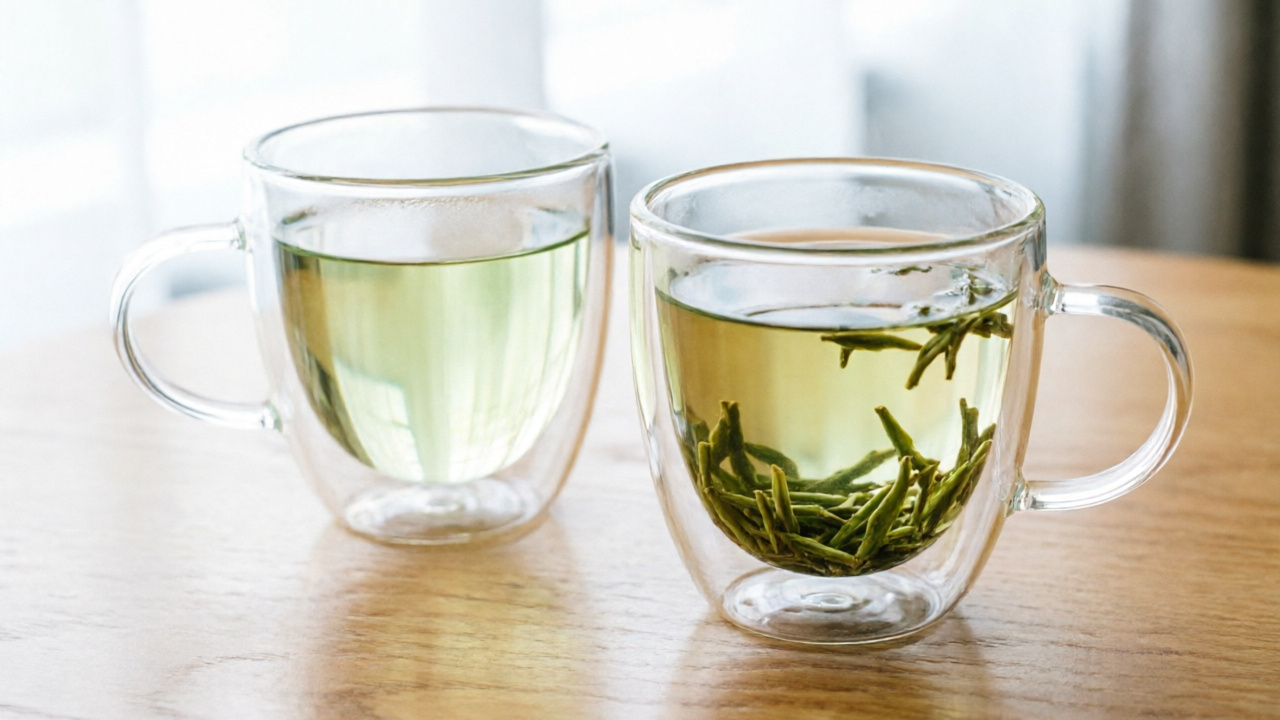
Visually stunning with green and white teas — you watch leaves spiral and settle. But glass conducts heat faster at the rim than porcelain. The Double-Wall Glass Tea Cup 200ml solves this with an insulated outer wall while keeping the clear inner view.
Glazed clay (celadon, tenmoku)
Moderate heat retention, visual depth from glaze effects. Celadon adds a smooth, cool feel on the lip. Tenmoku (the jianzhan family) adds dark, oil-spot or hare’s-fur patterns. The Jian Zhan Tenmoku Tea Cup is the thickest option here — it keeps puerh hot and rewards slow study of its glaze.
Yixing / unglazed clay
Absorbs flavor over time. A Yixing cup used only for shou puerh will season itself and eventually sweeten the brew. But you have to dedicate it. The Yixing Ceremonial Tasting Cup is the premium end of this path — unglazed zisha clay that develops patina with use.
Porcelain-first path, same as the gaiwan buying logic [3]. Clay is an upgrade for dedicated drinkers who know their tea family.
Cup Types Worth Knowing — Gongfu Cup, Pinming Bei, Xiang Bei, Jianzhan
Understanding the taxonomy helps you buy the right cup for the right purpose. Four major forms matter for gongfu practice:
-
Gongfu Cup (generic small cup): 30-80ml, everyday gongfu drinking. Rounded shape, slightly rolled rim. The Ceramic Gongfu Cup 80ml is the best example — straightforward, comfortable, no ceremony theater.
-
Pinming Bei (tasting cup): Thin-walled, 30-50ml, straight rim. Designed for evaluating tea — the thin wall releases aroma quickly and the straight shape lets you see liquor clarity from above. The Porcelain Pinming Bei 50ml is the purest form of this.
-
Xiang Bei (aroma cup): Tall and narrow, designed for smelling tea before drinking. You pour hot tea into the tall cup, cover it with a tasting cup, flip the pair, and lift the tall cup to your nose. Not covered in detail here — it belongs in a dedicated tasting session setup.
-
Jianzhan / Tenmoku: Thick dark-glazed cups from the Jian kiln tradition. The dark interior hides liquor color, the thick walls hold heat, and the oil-spot or hare’s-fur glaze patterns make each cup unique. See the Jianzhan appreciation guide for the full story [4].
For appreciation study beyond cups, the Fine vessels section on Teaware ties these forms into a larger vessel taxonomy.
Matching Cups to Tea Types
Each tea type benefits from a specific cup shape, volume, and material:
| Tea type | Best cup | Why |
|---|---|---|
| Green tea | Thin porcelain or glass | Shows jade liquor, cools fast to prevent bitterness |
| Oolong | Thin porcelain, 50-80ml | Aroma focus, mid-size lets you follow the unfolding |
| Puerh (raw/sheng) | Pale interior thin porcelain | Ruby liquor visibility |
| Puerh (ripe/shou) | Jianzhan or thick clay | Heat retention, earthy character suits dark glaze |
| White tea | Glass or thin porcelain | Watch unfurl through glass; porcelain for cooler brew |
| Black tea | Standard daily cup 120-200ml | Western-style volume is comfortable here |
The Porcelain Tea Cup with Lid and Strainer 250ml is the most versatile pick for daily drinking across tea types — white interior, lid keeps heat in, and the built-in strainer handles loose-leaf without a separate brewing vessel. For gongfu-specific sessions, the Gongfu Tasting Cup Set (4-pack) covers multiple tea types with the same pale interior baseline.
Practical Buying Filters — Rim, Feel, and Durability
Once you know the size, interior, and material, evaluate these hands-on (or through listing photos and reviews):
-
Rim thickness: Thin rims deliver aroma precisely — the tea hits the center of your tongue with minimal interference. Thick rims insulate but mute subtle aromas. For gongfu tasting, prefer thin [5].
-
Lip contour: Rolled rims (slightly outward-curved) are more comfortable for quick gongfu sipping. Straight rims suit measured tasting where you slow down for each sip.
-
Weight: Light cups (30-50g) suit gongfu — you pick up and set down dozens of times per session. Heavier cups (80-100g) suit daily drinking where one fill lasts longer.
-
Dishwasher safety: Porcelain and glass only. Jianzhan, celadon with crackle glaze, and Yixing clay cups must be hand-washed.
-
Stackability: Check whether cups nest without sticking. Pale-glazed sets like the Small Ceramic Tasting Cups (6-pack) are designed for stacking. Jianzhan and Yixing cups often have irregular bases that don’t stack cleanly.
Common Mistakes — and What to Buy Instead
-
Cup too large for gongfu (200ml+) — You end up sipping from what is basically a small bowl. Use a Western mug for daily volume and a true 50-80ml gongfu cup for sessions. The Ceramic Gongfu Cup 80ml is the fix.
-
Dark interior hides liquor color — You cannot see whether your green tea is pale jade or over-steeped yellow. Switch to the Porcelain Pinming Bei 50ml for any evaluation session.
-
Thick rim mutes subtle aromas — The tea hits your tongue through a layer of glaze and clay. Choose a thin-rimmed tasting cup like the pinming bei.
-
Buying full sets before trying singles — A 6-pack is great for guests, but you don’t know whether you like the shape or weight yet. Start with one single cup like the Handmade Gongfu Tasting Cup (Single) before committing to a set.
-
Yixing cup for daily all-tea use — Unglazed clay absorbs flavor. If you drink green in the morning and puerh at night, flavor carries over. Dedicate your Yixing cup to one tea family, or keep a glazed porcelain cup for everyday use [6].
When Study Becomes Buying — Appreciation Path
There is a threshold between studying cups and buying them. You cross it when you can name a glaze detail, identify a cup form, or describe how a material changes your tea. Before that point, buying is guesswork. After it, each purchase is a deliberate choice [5].
Start by exploring the appreciation section on Teaware. The Jianzhan appreciation guide and Chawan lineage guide show you what to look for before you spend.
When you are ready, the Yixing Ceremonial Tasting Cup is the kind of purchase that rewards study — unglazed zisha that seasons over time, dedicated to a single tea family. The Celadon Tasting Cup Set rewards a different kind of study — crackle patterns that develop as you use them.
For the wider buying path, the teaware for beginners path and teaware for tasting path help you build a cohesive set rather than a random collection of single cups.
The Mind of the Tea Cup
A tea cup is not a drinking vessel — it is a frame. The same tea shows different colors across porcelain, glass, and clay; the same rim feels warmer or thinner in a different hand. Choose by session size first, then by interior glaze, then by material. Three decisions, one cup, and a lifetime of tea to fill it with.
References
[1] Wikipedia contributors. “Teacup.” Wikipedia. https://en.wikipedia.org/wiki/Teacup — volume baselines, cultural context, cup typology.
[2] Wikipedia contributors. “Gongfu tea ceremony.” Wikipedia. https://en.wikipedia.org/wiki/Gongfu_tea_ceremony — tasting cup sizing and pour structure reference.
[3] Steep Atlas. “Gaiwan Guide: How to Choose Your First Gaiwan.” https://steepatlas.com/teaware/your-first-gaiwan/ — porcelain-first decision framing used as structural benchmark.
[4] Wikipedia contributors. “Jian ware.” Wikipedia. https://en.wikipedia.org/wiki/Jian_ware — jianzhan cup history, oil-spot and hare’s-fur glaze families.
[5] TeaTeapot. “Tea Cup Sets Guide.” https://teateapot.com/blogs/news/tea-cup-sets-guide — rim contour and material effect on tasting, buying sequence reference.
[6] Carved Ware. “What Cup Is Best for Tea?” https://www.carvedware.com/blogs/news/what-cup-is-best-for-tea/ — material breakdown for heat retention and flavor neutrality.