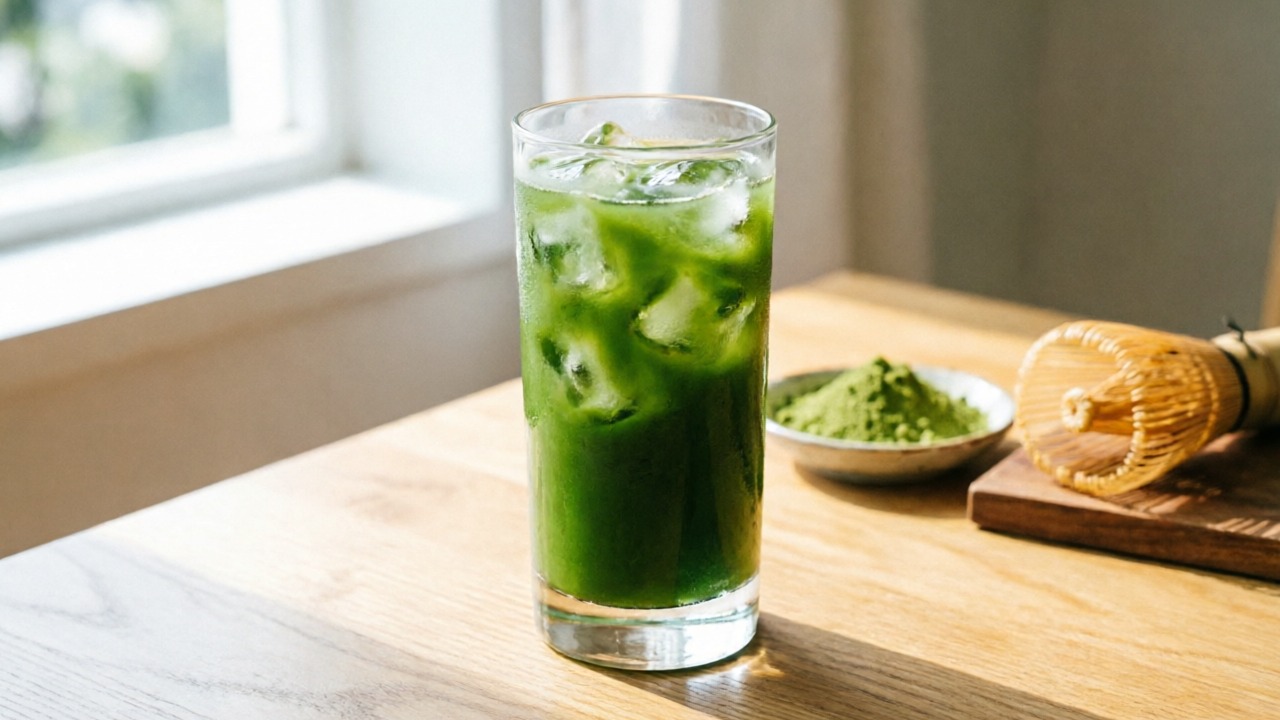
Iced matcha isn’t just hot matcha with ice cubes added. The cold changes how the powder dissolves, how the foam holds, and how you balance the strength. Most food blogs see it as a recipe swap — this guide approaches it as a different technique entirely.
Why Iced Matcha Is Different
Cold extraction changes two things at once. First, catechins — the compounds behind matcha’s bitterness — extract less readily below 60 °C [1]. That means an iced matcha can use a slightly lower-grade powder without tasting harsh, because the cold itself suppresses astringency. Second, matcha powder does not dissolve the same way in cold water as it does in hot. Fat particles in the powder clump more stubbornly at room temperature, which is why skipping the sift is more punishing in iced preparation.
The third factor is the one most recipes miss: ice dilution. A standard 12-ounce glass of iced matcha loses about 15–25% of its volume to melt-water over five minutes at room temperature [2]. If you build the drink at the same ratio you’d use for hot matcha (1 g powder per 60 ml water), the final cup tastes thin. The fix is a double-strength concentrate — 2 g matcha to 30 ml water — so the melt-water restores the balance.
Choosing the Right Matcha for Iced Drinks
Ceremonial Grade
Ceremonial-grade matcha is milled from the youngest first-harvest leaves, which have higher L-theanine and lower catechin content [1][3]. When served cold, that naturally lower astringency means you can drink it straight, without milk or sweetener. The color stays a vivid jade green rather than dulling to olive. If you’re making a pure iced matcha (no milk, no sugar), ceremonial grade is the right call.
The Jade Leaf Matcha Artisanal Barista Edition is our pick for iced drinking — it’s fine-ground enough to pass through a sifter without clumping, and it holds its bright green color even after diluting over ice.
Culinary / Premium Grade
Culinary-grade matcha comes from later-harvest leaves with higher catechin content and a more vegetal, slightly bitter flavor [1][3]. That bitterness disappears when you add milk and ice, which makes culinary-grade the smart budget pick for iced lattes. You pay roughly half the price per gram, and the milk masks the difference.
The Matcha Love Unsweetened Culinary Matcha is consistent and widely available. It’s unsweetened, so you control the sugar level — unlike pre-sweetened mixes that become cloying when cold.
What to Avoid
Pre-sweetened matcha mixes taste fine hot, but when cold the sweetness concentrates and feels syrupy. Low-quality matcha that looks brownish-grey in the tin will turn a muddy green-grey when chilled. And any powder that sat open in the cupboard for more than six months has already oxidized — cold water won’t save it.
What You’ll Need
| Item | What It Does |
|---|---|
| Ceremonial or culinary matcha | The base. Grade determines whether you serve it with milk or straight. |
| Matcha shaker bottle | The fastest path to iced matcha — shake, pour, done. No whisk needed. |
| Bamboo whisk (chasen) | Traditional tool for the whisked method. Produces finer foam than shaking. |
| Mixing bowl with pour spout | Wide enough for the M-whisk motion without hitting the walls. |
| Temp-control kettle | Needed for the whisked method to hit 80 °C precisely. |
| Handheld frother | Budget alternative to the whisk. Works well for iced. |
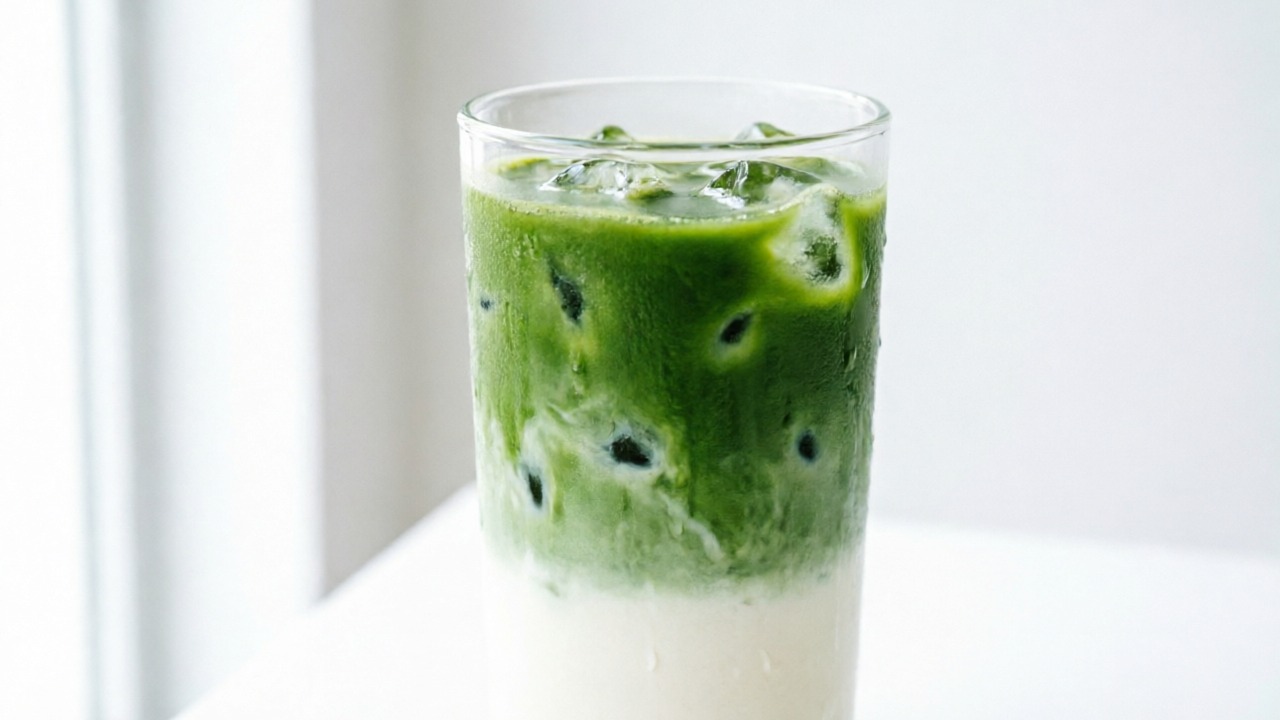
| Glass pitcher or tall glass | For serving. Glass shows off the two-tone layer. |
Method 1 — The Shaken Cup (30 seconds)
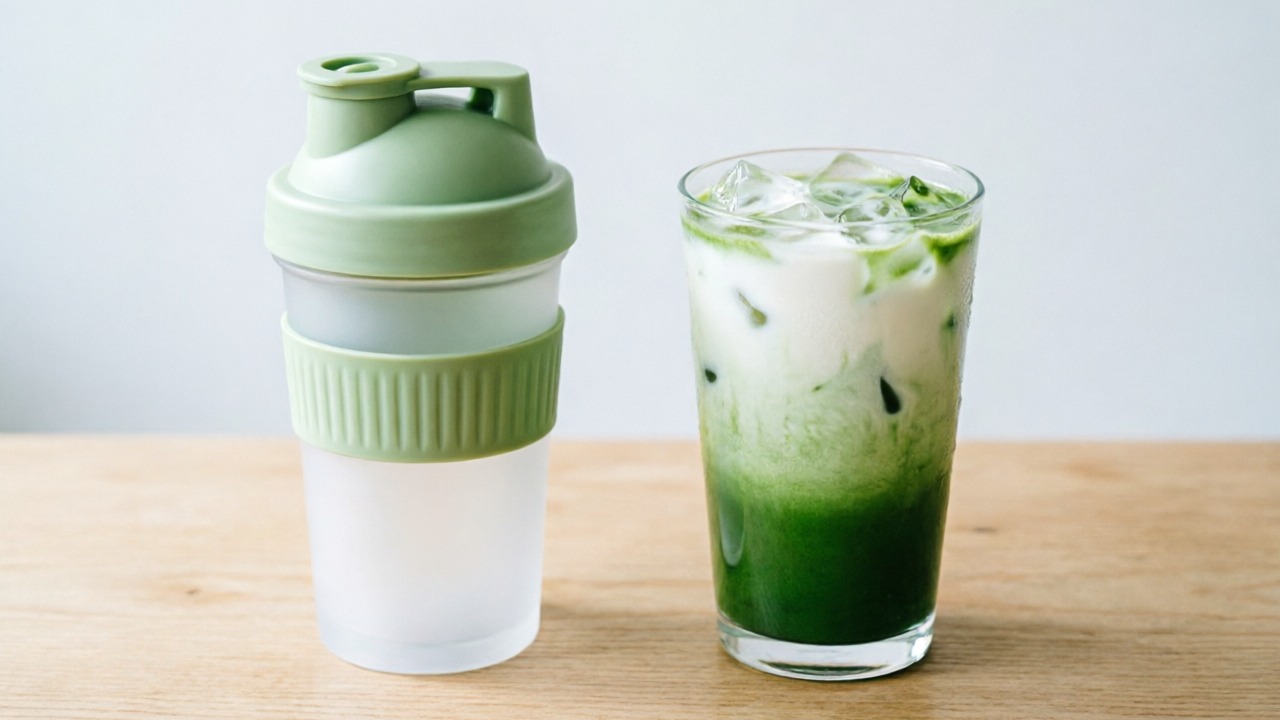
This is the method you’ll reach for on a weekday morning. No kettle, no warm-up, no whisk to clean.
Step 1: Sift 2 g matcha into a shaker bottle. Sifting is more important here than in hot preparation. Cold water can’t dissolve clumps the way hot water can, so any lump that passes through the sifter will stay intact through the entire shake. A single tap through a fine-mesh strainer is enough.
Step 2: Add 30 ml of room-temperature water. This is half the water volume you’d use for a hot cup (60 ml). The double-strength ratio — 2 g powder to 30 ml water — is what compensates for the ice that will melt later.
Step 3: Shake vigorously for 25–30 seconds. The motion creates a stable cold foam. Because the water is cold, the protein film around each air bubble does not denature the way it does in hot foam — cold foam from shaking degrades slower than hot whisked foam [2].
Step 4: Fill a tall glass with ice and 200 ml of cold milk. Use oat, whole dairy, or whatever milk you prefer — more on that below.
Step 5: Pour the matcha shot over the milk. The two-tone layer is part of the appeal. You can stir it at the table or stir for the drinker before serving. The foam cap holds for several minutes.
Using a dedicated matcha shaker bottle makes this process seamless — the integrated strainer catches any remaining powder flecks. Without one, a mason jar with a tight lid works fine; just pour through a small sieve.
Method 2 — The Whisked & Stirred Layer
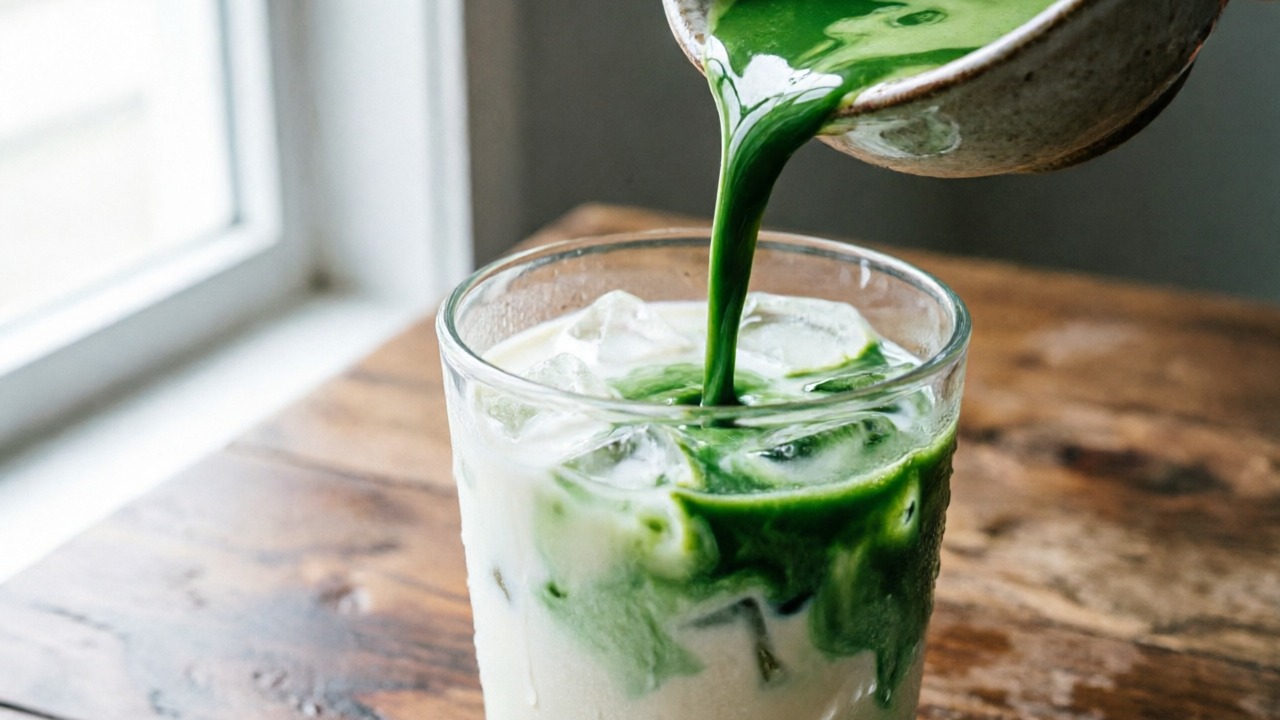
This method takes longer but produces a finer micro-foam and a more traditional matcha texture. It’s the route for a weekend cafe-style cup.
Step 1: Sift 2 g matcha into a wide bowl. Wide is key — a narrow cup leaves no room for the whisk’s M-pattern, and the powder sits unmixed at the bottom. The Jade Leaf porcelain bowl with pour spout is purpose-built for this.
Step 2: Add 30 ml of water at 80 °C. Warm water dissolves the powder more evenly than cold water, eliminating the risk of clumps that can survive a cold whisk. A temperature-controlled kettle set to 80 °C is the most reliable way to hit the right temperature. If you don’t have one, boil water and wait 90 seconds before adding it to the bowl.
Step 3: Whisk in a firm M-motion for 30 seconds. Keep the bristle tips on the bottom of the bowl. The surface will go from cloudy and streaky to glossy with fine, even foam. Stop when the texture is like soft shaving cream.
A bamboo chasen whisk produces the finest micro-foam. If you don’t have one, a handheld milk frother works — the foam is coarser but the cup tastes the same.
Step 4: Fill a glass with ice and 200 ml of cold milk.
Step 5: Pour the matcha concentrate over the ice. For extra smoothness, pour through a small strainer to catch any last flecks. The hot-concentrate-on-cold-milk creates a clean layer that holds well.
Step 6: Stir gently, or don’t — let the drinker stir at the table. Stirring too aggressively collapses the foam. A few slow turns with a long spoon are enough to integrate the layers.
Shaken vs Stirred — When to Use Each
| Dimension | Shaken (Method 1) | Whisked (Method 2) |
|---|---|---|
| Time | 30 seconds | 90 seconds |
| Equipment needed | Shaker bottle | Whisk + bowl + kettle |
| Foam type | Stable cold foam | Finer micro-foam, degrades faster |
| Best for | Office, quick, minimal gear | Home, cafe-quality, layering |
| Cleanup | Rinse shaker | Rinse whisk + bowl |
If you own both a shaker bottle and a whisk, keep the shaker for weekday mornings and the whisk for weekend cups. They don’t compete — they serve different speeds.
Milk & Sweetener Options
Dairy Milks
Whole milk gives the creamiest body and the most stable foam in iced matcha. Two-percent is lighter but still balanced. Oat milk is the best plant-based option — its beta-glucan content creates a foam that holds almost as well as dairy [2]. Almond milk foams lightly but feels thin. Coconut milk adds a noticeable tropical note that some drinkers love and others find distracting with matcha’s grassiness.
Cold milk straight from the fridge — no need to heat it for iced matcha.
Sweeteners
Honey adds a floral sweetness that plays well with matcha’s vegetal notes. Maple syrup brings an earthier character. Agave is the most neutral option. Simple syrup (equal parts sugar and water, dissolved) is the cleanest sweetener — it doesn’t add its own flavor and dissolves instantly in cold liquid.
Use 5–10 ml per 300 ml drink. Granulated sugar won’t dissolve in cold liquid and leaves a gritty texture, so stick to liquid sweeteners.
Unsweetened
Ceremonial-grade matcha has enough natural umami sweetness from L-theanine that many drinkers skip sweetener entirely when drinking it cold. If you’re using ceremonial grade and serving it with oat milk (which is slightly sweet on its own), you might not miss the sugar.
The Science of Ice Dilution
Ice melts into the drink at a predictable rate. Over five minutes at room temperature, approximately 15–25% of the beverage volume becomes melt-water [2]. A standard-strength matcha (1 g powder + 60 ml water) poured over ice ends up tasting thin because the melt-water dilutes the concentration.
The double-strength concentrate (2 g powder + 30 ml water) accounts for this. When the ice melts, it restores the original ratio rather than watering down the cup.
An alternative is matcha ice cubes — freeze matcha powder mixed with water in an ice cube tray. These add matcha as they melt instead of diluting it. The cold foam seal on top of a shaken iced matcha also slows the melt rate by insulating the liquid from ambient air.
Common Mistakes
-
Boiling water on matcha. Above 85 °C, catechins extract aggressively and create bitterness that cold milk can’t mask [1]. Use 80 °C or room-temperature water.
-
Skipping the sift. In cold preparation, a clump that survives the sift stays a clump. A fine-mesh sifter like the Jade Leaf stainless steel sifter eliminates this problem in two seconds.
-
Full-strength concentrate with no dilution compensation. Using a standard 1:60 ratio over ice leads to a watery cup. Double the powder or reduce the water to 30 ml.
-
Using sweetened matcha mix. Pre-sweetened powders are formulated for hot water ratios. When cold, the sweetness cloys. Use plain ceremonial or culinary powder and sweeten to taste.
-
Whisking in a narrow cup. An M-whisk requires a bowl at least 10 cm wide. A narrow mug traps powder at the bottom. Use a wide mixing bowl or switch to the shaken method.
Recommended Gear
If you’re starting from zero, begin with the shaker bottle — it’s the cheapest entry point and covers the fastest method. Add a whisk and bowl when you want the finer texture. The kettle becomes useful only once you’re making both hot and iced matcha regularly.
- Best for speed: Matcha shaker bottle, $14.99
- Best for texture: Bamboo whisk (2-pack), $12.49
- Best for temperature precision: Cosori gooseneck kettle, $69.99
- Best all-in-one: Hario matcha set, $99.00
This article lives in the brewing guides collection and connects to the matcha varieties guide for grade selection, the hot matcha latte recipe for the warm counterpart, the matcha tools guide for equipment deep-dives, and the cold brew tea guide for the broader iced steep approach. For those interested in the traditional context behind matcha, the matcha ceremony guide covers the full preparation.
The Mind of Iced Matcha
Iced matcha is the moment cold water meets fine stone-ground powder — a reminder that temperature changes everything. The same leaf that steams in a chawan now chills in a shaker, trading ceremony for refreshment without losing the green. Shake or whisk, the cup still holds the mind of matcha. Temperature shifts the method but not the reverence.
References
[1] Kochman, J., et al. “Health benefits and chemical composition of matcha green tea: A review.” Molecules 26.1 (2020): 85. Catechin and L-theanine solubility ranges by temperature, including extraction differences above 80 °C.
[2] Damodaran, S. “Food proteins and their applications.” Marcel Dekker (1997). Foam stabilization principles for matcha’s surface-active proteins, including cold foam mechanics and bubble degradation rates.
[3] Horie, H., et al. “Comparison of chemical components of matcha.” Chagyo Kenkyu Hokoku (Tea Research Journal) (2002). Harvest-season differences in catechin, L-theanine, and chlorophyll content across matcha grades.