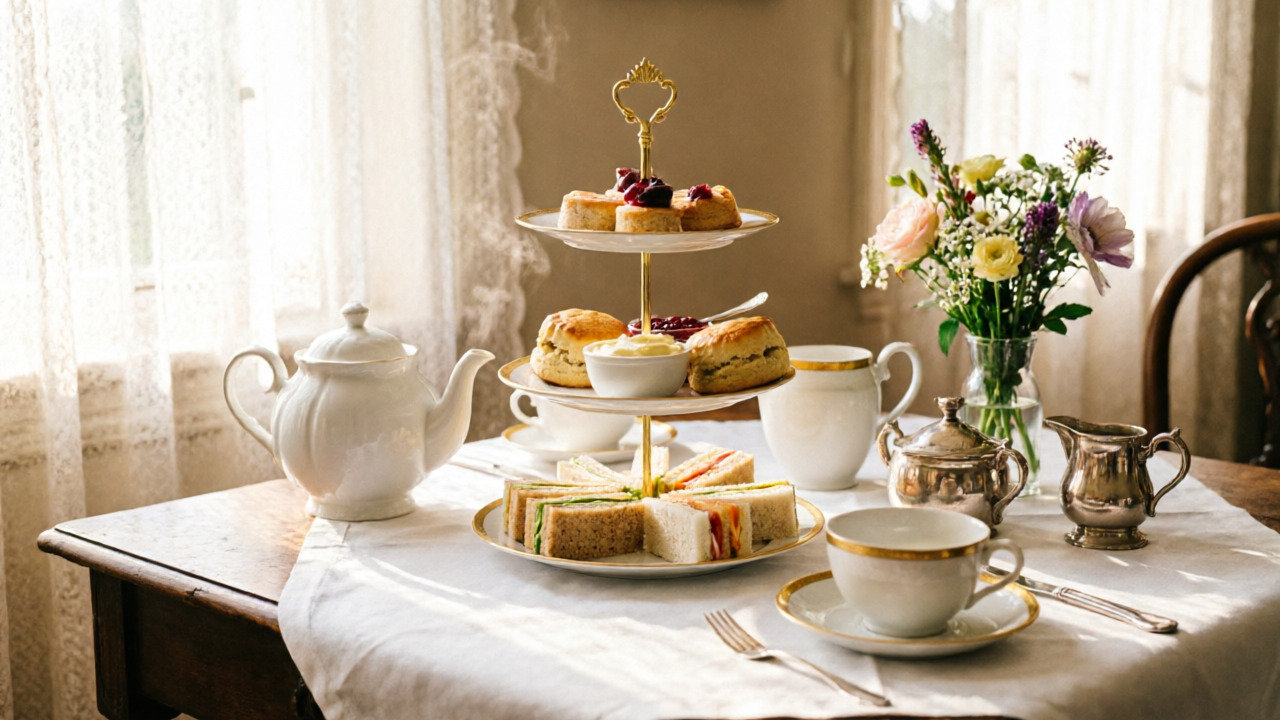
Afternoon tea is a Western tradition map - not a Japanese matcha Practice path, and not a brewing parameter classroom. I have hosted afternoon tea for friends enough times to know what actually works and what belongs in a museum. This page keeps it as what afternoon tea is, why each ware has a role (teapot, cups, tiered stand, strainer), an honest hosting timeline you can actually run, and when simplicity beats ceremony. Deep brewing parameters export to brewing pages; vessel decisions export to teaware.
What Afternoon Tea Is (and Is Not)
Afternoon tea is a British social ritual that began around 1840, credited to Anna Maria Russell, Duchess of Bedford [1]. The story: she felt hungry between lunch and dinner and asked for tea and light food in her room. Friends joined. The habit spread [1][2].
It is a structured social meal - tea brewed in a pot, served with a specific food layering: savory sandwiches first, then scones, then sweets, often on a tiered stand [2][3]. The rhythm is conversation-paced, typically 3-4pm.
It is not:
- “High tea” - that is a working-class evening meal with hearty food, served at a high dining table. The confusion is widespread [1][5].
- A Japanese Chado ceremony - different leaf, different vessel, different intent. Soft-link: Chado for that path.
- A Gongfu skill practice - different brewing grammar entirely. Soft-link: Gongfu Cha for the Chinese tradition.
If you want brewing parameters for black tea, head to water temperature and steeping time. If you want a 21-step Gongfu sequence, that lives on the Gongfu page. This is the Western tradition.
Tradition Map - Among the Four Ceremonies
TeaWithMind keeps four traditions as orientation, not as an encyclopedia [3]:
| Tradition | Origin | Core intent | Vessel focus | Tea type | Time |
|---|---|---|---|---|---|
| Afternoon Tea | Britain, ~1840 [1] | Social hospitality | Teapot + tiered stand | Black tea | 3-4pm |
| Gongfu Cha | China, ~Ming dynasty [3] | Skill + tasting | Gaiwan + cha-hai | Oolong/Pu-erh | Flexible |
| Chado | Japan, ~15th century [3] | Harmony + presence | Matcha bowl + whisk | Matcha | 2-4hr |
| Darye | Korea, ~Goryeo dynasty [3] | Respect + offering | Bowl + co-serve | Various | Structured |
Why this map matters: Western learners often confuse “afternoon tea” with “high tea” or assume all tea ceremonies share the same structure. They don’t. Afternoon tea is the only one built around food pairing and social hosting rather than brewing skill or meditative presence [3].
Tea and Ware Role Map (Not a Shopping Dump)
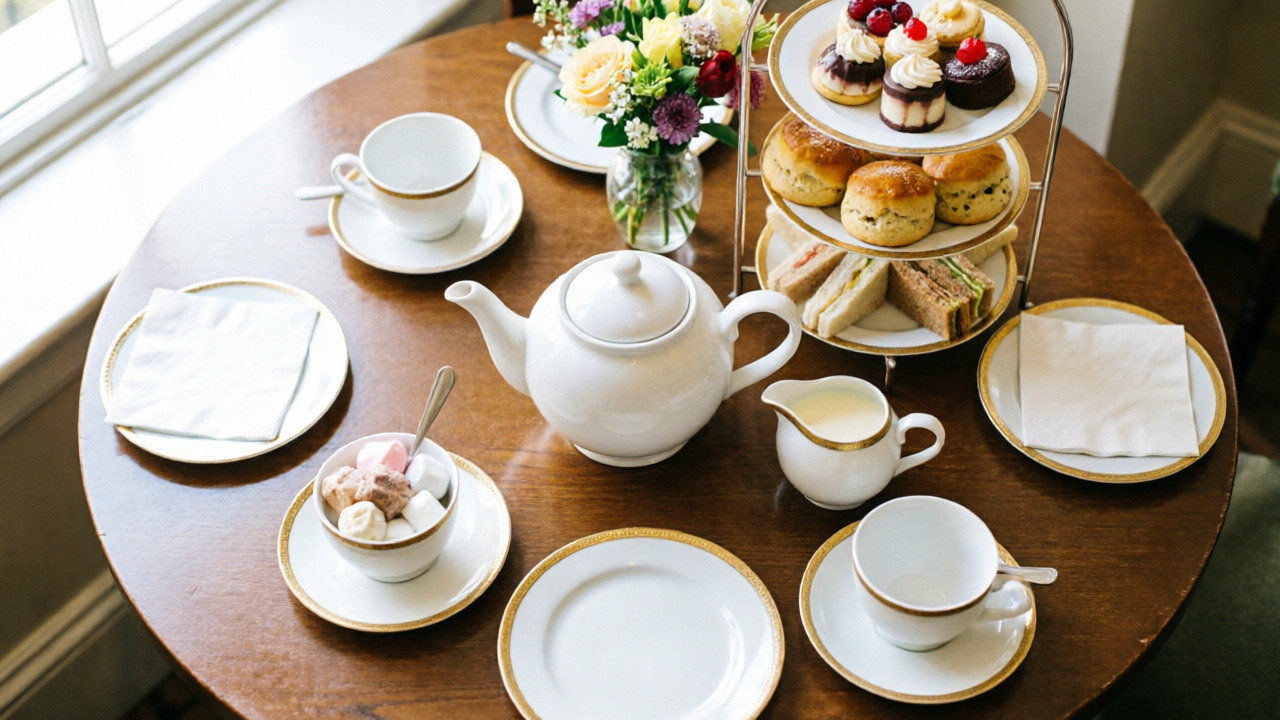
Each item has a job in the sequence. Brand top-tens belong elsewhere; roles belong here [2][4].
Tea leaf selection - three pillars:
- English Breakfast: robust, milk-friendly, everyday hosting base. Davidson’s Organics loose leaf, 16oz bag gives bulk for frequent hosting.
- Earl Grey: bergamot aroma, pairs with sweets, signature scent. Harney & Sons Earl Grey loose leaf is the classic. For organic, 20 Leaves Earl Grey, 1LB is a certified alternative.
- Darjeeling: lighter, first-flush for purists, no milk. Not every shop stocks it - buy when you find a good flush.
Black tea parameters: 95-100°C water, 3-5 minutes steep. Exact depth lives at water temperature and steeping time.
Ware role table:
| Role | Job in the sequence | Home pick |
|---|---|---|
| Teapot (6-cup) | Brews for the group | Sweejar porcelain set for 6 - complete with cups, saucer, sugar bowl, creamer |
| Cups and saucers | Individual service | Included in set above; or upgrade to fanquare blue British set for the aesthetic |
| Tiered stand | Food presentation | Sumerflos 3-tier porcelain stand if you already own cups |
| Strainer | Loose-leaf service | Reinmoson fine mesh strainer |
| Warmer | Temperature hold | Teabloom glass teapot warmer |
| Timer | Steeping precision | Lily’s Home 3-in-1 sand timer - 3/4/5 minute |
Home Sequence - An Honest Hosting Timeline
This is a runnable timeline, not a twenty-one-gesture theater list [4][5].
Prep the day before: bake scones (or buy them - no shame in a good bakery), prepare sandwich fillings, set the table with the tiered stand and cups.
Day-of timeline:
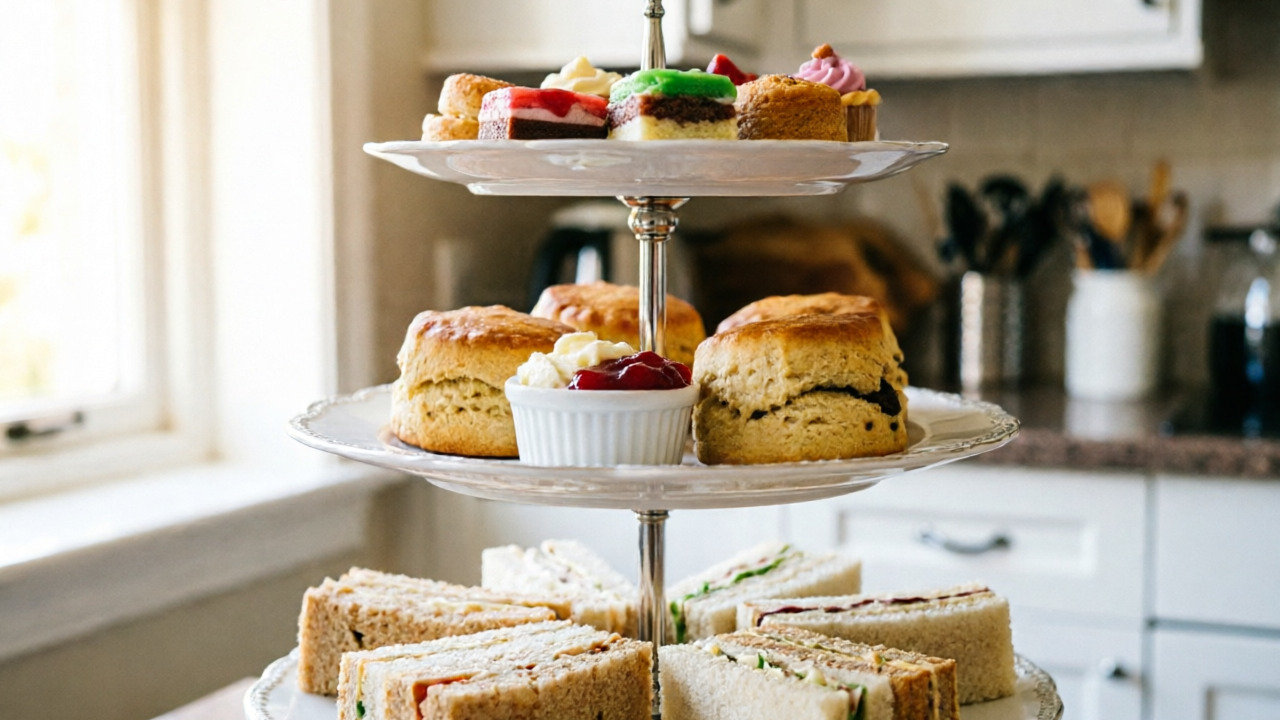
- T-60 min - Set the table. Position the tiered stand, teacups, saucers, napkins, and small plates. If you have a complete porcelain set, lay it out now so you don’t scramble later.
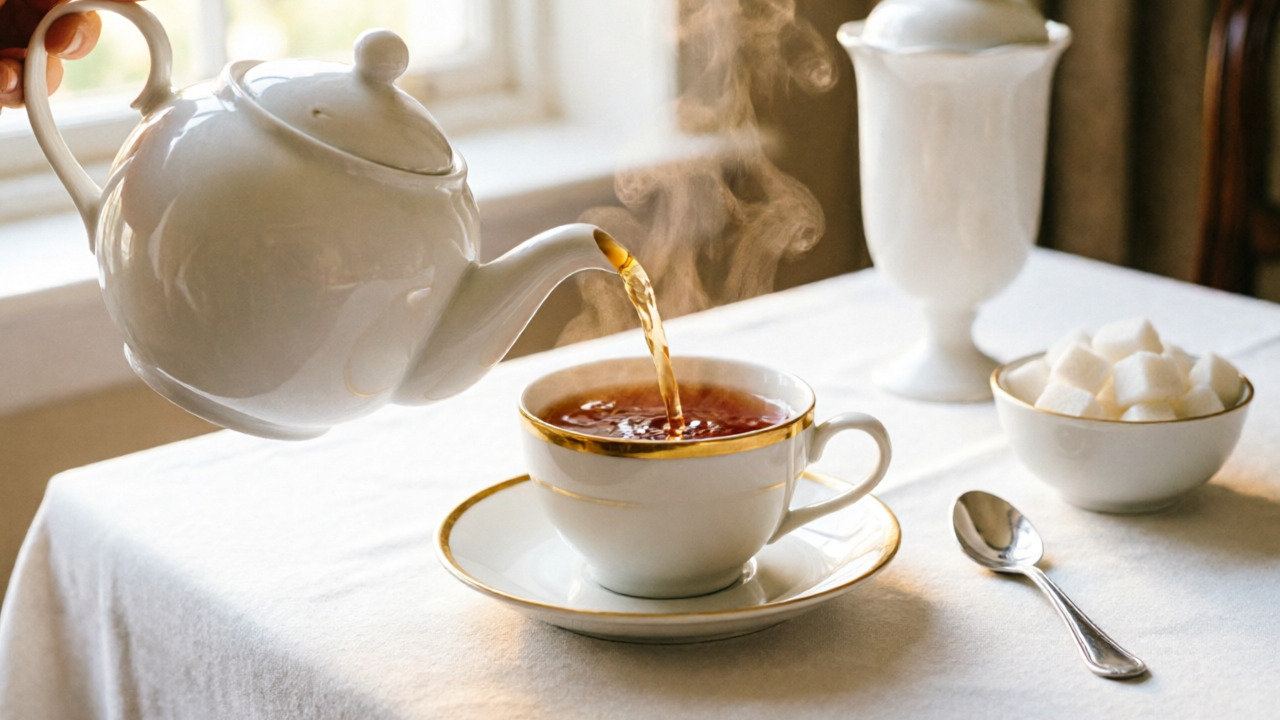
- T-30 min - Brew the first pot. Boil water, warm the teapot with a hot rinse, add loose-leaf tea (one teaspoon per cup plus one for the pot), pour at 95-100°C, steep 3-5 minutes. Use the 3-in-1 sand timer to track. Set the pot on the glass warmer to hold temperature.
 3. T-15 min - Layer food on the tiered stand. Bottom tier: savory (cucumber sandwiches, smoked salmon, egg and cress). Middle: scones with clotted cream and jam. Top: sweets (petits fours, macarons, shortbread) [2][3].
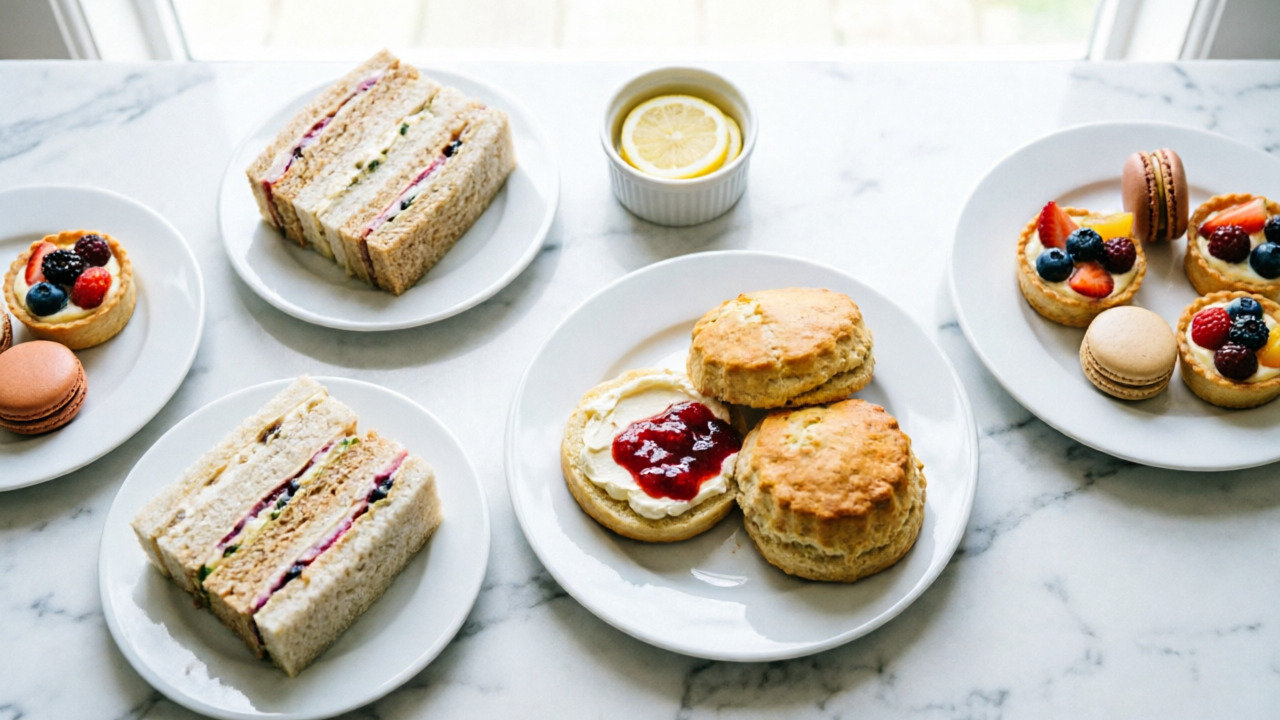 4. T-0 - Pour and serve. Host pours first. Milk debate: tradition says milk after tea so you can judge strength; either way works. Pour through a fine mesh strainer to catch loose leaves.
Serving rhythm: tea first, then savory course, then the scone course (the cream-vs-jam-first debate is a Cornwall vs Devon argument you can sidestep), then sweets. The Maxcheck all-in-one set with 3-tier stand covers both teapot and stand in one purchase if you’re starting from scratch.
When Not to Force a Full Ceremony
A full tiered-stand setup is hospitality, not a daily obligation [5].
- For 1-2 people: a single teapot and a plate of biscuits captures the spirit. No tiered stand needed.
- Casual settings: a mug and a tea bag is fine. Loose-leaf with a strainer is the upgrade path when you want depth.
- Budget constraints: start with one good tea - Harney & Sons Earl Grey - and one teapot. The tiered stand is presentation, not a requirement.
- Time constraints: a ten-minute tea pause captures the intention without the setup. That page is the honest alternative to full ceremony.
- Learning the ropes: if you’re new to tea ceremony in general, start at tea for beginners before committing to an afternoon tea spread.
Ceremony is about intention, not props. A good pot of tea shared with someone is the whole point.
Export Paths - Parameters to Brewing, Ware to Teaware
Keep boundaries clean so this tradition page doesn’t cannibalize brewing classrooms or vessel guides [3].
| Need | Go here | Status |
|---|---|---|
| Black tea brewing parameters | Water temperature | Live |
| Steeping time precision | Steeping time | Live |
| Chinese tradition contrast | Gongfu Cha | Live |
| Japanese tradition contrast | Chado | Live |
| Matcha practice path | Matcha ceremony | Live |
| Beginner culture door | Tea for beginners | Live |
| Quick alternative | Ten-minute tea pause | Live |
A Starter Kit Without Theater
Build by role, not by “best set of 2026.”
| Role | Pick | Price | Why |
|---|---|---|---|
| Tea (everyday) | Davidson’s English Breakfast, 16oz | $19 | Bulk hosting base |
| Tea (signature) | Harney & Sons Earl Grey, 4oz | $10 | Bergamot aroma with sweets |
| Tea set (complete) | Sweejar porcelain set for 6 | $66 | Teapot + cups + saucers + sugar + creamer |
| All-in-one value | Maxcheck set with 3-tier stand | $64 | Set + stand in one buy |
| Tiered stand only | Sumerflos 3-tier porcelain | $26 | If you already own cups |
| Strainer | Reinmoson fine mesh | $10 | Loose-leaf service |
| Warmer | Teabloom glass warmer | $16 | Temperature hold |
| Timer | Lily’s Home sand timer | $17 | 3/4/5 min precision |
Budget path: one tea + one teapot + one strainer = under $40. Full hosting path: all-in-one set + tea + warmer + timer = under $120. The fanquare blue British set at $73 is the aesthetic upgrade when the base kit is running.
Path Rails - Where Afternoon Tea Sits on the Site
- Hub: Ceremony Traditions (this article appears here after publish)
- Cross-tradition: Gongfu Cha (Chinese) · Chado (Japanese) · Matcha ceremony (Practice lane)
- Beginner entry: Tea for beginners
- Quick alternative: Ten-minute tea pause
- Brewing export: Water temperature · Steeping time
The Mind of Afternoon Tea
Afternoon tea is hospitality made visible - a teapot, a layered stand, and a room that slows down. Unlike Gongfu’s skillful precision or Chado’s meditative stillness, the British tradition asks you to hold space for conversation and warmth. Pour one cup. Offer it. The ceremony is not in the props but in the pause you create for another person.
References
[1] Wikipedia - Afternoon tea. Historical origin (~1840, Duchess of Bedford Anna Maria Russell), distinction from “high tea.”
[2] Twinings - How to host the perfect afternoon tea. Hosting guide structure, teaware selection, tea leaf pairing.
[3] Wikipedia - Tea ceremony. Cross-tradition orientation (Chinese / Japanese / Korean / English).
[4] Tea Trolley - Complete guide to afternoon tea. H2 structure reference, etiquette overview, hosting tips.
[5] Historic UK - Afternoon Tea. Etiquette authority, “high tea” distinction, table conduct.