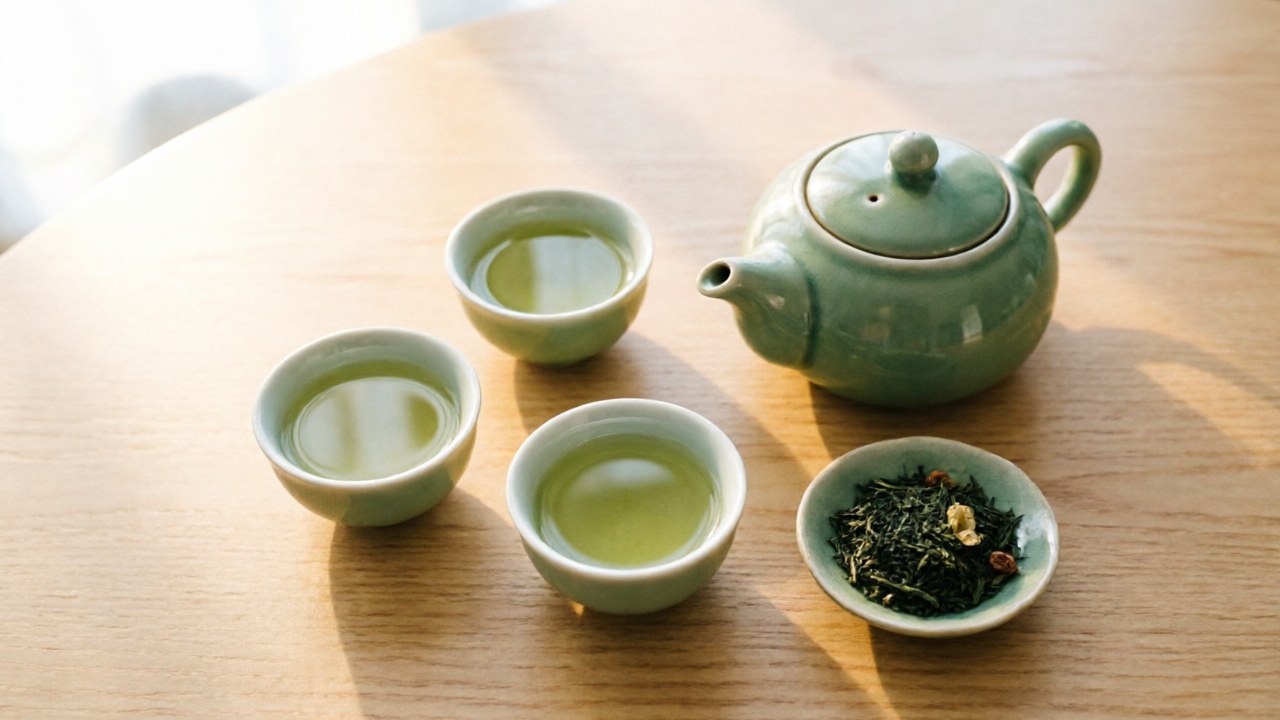
Darye (다례) is Korea’s tea ceremony tradition — built on Confucian hospitality rather than Japanese meditative silence or Chinese multi-steep skill. You don’t need a temple, a matcha bowl, or twenty-one steps. You need a teapot, green tea, and the willingness to serve someone else first. Below: a vessel-role map, a green tea grading guide, and a seven-step home sequence you can run tonight.
What Darye Is (and Is Not)
Darye translates to “etiquette for tea” or “tea rite” — a Korean tradition stretching back over a thousand years [1]. Its roots are Confucian: the ceremony is an act of respect between host and guest, a grammar of hospitality rather than a performance of skill [1].
Three principles anchor the practice:
- Jeong (正) — correctness in preparation
- Ye (禮) — etiquette, the ritual of courtesy
- Mangyeong (忘敬) — “forgetting shape,” meaning natural, unforced respect that doesn’t draw attention to itself [2]
What Darye is: a relaxed hospitality sequence where host and guest share tea and conversation. What it is not:
- Japanese chanoyu — different leaf (nokcha vs matcha), different bowl path, far more rigid protocol
- Chinese Gongfu Cha — different vessel grammar entirely; Gongfu is skill multi-steeping, Darye is etiquette
- A brewing classroom — temperature and ratio parameters matter, but they export to green tea brewing
- A wellness page — no health claims here
If you’re new to tea ceremonies broadly, start with tea culture for beginners before diving into any single tradition.
Tradition Map — Among the Four Ceremonies
Darye occupies a specific position among the world’s major tea traditions:
| Tradition | Frame | Spirit |
|---|---|---|
| Gongfu Cha | Chinese skill multi-steep | Skillful attention |
| Chado / Chanoyu | Japanese powdered matcha + bowl | Meditation, four principles |
| Darye | Korean etiquette + offering | Respect, relaxation, hospitality |
| Afternoon tea | English service + table | Social gathering |
Darye is the most relaxed of the four — designed for host-guest comfort, not rigid protocol [2]. Where chanoyu demands silence and precise movement, Darye encourages conversation. Where Gongfu rewards technical mastery of multiple steeps, Darye rewards the gesture of serving someone before yourself.
For a simpler home practice without the full tradition, matcha ceremony home practice offers a lighter entry point.
Korean Tea Ware — Celadon and the Dabang
Every vessel in Darye has a role in the sequence — not a shopping list, but a function. Here’s what each piece does:
| Role | Job in the Sequence | Home Pick |
|---|---|---|
| Celadon teapot (청자) | Main brew vessel; jade-green glaze holds heat gently | Seres Celadon Teapot |
| Dabang (다방, tea set) | Complete hosting set for multiple guests | Dahlia Ice Crack Celadon Set |
| Teacups (잔) | Small porcelain cups for guest service | Skyley Korean Ceramic Cups |
| Kettle | Boiling water for nokcha preparation | CAXUSD Korean Tea Kettle |
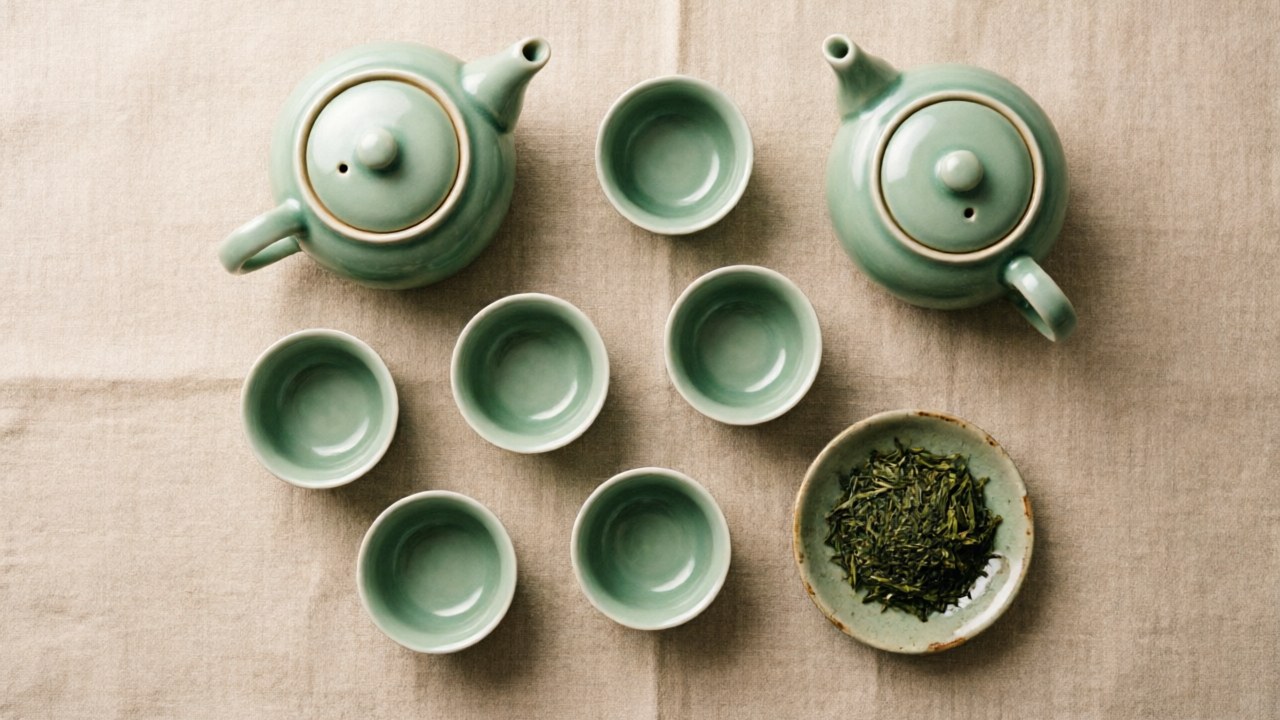
Goryeo celadon (고려청자) is Korea’s signature ceramic — its jade-green glaze has been recognized as culturally significant for centuries, with Goryeo celadon kiln sites inscribed on the UNESCO World Heritage list [3]. The glaze isn’t decorative; it holds heat evenly, which matters for green tea that scorches above 80°C.
How does this compare to other traditions? Japanese chawan (matcha bowls) are wide and open for whisking powder. Chinese gaiwan (lidded brewers) are designed for rapid multi-steep pouring. Korean celadon teapots sit in between — a brewing vessel that’s also a serving vessel, reflecting Darye’s emphasis on the host directly caring for the guest.
For deeper vessel decisions, see how to choose a gaiwan and teaware care.
Korean Green Tea — From Woojeon to Jungjak
Korean green tea (녹차, nokcha) uses a unique grading system based on harvest timing — different from Chinese or Japanese grading [4].
| Grade | Harvest | Character | Best For |
|---|---|---|---|
| Woojeon (우전) | Before April 20 (Gogu) | Tenderest, sweetest | Special ceremony, gifts |
| Sejak (세작) | Late April | Bright, clean, balanced | Everyday Darye practice |
| Jungjak (중작) | Early May | Fuller body, slightly grassy | Daily drinking |
| Daejak (대작) | Mid-May onward | Robust, astringent | Cooking, bulk use |
For authentic Korean nokcha, Osulloc Jeju Green Tea comes from Jeju Island — one of Korea’s most recognized tea-growing regions. For everyday practice, Surasang Brown Rice Green Tea blends hyeonmi (roasted brown rice) with green tea for a nuttier, more forgiving cup.
Brewing parameters — water at 70–80°C, about 1 minute for the first steep — follow the same logic as any green tea. Full details live in our green tea brewing guide.
Home Sequence — Seven Honest Steps
This isn’t a 21-step temple ceremony. It’s a runnable home map for hosting a guest with Korean etiquette [5].
-
Set the table — place your celadon teapot, cups, and a kettle on a clean surface. The arrangement itself is part of the etiquette — a tidy table signals care for your guest before they arrive.
-
Warm the vessels — pour hot water through the celadon teapot and cups, then discard the water. This warms the porcelain and tells your guest you’ve prepared for them specifically.
-
Place the leaf — portion Korean green tea into the warmed pot. Sejak grade is the sweet spot for home practice — balanced without being prohibitively expensive.
-
Brew — water at 70–80°C, first steep about 1 minute. Exact parameters live in our green tea brewing guide. Don’t overthink it — Darye values the gesture over precision.
-
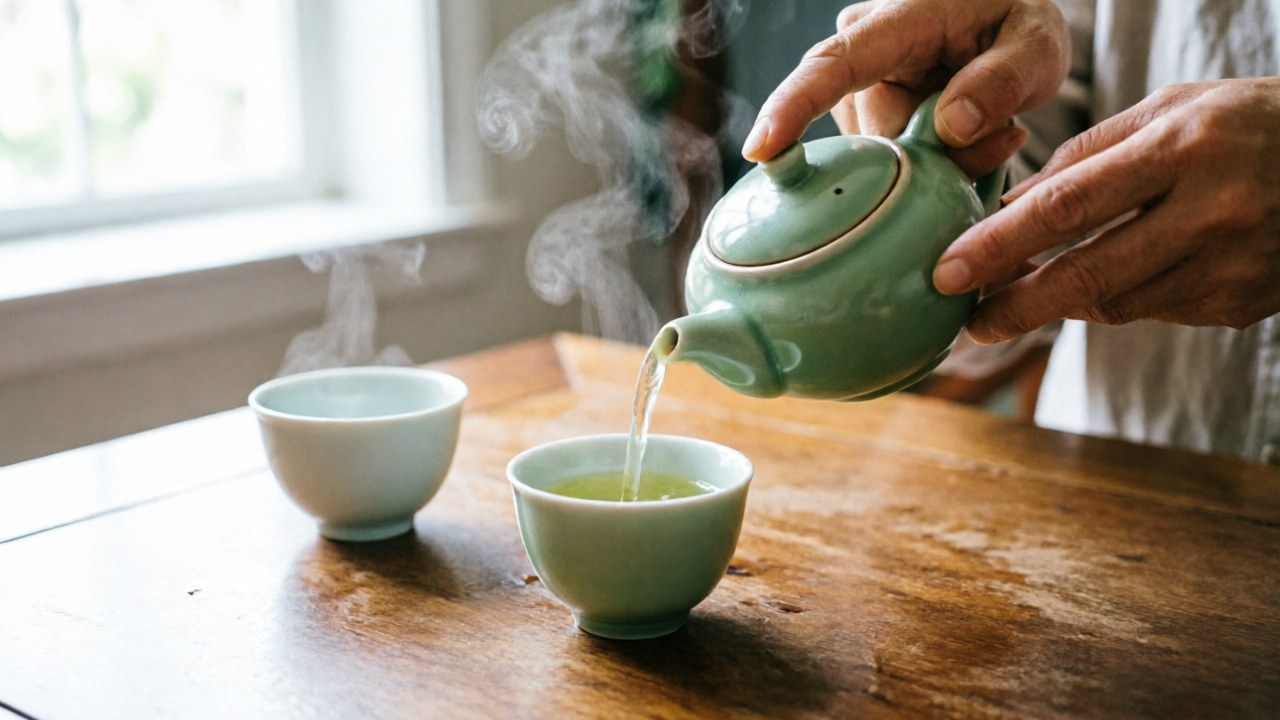
Pour for the guest first — the host serves the guest before themselves. This is the core of Darye: ye (禮), the ritual of courtesy [1].
-
Receive with both hands — guests accept the cup with both hands or a slight bow. This is mangyeong (망경) — “forgetting shape” — meaning natural respect, not stiff performance [2].
-
Share conversation — Darye is designed for relaxed social exchange, unlike the silent formality of chanoyu [2]. Talk. Laugh. Pour a second round.
When Not to Force a Full Ceremony
Not every cup of tea needs to be a ceremony. Darye’s flexibility is its strength:
- Solo morning — a mug of brown rice green tea is honest. Start with how to brew tea and let the ceremony come later.
- Guest is rushed — one pot poured into celadon cups beats a half-finished ceremony. The etiquette is in the pour, not the duration.
- No celadon set — any porcelain teapot works. The etiquette lives in the gesture, not the ware.
- Paebaek note: Korean wedding tea ceremony (폐백, paebaek) uses the same etiquette grammar — serving elders first, receiving with both hands — but in a formal family setting. It’s not daily practice.
When you’re ready to reset and explore more, head to tea culture for beginners.
A Starter Kit Without Theater
You don’t need everything at once. Here’s a tiered approach:
| Item | Role | Pick |
|---|---|---|
| Korean green tea | The leaf — sejak grade for balance | Osulloc Jeju Green Tea |
| Celadon teapot | Main vessel — jade-green porcelain | Seres Celadon Teapot |
| Korean cups | Guest service — small porcelain | Skyley Ceramic Cups |
| Kettle | Heat control | CAXUSD Tea Kettle |
| Complete set (optional) | Full hosting for 6 guests | Dahlia Ice Crack Celadon Set |
| Gift set (optional) | Flower tea for special occasions | KKOKDAM Flower Tea Gift Set |
Budget path: kettle + any porcelain pot + cups. You can run the full seven-step sequence with this.
Upgrade path: celadon set + bulk Damtuh green tea for regular practice.
Where Darye Sits on the Site
| Need | Go Here |
|---|---|
| First-cup brewing (no ceremony) | How to brew tea |
| Green tea parameters | Green tea brewing |
| Gongfu tradition (Chinese skill) | Gongfu Cha |
| Chado tradition (Japanese meditation) | Chado |
| Afternoon tea tradition | Afternoon tea |
| Matcha home practice | Matcha ceremony |
| Tea culture door | Tea for beginners |
| Traditions hub | Ceremony hub |
The Mind of Darye
Darye teaches that etiquette isn’t stiffness — it’s care made visible. When you pour for your guest first, warm the cups with intention, and receive each cup with both hands, you practice ye (禮), the ritual of respect. The tea is nokcha, the vessel is celadon, but the real ceremony is the unhurried attention you offer the person sitting across from you.
References
[1] Korean Tea Ceremony — Darye (다례). Wikipedia. https://en.wikipedia.org/wiki/Korean_tea_ceremony [2] The Spirit of Korean Tea Culture. Antique Alive. https://www.antiquealive.com/Blogs/Dado_Korean_Tea_Ceremony.html [3] Goryeo Celadon Kiln Sites — UNESCO World Heritage List. UNESCO. https://whc.unesco.org/en/list/976 [4] Korean Green Tea Grading System. Steeped Travels. https://steepedtravels.com/korean-tea-ceremony-darye-a-guide-to-korean-tea-culture/ [5] Korean Tea Ceremony Guide — Steps and Etiquette. Steeped Travels. https://steepedtravels.com/korean-tea-ceremony-darye-a-guide-to-korean-tea-culture/