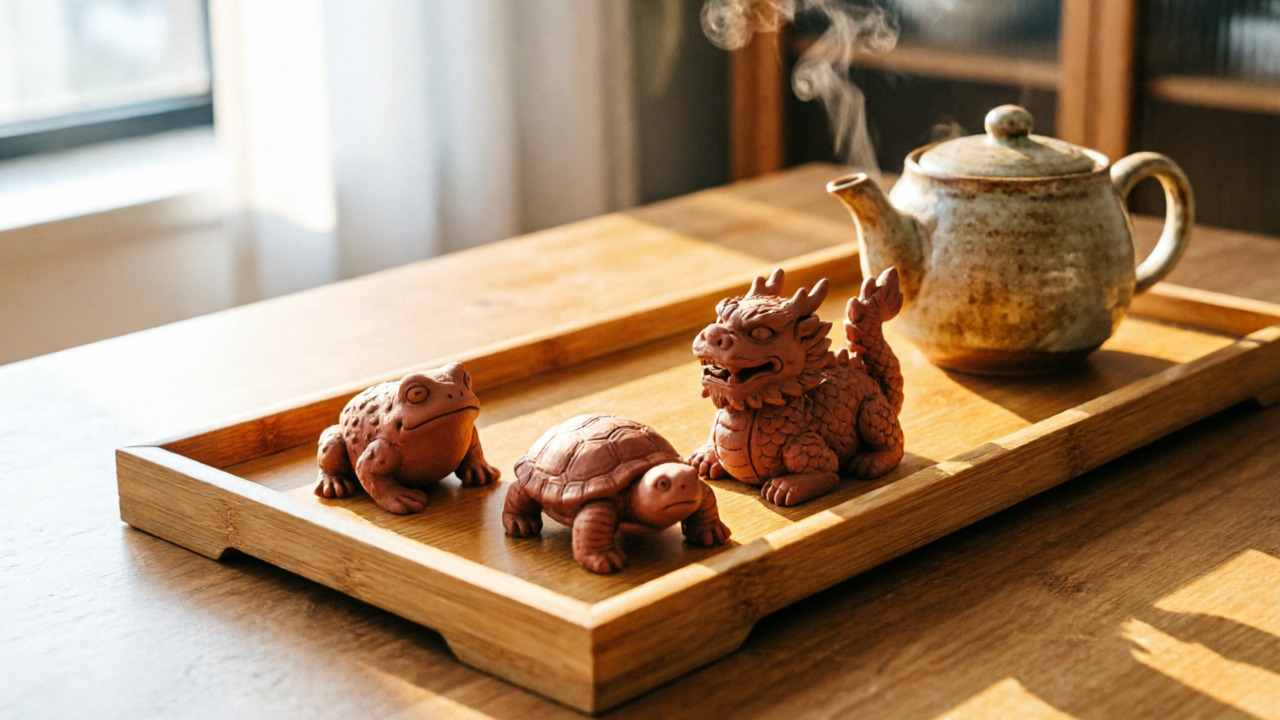
Tea pet figures are small unglazed clay animals and mythical creatures that live on your gongfu tea tray. Each one carries centuries of cultural symbolism, and each develops a unique patina as you pour tea over it day after day. This guide covers the major figure categories, clay materials, cultural meanings, and a practical framework for choosing your first clay companion. For the full patina journey and daily care routine, see our how to raise a tea pet guide.
What Tea Pet Figures Are (and Why They Sit on the Tray)
A tea pet (chachong, 茶宠) is a palm-sized figure placed on the gongfu tea tray alongside your teapot and cups. The practice started in Yixing, Jiangsu province, where zisha clay artisans crafted small animal and mythical figures as companions for the tea table [1].
Unlike a figurine that sits on a shelf, a tea pet is an active participant in every session. When you warm the pot, rinse leaves, or discard the last pour, you pour the tea over the pet instead of wasting it. The porous clay absorbs the liquid, and over months the surface transforms from raw matte to a smooth, warm sheen called baojiang — the same patina that develops on a well-used Yixing teapot.
This makes the figure more than decoration. It’s a quiet record of every cup you’ve brewed. Browse more tea pet culture on our hub page.
The Three Clay Families
The material your tea pet is made from determines everything — whether it develops patina, how fast, and what color it turns. Three materials dominate the market:
Zisha (Yixing purple clay) is the traditional standard. Its dual-pore structure — microscopic channels visible only under magnification — absorbs tea oils and tannins with each pour [2]. This is the material that creates the deepest, richest patina. The EatingBiting Zisha Golden Toad ($14.50) is a classic example: authentic zisha, smooth body, and the most popular symbolic figure in tea pet culture.
Nixing clay comes from Qinzhou, Guangxi. It has similar porosity to zisha but a different mineral profile that gives it a darker, reddish-brown natural color. Nixing develops patina well, though slightly slower than zisha in practice.
Color-changing resin and glazed ceramic are modern innovations. A thermal-reactive glaze shifts hue when hot tea hits the surface — a visual trick that delights new tea drinkers. The EatingBiting Zisha Fox ($12.70) uses this effect alongside traditional clay form. But here’s the trade-off: these materials are non-porous. Tea runs off without penetrating. A color-changing pet will look the same after a year of pouring as it did on day one. No patina, just the color shift.
That doesn’t make them inferior — it makes them different. Some drinkers want the visual surprise; others want the slow transformation. Know which one you’re buying.
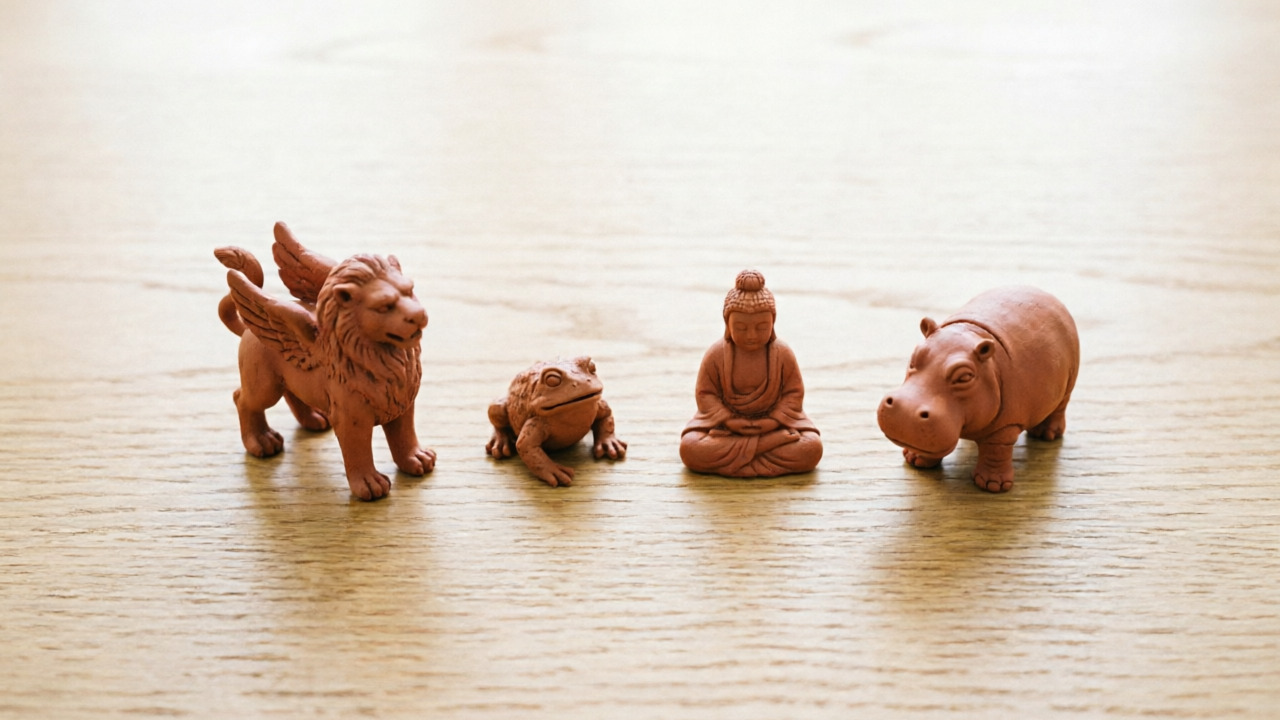
Figure Categories: From Mythical Creatures to Modern Companions
Tea pet figures fall into four broad categories. Each carries distinct symbolism, and each interacts with tea differently based on its surface texture.
Mythical Creatures (Pixiu, Dragon, Golden Toad, Qilin)
Mythical figures draw from Chinese folklore spanning over a thousand years. They’re the most traditional category — and the most detailed.
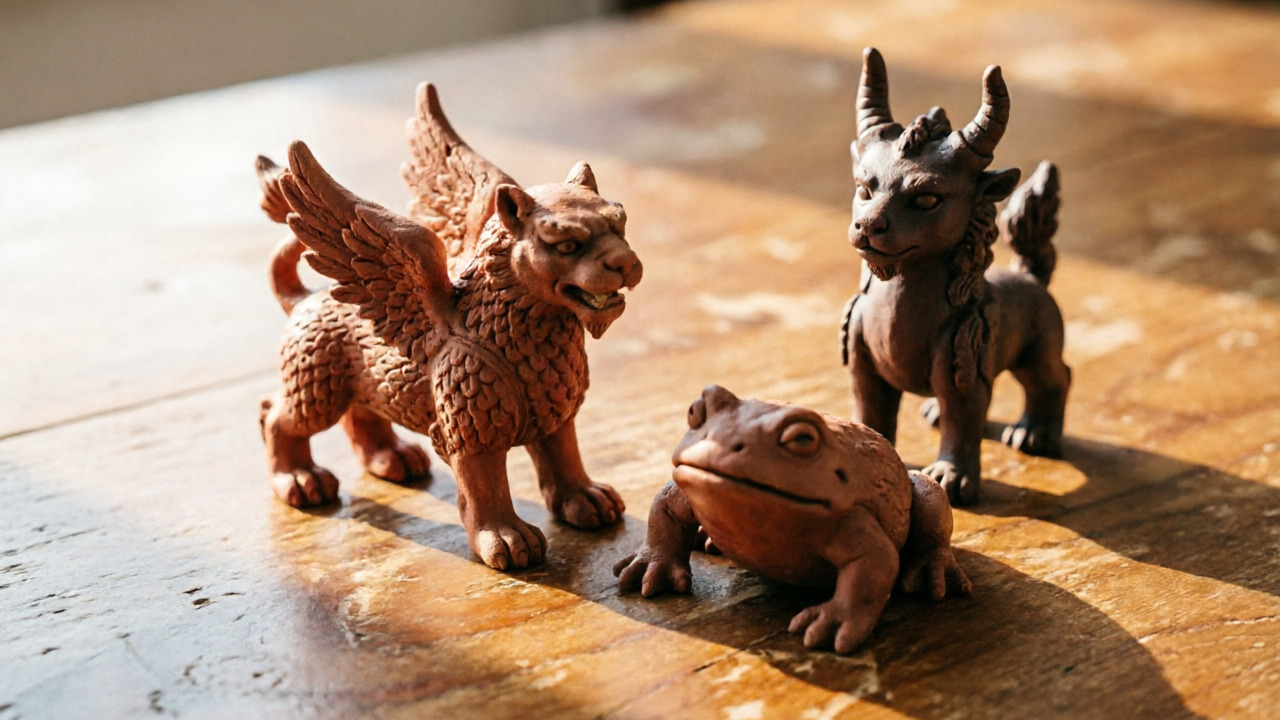
Pixiu (貔貅): In Chinese mythology, Pixiu is the ninth son of the Dragon King, said to feed on gold and silver without excreting it [3]. The figure is detailed with wings and scales, which means tea pools in the crevices, creating contrast between raised and recessed areas. The Dragon Turtle Pixiu ($22.50) combines Pixiu elements with the dragon turtle (Bixi) form — the most intricate figure you can buy for a tea tray.
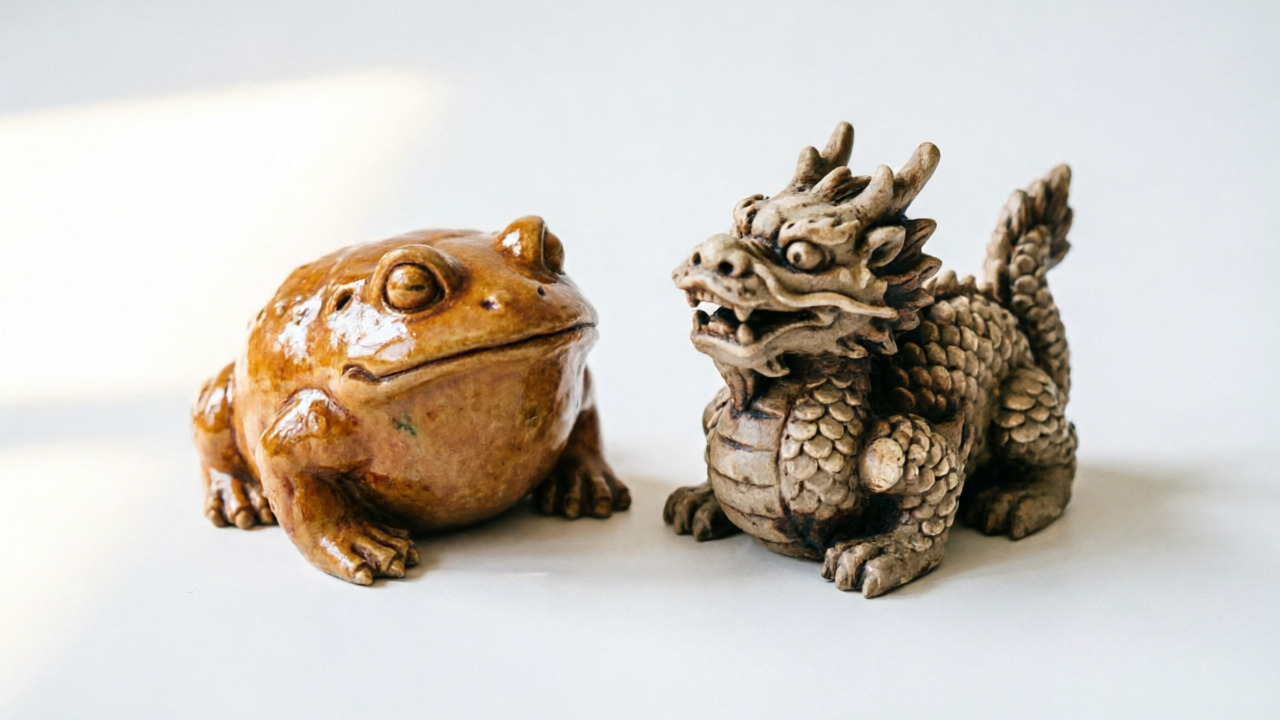
Three-Legged Golden Toad (金蟾/Chan Chu): The toad comes from the legend of Liu Hai, a Daoist immortal who lured a golden toad with a string of coins [3]. It’s the most popular wealth symbol in tea pet culture. Its smooth body develops even patina faster than any other figure type. The zisha golden toad ($14.50) is the figure most tea drinkers buy first.
Dragon (龙): Power and authority. Dragons have complex scale patterns that slow patina development — tea collects unevenly in the scale grooves, creating a textured, patchy look that some collectors prefer.
Qilin (麒麟): A hooved chimera representing prosperity and serenity. Moderate detail level — more textured than a toad, less than a dragon.
Animals (Pig, Bat, Turtle, Cat, Fox)
Animal figures are less formal than mythical creatures but carry equally rich symbolism. They’re often simpler in shape, which means faster, more even patina.
Pig (猪): Wealth and abundance in the Chinese zodiac. The round body shape creates an even surface that takes patina uniformly.
Bat (蝠/fú): The Chinese word for bat sounds identical to 福 (fú, “fortune”). Bats represent happiness and good fortune. The zisha bat ($10.50) is one of the most affordable authentic zisha figures available.
Turtle (龟): Longevity and patience. The smooth shell is ideal for patina development — tea spreads evenly across the broad surface. The zisha turtle ($14.20) is a favorite for drinkers who want visible results within weeks.
Cat (猫/Maneki Neko): A cross-cultural figure that bridges Japanese and Chinese tea traditions. The zisha lucky cat ($9.30) makes a popular gift for tea lovers who appreciate both cultures.
Fox (狐): Cleverness and adaptability. Modern fox figures often use color-changing glaze for a visual surprise element, though this means no patina development.
Buddha and Bodhisattva Figures
Buddhist figures — typically Jizo (地藏), the bodhisattva of travelers and children, or a laughing Buddha — bring a contemplative element to the tray. They’re usually made from sandstone or ceramic rather than zisha, giving them a different texture and color palette. The Jizo Monk statue ($8.80) in sandstone is an example — its muted grey tone contrasts beautifully with the warm browns of zisha figures.
These figures aren’t objects of worship. They serve as mindfulness anchors — a visual reminder to slow down and pay attention during the session.
Modern and Playful Figures
Newer designs cater to casual and younger tea drinkers who want personality over tradition. The zisha hippo ($12.30) is a modern favorite — its smooth, rounded body develops patina quickly, and the figure itself is a conversation starter. Other modern figures include capybaras, pandas, and novelty characters that bridge traditional tea culture with contemporary taste.
How to Choose Your Tea Pet Figure
Don’t just pick the figure with the most impressive symbolism. The right tea pet is the one you’ll actually enjoy pouring tea over for months and years.
Pick by Personality (Not Just Symbolism)
Different tea drinkers gravitate toward different figures:
- The Collector: Detailed mythical creatures like the dragon turtle or Pixiu. Slower patina, but visually striking from day one. Each crevice tells a story over time.
- The Casual Drinker: Smooth animals like the toad, turtle, or hippo. Fast, even patina with minimal effort. These figures look noticeably different within weeks.
- The Gift-Giver: Zodiac-year matching adds thoughtfulness. A turtle for someone born in a water year, a dragon for an ambitious friend, a Jizo for someone who needs calm.
- The Mindfulness Seeker: Buddha or Jizo figures. Not patina-driven — the focus is on presence and aesthetic, not transformation.
Pick by Patina Potential
Figure shape affects how tea interacts with the surface:
- Smooth surfaces (toad, turtle, hippo) — tea spreads evenly, patina develops fast and uniformly. Visible change within 1–2 months of daily pouring.
- Detailed surfaces (dragon scales, Pixiu wings) — tea pools in crevices, creating darker pockets against lighter raised areas. Slower, uneven, but some collectors find the contrast more interesting.
- Non-porous surfaces (color-changing resin, glazed ceramic) — zero patina. The color shift is the only transformation you’ll see.
For the full patina timeline — what to expect at 1 month, 6 months, and 1 year — see our tea pet care guide.
Pick by Budget
| Tier | Price Range | What You Get | Example |
|---|---|---|---|
| Budget | $8–13 | Small zisha animal or sandstone Buddha | Bat ($10.50), Hippo ($12.30) |
| Mid | $12–18 | Larger zisha figures, color-changing variants | Toad ($14.50), Turtle ($14.20) |
| Premium | $20–30 | Complex mythical creatures, dragon turtle, large Pixiu | Dragon Turtle Pixiu ($22.50) |
Displaying and Collecting Tea Pet Figures
Placement: Your tea pet should sit where tea naturally reaches it when you pour. The center or front corner of the tea tray works well — just don’t block the water drainage channel. If you’re choosing a tray, our tea tray guide covers sizes and drainage styles that work with figures.
Rotation: Some collectors rotate figures by season — a turtle in summer, a Pixiu during the New Year. Others keep one dedicated pet year-round and let it build a deep, personal patina. There’s no wrong approach, but starting with one figure and getting to know it is better than spreading your tea across five pets at once.
Gifting etiquette: Never gift a broken or chipped figure — it’s considered careless in Chinese tea culture. Zodiac-year matching adds thoughtfulness: a dragon for someone born in a dragon year, a rabbit for a rabbit-year birthday. When in doubt, the golden toad and the lucky cat are universally welcome gifts.
Collection growth: Start with one. Pour tea over it for a few months. Notice which aspects you enjoy — the symbolism, the patina change, the shape, the conversation it sparks. Let that guide your second figure.
Common Mistakes with Tea Pet Figures
- Buying glazed or resin expecting patina — Only unglazed zisha or nixing clay develops the glossy baojiang surface. If the figure feels smooth and glassy out of the box, it’s likely glazed and will never change.
- Forcing symbolism over personal connection — A Pixiu might mean “wealth,” but if you don’t enjoy looking at it every day, you won’t pour tea over it. Choose what resonates.
- Over-pouring on detailed figures — Tea can stain unevenly on complex surfaces like dragon scales. Pour slowly and brush gently to distribute the liquid.
- Mixing materials carelessly — A zisha toad and a color-changing fox on the same tray can look incoherent. If you mix materials, keep the color palette consistent.
- Buying too many at once — Each figure needs consistent attention to develop patina. Start with one or two; add more once those are established.
The Mind of Tea Pet Figures
A tea pet figure is not chosen for luck but for companionship. The toad on your tray does not bring wealth — it receives your leftover tea and, over months, returns a quiet shine that no new object can replicate. That exchange, repeated daily, is the whole point. Pick a figure whose shape pleases you, whose story you enjoy telling, and let the clay do the rest.
References
[1] Wikipedia contributors. “Chinese tea culture.” Wikipedia. https://en.wikipedia.org/wiki/Chinese_tea_culture - Song dynasty origins of Yixing zisha tea culture and companion figures.
[2] Wikipedia contributors. “Yixing clay.” Wikipedia. https://en.wikipedia.org/wiki/Yixing_clay - Mineral composition and microstructure of zisha purple clay.
[3] Wikipedia contributors. “Pixiu.” Wikipedia. https://en.wikipedia.org/wiki/Pixiu - Mythological origins of Pixiu; “Jin Chan.” Wikipedia. https://en.wikipedia.org/wiki/Jin_Chan - Liu Hai golden toad legend.