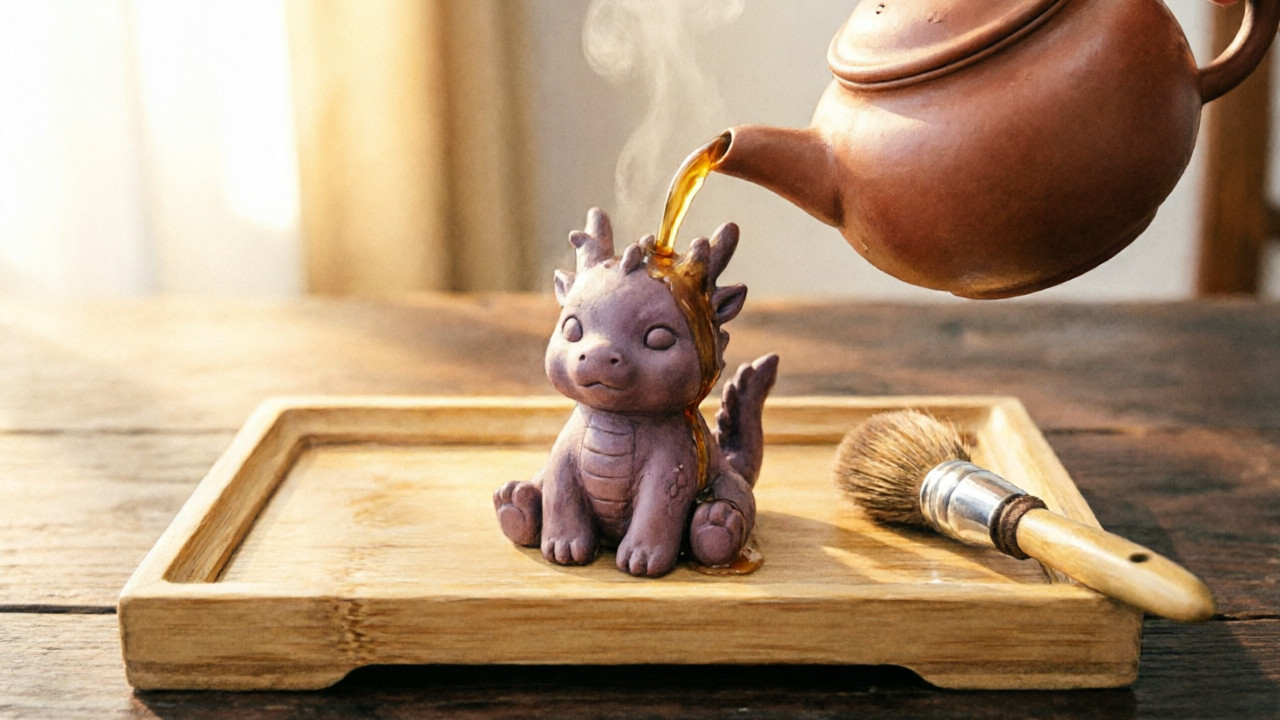
A tea pet is a small unglazed clay figure that lives on your tea tray. You “raise” it by pouring tea over it every session, and over months the clay absorbs tea oils and develops a warm, glossy patina called baojiang. This guide covers the clay science, figure symbolism, daily ritual, patina timeline, and troubleshooting that English-language tea sites rarely explain in depth. For more on tea pet culture, browse our pets hub.
What Is a Tea Pet?
A tea pet (chachong, 茶宠) is a palm-sized clay figure that sits on the Gongfu tea tray alongside your teapot and cups. The practice originated in Yixing, Jiangsu province, during the Song dynasty (960–1279), where zisha (purple clay) teapot makers created small animal and mythical figures as “companions” for the tea table [1].
Unlike a figurine you place on a shelf, a tea pet is an active participant in the tea session. Every time you pour tea — whether warming the pot, rinsing leaves, or discarding the last rinse — you pour it over the tea pet instead of wasting it. The clay absorbs the tea liquid, and over months and years the surface transforms from raw, matte clay to a smooth, glossy surface with depth.
This transformation is called baojiang (包浆) — the same term used for the patina that develops on a well-used Yixing teapot [2]. The practice ties into the broader Gongfu tea ceremony tradition, where every object on the tray has a role.
Why Some Clay Develops Patina (and Some Never Will)
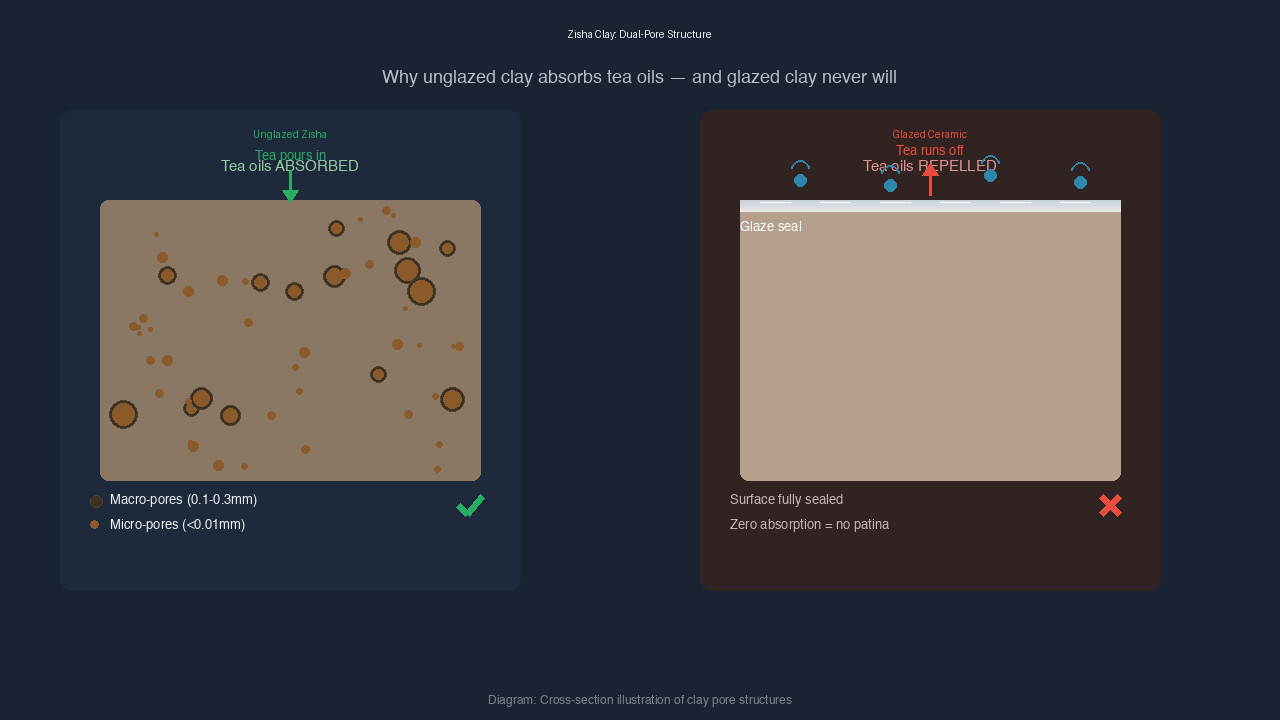
The secret to a tea pet’s transformation lies in porosity. Unglazed zisha (Yixing purple clay) and nixing clay have a microscopic pore structure — visible only under magnification — that absorbs tea oils and tannins with each pour [3]. These pores trap the pigments and oils from your tea, and over hundreds of pourings, the accumulated material fills the surface, creating a smooth, translucent sheen.
What works:
- Zisha (purple clay): The gold standard. Dual-pore structure (macro and micro) gives the richest patina [3]. This is the material most traditional tea pets use. The HonHeam Zisha Dragon ($17.99) is a solid example of authentic zisha.
- Nixing clay: From Qinzhou, Guangxi. Similar porosity, often darker natural color. Develops patina well.
What does NOT work:
- Glazed ceramic: The glaze seals the clay surface completely. Tea runs off without penetrating. A glazed figurine will look the same after 10 years of pouring as it did on day one.
- Resin or plastic: No porosity at all. Purely decorative.
- Painted figures: The paint layer blocks absorption.
This is why the traditional zisha tea pet is more than an aesthetic choice — the material is doing the work.
Choosing Your First Tea Pet: Materials, Figures, and Meaning
When choosing your first tea pet, two decisions matter: the material and the figure.
Material priority: Always choose unglazed zisha or nixing clay. Check the product description for “zisha” (紫砂) or “purple clay.” If the listing says “ceramic” without specifying unglazed clay, it may be glazed and will never develop patina.
Figure meaning — each traditional figure carries cultural symbolism:
| Figure | Chinese Name | Cultural Meaning |
|---|---|---|
| Pixiu (mythical beast) | 貔貅 | Symbol of wealth protection in Chinese folklore |
| Golden Toad (3-legged) | 金蟾 | Traditional symbol of prosperity; depicted sitting on coins |
| Dragon | 龙 | Power, authority, noble spirit |
| Buddha / Monk | 弥勒佛 | Peace, contentment, mindfulness in practice |
| Zodiac animal (your year) | 生肖 | Personal fortune; common birthday gift |
| Pee Boy | 撒尿童子 | Playful classic; demonstrates hot-water physics |
We treat the symbolism as cultural tradition, not supernatural claims. Folk stories exist, but the real reward of a tea pet is the slow patina and the daily ritual of care.
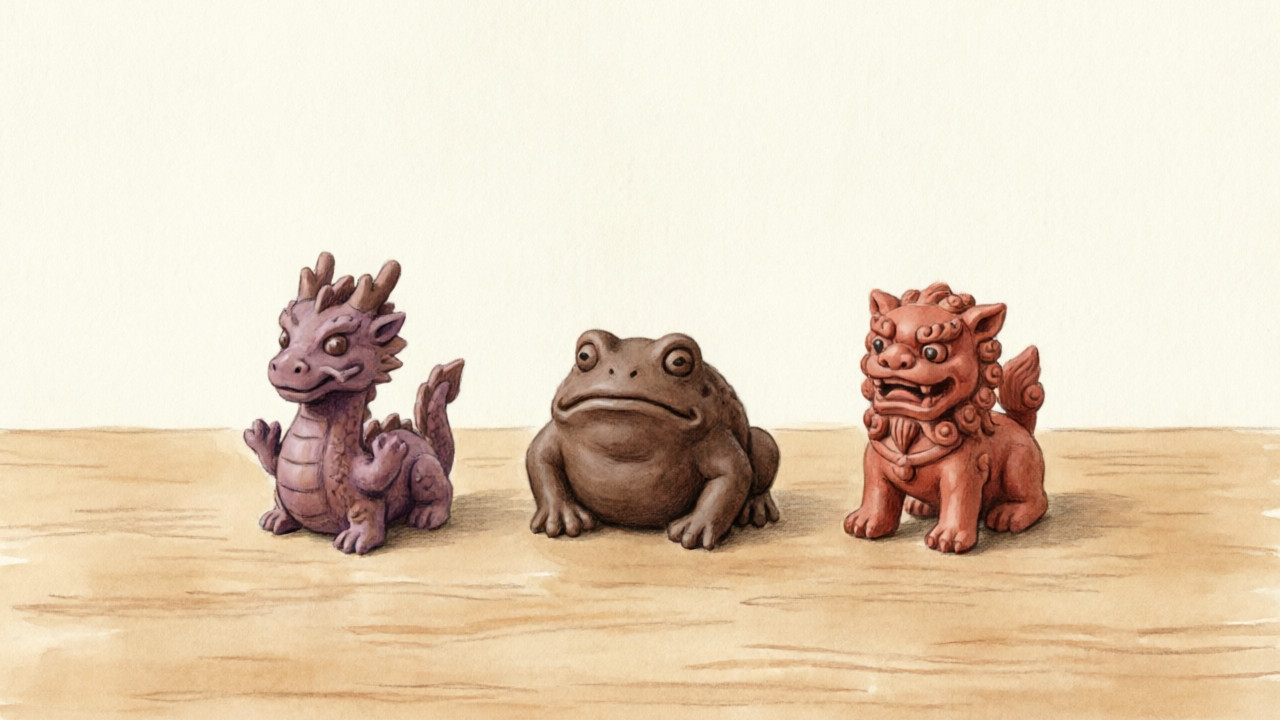
For your first tea pet: Start with a figure that resonates with you personally. The dragon is the most popular traditional choice — the HonHeam Zisha Dragon ($17.99) is a great starting point. On a budget, the EatingBiting Zisha Pig ($8.99) and Monkey King ($8.88) offer authentic zisha at the lowest prices. Cat lovers gravitate toward the LYART Angry Cat ($13.99), while the hashiny Chubby Crab ($9.99) is a whimsical conversation starter.
The Daily Ritual: How to Raise Your Tea Pet
Raising a tea pet is simple, but consistency matters. Here’s the daily ritual:
- Place your tea pet on the tea tray where it will catch runoff water and discarded tea. Position it near the edge of the waste-water tray (chuan) or on the draining surface.
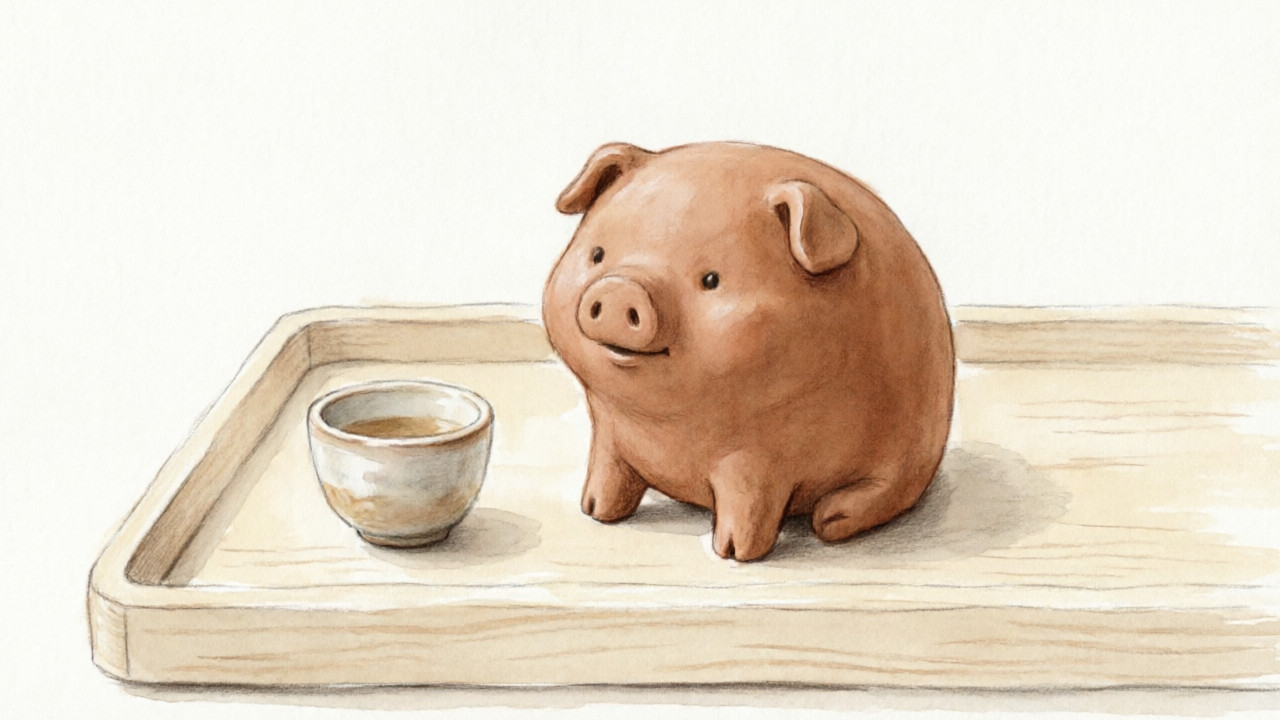 2. Pour waste tea over it. Every time you warm your teapot, rinse your leaves, or have leftover tea, pour it over the tea pet instead of discarding it elsewhere. This is the primary “feeding.”
3. Brush gently. After pouring, use a soft tea brush to distribute the tea evenly across the surface. This prevents uneven staining and helps the patina develop uniformly.
4. Choose your tea. Darker, oilier teas produce faster results. Ripe puerh and roasted oolong are ideal. Light green tea produces minimal patina [4].
5. Never use soap. When your session ends, rinse the tea pet with clean warm water and let it air-dry. Never scrub with detergent — soap strips the oils you’ve been building.
6. Be patient. Patina develops over months, not days. The clay is working even when you can’t see daily changes.
2. Pour waste tea over it. Every time you warm your teapot, rinse your leaves, or have leftover tea, pour it over the tea pet instead of discarding it elsewhere. This is the primary “feeding.”
3. Brush gently. After pouring, use a soft tea brush to distribute the tea evenly across the surface. This prevents uneven staining and helps the patina develop uniformly.
4. Choose your tea. Darker, oilier teas produce faster results. Ripe puerh and roasted oolong are ideal. Light green tea produces minimal patina [4].
5. Never use soap. When your session ends, rinse the tea pet with clean warm water and let it air-dry. Never scrub with detergent — soap strips the oils you’ve been building.
6. Be patient. Patina develops over months, not days. The clay is working even when you can’t see daily changes.
Your tea pet should sit on a proper Gongfu tray with drainage — if you need one, see our guide to choosing a Gongfu tea tray. A tray without drainage will leave your pet sitting in stagnant water, which leads to mold.
For interactive fun, the LYART Spray-Water Frog ($14.99) demonstrates how porous clay absorbs hot tea and releases a fine mist — a small physics lesson on every pour. The classic Pee Boy ($17.09) works on the same principle: pour hot tea over it and it “pees” water through a tiny channel.
The Patina Timeline: What to Expect
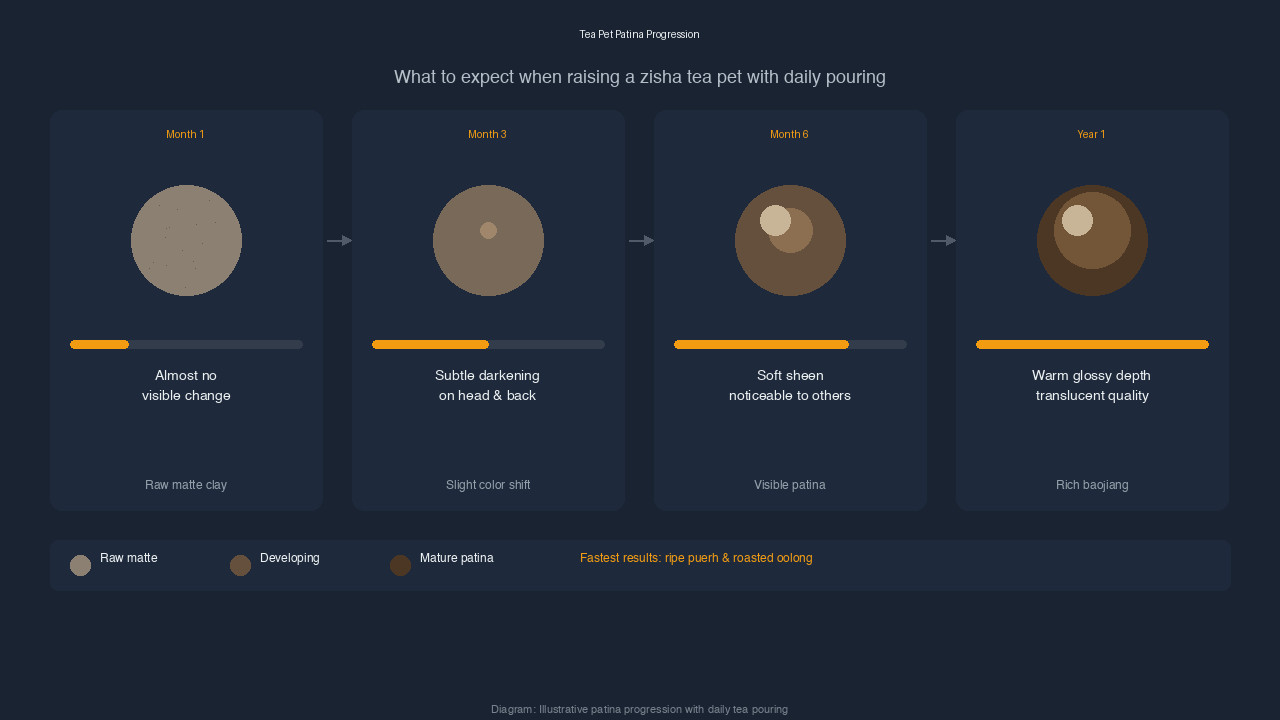
No competitor tells you what your tea pet will actually look like over time. Here’s an honest progression:
By 1 month: Almost no visible change. The clay may feel slightly less chalky to the touch, but you won’t see color difference yet. This is normal — the pores are absorbing oils but haven’t accumulated enough to change the surface appearance.
By 3 months: Subtle darkening appears in the areas where tea concentrates (top of the head, back). The surface feels smoother where you brush regularly.
By 6 months: The patina becomes noticeable to others. The surface takes on a soft sheen in good light. Darker areas (where tea pools) develop faster than raised surfaces.
By 1 year: The tea pet looks distinctly different from a new one. The surface has a warm, glossy depth — not mirror-shiny, but alive with a translucent quality. The color has shifted from raw grey-purple toward a warm brown-amber.
Tea-to-patina color guide:
| Tea Type | Patina Color | Speed |
|---|---|---|
| Ripe Puerh (shou) | Dark glossy brown | Fastest |
| Black tea (Dianhong/Keemun) | Reddish-amber | Fast |
| Roasted Oolong (Da Hong Pao) | Golden honey | Medium |
| Raw Puerh (sheng) | Light golden-yellow | Slow |
| Green tea (Longjing) | Barely visible, very subtle | Very slow |
Common Mistakes and How to Fix Them
Mold (white or green fuzz): Caused by leaving the tea pet in standing water for days. Fix: scrub with a clean toothbrush under warm running water, then dry completely in a well-ventilated area — not in direct sunlight, which can crack the clay. Resume normal tea pouring once fully dry.
Sticky surface: Caused by pouring overly concentrated tea or tea with sugar and milk near the pet. Fix: rinse with hot water several times and brush firmly. Keep dairy and sweetened drinks away from the clay.
Uneven coloration: Some areas much darker than others. Fix: brush more evenly during sessions to distribute tea across the whole surface. Rotating the figure occasionally also helps.
Chalky residue (white powder): Mineral deposits from hard water, not a clay problem. Fix: switch to filtered water for your tea sessions.
No patina after months: Verify your tea pet is unglazed zisha. If it’s glazed ceramic, it will never develop patina — no matter how much tea you pour. Check for a glassy, shiny surface (glazed) versus a matte, dry feel (unglazed).
Recommended Tea Pets for Your Tray
If you’re ready to start, these are excellent first tea pets — all verified as unglazed zisha or purple clay:
| Pick | Figure | Price | Why |
|---|---|---|---|
| Dragon | Dragon (power) | $17.99 | Best overall — classic zisha, detailed craft |
| Pig | Pig (fortune) | $8.99 | Budget entry — lowest price for authentic clay |
| Monkey King | Sun Wukong | $8.88 | Folklore classic — beloved cultural figure |
| Crab | Crab (harmony) | $9.99 | Whimsical — great conversation starter |
| Rabbit | Rabbit (peace) | $14.99 | Zodiac pick — longevity and peace symbol |
| Capybara | Modern trendy | $15.99 | For younger tea drinkers — capybara meets tradition |
| Pee Boy | Classic novelty | $17.09 | Traditional fun — water-pressure physics demo |
Explore more tea pet culture on our hub page.
References
[1] K.S. Lo, The Story of Tea, Hong Kong Museum of Art, 2003. Song dynasty origins of Yixing zisha tea culture and companion figures.
[2] S.Y. Zhang, Yixing Purple Clay Ware, Shanghai Calligraphy & Painting Publishing House, 1998. Baojiang (包浆) patina formation on unglazed zisha surfaces.
[3] P. Zhang et al., “Microstructure and physical properties of Yixing zisha clay,” Journal of the European Ceramic Society, vol. 38, no. 4, pp. 1825-1832, 2018.
[4] Y. Li, Chinese Tea: Culture, Traditions, and the Art of Brewing, Tuttle Publishing, 2019. Tea type effects on clay patina development.
The Mind of the Tea Pet
A tea pet asks nothing and gives quietly. Each pour of tea is a small act of attention — not for the flavor, not for the caffeine, but simply for the act of caring for something that changes slowly, invisibly, over time. In a world built on instant results, the tea pet is a lesson in patience: a reminder that some transformations can only be earned through showing up, session after session, and pouring what you have.